Dangerous Snakes of KwaZulu-Natal (KZN)
The Medically Significant Snakes of KwaZulu-Natal (KZN) - A Factual Guide
KZN's diverse environment supports numerous snake species, some of which are medically significant due to their potent venom. This guide categorizes and describes the most relevant species, focusing on their characteristics, habitat, and venom type.
JUMP TO
1. Highly Venomous Species
2. Medically Significant Species
3. Common/Regional Dangerous Species
1. Highly Venomous Species (Potentially Life-Threatening Bites)
These species possess venom that can result in human fatality without timely medical intervention and often require antivenom.
DANGEROUS SNAKES OF KWAZULU-NATAL
Black Mamba (Dendroaspis polylepis)
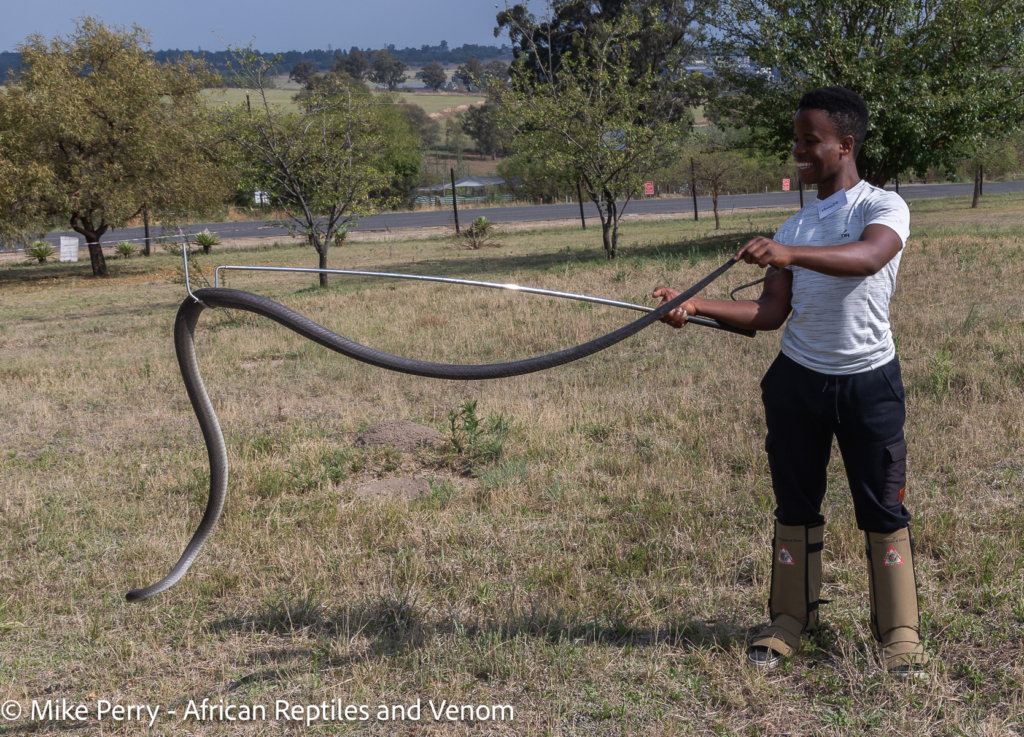
This species is the longest venomous snake in Africa, with adults potentially exceeding 4 meters. Coloration ranges from olive to dark brown/grey. It is primarily terrestrial and is found across diverse habitats in KZN, including coastal bush and inland bushveld, sometimes near human dwellings. Its venom is Neurotoxic, which affects the nervous system, leading to progressive paralysis and respiratory failure. The venom is fast-acting, necessitating immediate treatment.
DANGEROUS SNAKES OF KWAZULU-NATAL
Green Mamba (Dendroaspis angusticeps)
A robust, uniformly bright green snake, this species is arboreal (tree-dwelling) and generally more docile than the Black Mamba. It is restricted to a narrow strip of dense coastal forest in KZN, rarely found far from the ocean. Its venom is primarily Neurotoxic, but bites also exhibit Cytotoxic effects, causing local swelling. Bites are infrequent due to its specialized habitat.
DANGEROUS SNAKES OF KWAZULU-NATAL
Forest Cobra (Naja subfulva)
Africa’s largest cobra species, this snake can reach lengths over 2.7 meters. Adults are typically a uniform brown or blackish-brown and have a shiny appearance. It is restricted to the dense coastal forests and thickets of Northern KZN (from Ballito northwards). Its venom is a combination of Neurotoxic and Cytotoxic components, capable of causing rapid systemic paralysis and tissue damage.
Snouted Cobra © Corne van Niekerk
DANGEROUS SNAKES OF KWAZULU-NATAL
Snouted Cobra (Naja annulifera)
A large cobra reaching up to 2.5 meters. Coloration can be uniform brown, yellowish, or have dark cross-bands (the banded form is rarely seen in KZN), and it is identifiable by a large, impressive hood display. It is found in the Northern KZN bushveld, Lowveld, and savanna areas, extending south to regions like Hluhluwe. Its venom is a potent mix of Neurotoxic and Cytotoxic components, causing both systemic paralysis (potentially fatal) and local tissue damage.
DANGEROUS SNAKES OF KWAZULU-NATAL
Boomslang (Dispholidus typus)
A slender, long-tailed, large-eyed arboreal snake. Adult males in KZN are typically bright green, while females are often brown or olive. It is a rear-fanged species found widely in trees and shrubs across the province. Its venom is Haemotoxic (blood-affecting), disrupting the blood-clotting mechanism and causing internal and external bleeding. Though symptoms may be delayed for many hours, the venom is highly potent and requires a specific monovalent antivenom.
DANGEROUS SNAKES OF KWAZULU-NATAL
Gaboon Viper (Bitis gabonica)
The largest viper in the world and one of the heaviest, it possesses the longest fangs of any snake. It is identifiable by its distinctive geometric pattern of rectangles and triangles. Found in the leaf litter of forest areas, primarily in northern KZN (e.g., Zululand, St Lucia). Its venom is Cytotoxic, causing extensive tissue destruction, severe pain, and massive swelling. Bites are rare due to its nocturnal, highly camouflaged, and sedentary nature.
2. Medically Significant Species (High Incidence of Bites / Severe Local Effects)
These snakes are responsible for the highest number of reported bites and cause severe local damage, though fatalities are less common than with the highly neurotoxic species.
DANGEROUS SNAKES OF KWAZULU-NATAL
Puff Adder (Bitis arietans)
A heavy-bodied viper with a large, flattened head and a characteristic pattern of light and dark chevron markings. It is widely distributed across all habitats in KZN, including suburban areas. Its venom is Cytotoxic, destroying tissue and causing severe pain, blistering, and swelling. Its tendency to lie motionless, relying on camouflage, contributes to a high rate of defensive bites when stepped on.
Mozambique Spitting Cobra © Jeanette Zitzer
DANGEROUS SNAKES OF KWAZULU-NATAL
Mozambique Spitting Cobra (Naja mossambica)
A medium-sized cobra, typically grey or brown, known for its ability to spread a hood. It is common across KZN, often found in homes and suburbs, especially when hunting at night. Its venom is primarily Cytotoxic, causing severe pain, tissue damage, and necrosis. Its key defense is the ability to accurately spray venom up to 3 meters, which targets the eyes and requires immediate and thorough flushing with water.
DANGEROUS SNAKES OF KWAZULU-NATAL
Bibron's Stiletto Snake (Atractaspis bibronii)
A small, dark brown or black fossorial (burrowing) snake with a pointed snout. It often emerges above ground at night after rain. It is widespread in KZN. Its venom is Cytotoxic, causing intense, localized pain, blistering, and severe tissue damage (necrosis). Its unique, hinged fangs allow it to stab sideways, posing a risk even when held behind the head. No antivenom is available.
DANGEROUS SNAKES OF KWAZULU-NATAL
Southern Vine Snake (Twig Snake) (Thelotornis capensis)
An extremely slender, grey/brown snake with a long, pointed head, perfectly camouflaged to resemble a twig. Widespread in KZN’s bushy areas. Its venom is Haemotoxic (blood-affecting), which can cause prolonged bleeding and internal haemorrhage. Bites are very rare, but no antivenom is available.
3. Common/Regional Dangerous Species
While not typically associated with high fatality rates in healthy adults, the snakes in this category are significant either because they are frequently encountered in suburban and farming areas or are the dominant venomous threat in a specific region of the province. Their bites still require urgent medical assessment and can result in severe localized effects or prolonged illness.
DANGEROUS SNAKES OF KWAZULU-NATAL
Rhombic Night Adder (Causus rhombeatus)
This species is a moderately stout snake with a distinct dark V-shaped marking on its head. Active both day and night, it specializes in feeding on frogs. It is very common in suburban gardens in KZN. Its venom is Cytotoxic, causing painful local swelling, but is generally not considered life-threatening to healthy adults. Medical attention is necessary, particularly for children or pets.
Berg Adder from Giant’s Castle area, Kwazulu Natal © peterryan31
DANGEROUS SNAKES OF KWAZULU-NATAL
Berg Adder (Bitis atropos)
A small, stout viper typically found in high-altitude, rocky, and mountainous areas, particularly the Drakensberg region of KZN. Its venom is predominantly Neurotoxic. Symptoms often include neuro-ophthalmic effects (e.g., droopy eyelids, blurred vision) and sometimes respiratory distress. No antivenom is available, but human fatalities have not been reliably documented.
Images used in this article are copyrighted and belong to Mike Perry, or licensed under
a Creative Commons Attribution-NonCommercial 4.0 International License (CC BY-NC 4.0).
We extend our sincere thanks to the respective photographers who generously
shared their work on iNaturalist, making the visual content of this article possible.
Safety and Medical Protocol
In the event of a snakebite, immediate hospitalization is mandatory. Treatment involves managing symptoms, pain control, and the administration of species-specific antivenom where applicable (available for Mambas, Puff Adders, and Cobras). Never attempt to use methods such as tourniquets, cutting the wound, or sucking out venom. The safest approach to coexistence is to maintain distance and allow all snakes to move away naturally.