Dangerous Snakes of Limpopo
The Medically Significant Snakes of Limpopo Province: A Factual Guide
JUMP TO
1. Highly Venomous Species (Potentially Life-Threatening Bites)
- Black Mamba
- Snouted Cobra
- Brown Forest Cobra
- Boomslang
- Southern Vine Snake (Twig Snake) (Thelotornis capensis)
2. Medically Significant Species (High Incidence of Bites / Severe Local Effects)
3. Common/Regional Dangerous Species
1. Highly Venomous/Life Threatening Species
2. Dangerous/Medically Significant Species
3. Common/Regional Dangerous Species
1. Highly Venomous Species (Potentially Life-Threatening Bites)
These species possess venom that can result in human fatality without timely medical intervention and often require antivenom.
DANGEROUS SNAKES OF LIMPOPO PROVINCE
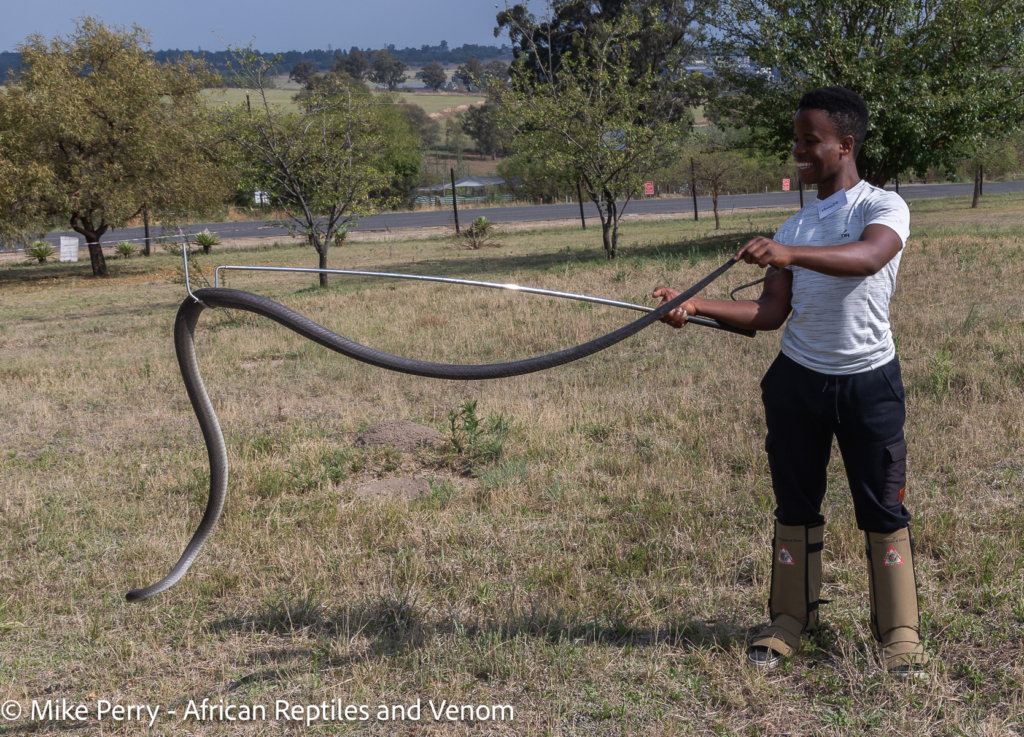
Black Mamba (Dendroaspis polylepis)
This species is the longest venomous snake in Africa (up to 4.5m). Coloration typically ranges from olive to dark grey/brown. It is found throughout the lowveld and bushveld areas of Limpopo, where it is often associated with rocky hillsides and dense vegetation. Its venom is Neurotoxic, which rapidly affects the nervous system, leading to progressive paralysis and respiratory failure. Immediate medical treatment is critical.
DANGEROUS SNAKES OF LIMPOPO PROVINCE
Snouted Cobra (Naja annulifera)
A large cobra with an impressive hood. Coloration can be brown, yellowish, or have dark cross-bands . It is common in the savanna and bushveld regions of the Limpopo province. Its venom is primarily Neurotoxic, but is also strongly Cytotoxic, causing both systemic paralysis and severe localized tissue damage.
Brown Forest Cobra from eastern Soutpansburg near Mphaphuli, Limpopo Province © Yondela Nqadala, some rights reserved (CC-BY-NC)
DANGEROUS SNAKES OF LIMPOPO PROVINCE
Brown Forest Cobra (Naja subfulva)
A large fast cobra that has a light golden-brown head & neck, fading darker down the body, to pitch black on the tail. It is quick to rear and spread a broad hood when disturbed. Distribution in the Limpopo Province: Rare in the Limpopo province and only known from a handful of records from the extreme northern Kruger National Park and the eastern Soutpansberg mountains. In South Africa this snake is mostly restricted to coastal forests in Zululand. Venom Type: Potent Neurotoxic venom with Cytotoxic components with bites resulting in Progressive Weakness Syndrome and Painful Progressive Swelling, respectively.
DANGEROUS SNAKES OF LIMPOPO PROVINCE
Boomslang (Dispholidus typus)
A slender, large-eyed arboreal snake. Coloration is usually green in males and brown or olive in females. It is a rear-fanged species found widely in trees and shrubs. Its venom is Haemotoxic (blood-affecting), disrupting the blood-clotting mechanism and causing internal and external bleeding. Symptoms may be delayed for many hours. The venom is extremely life-threatening. and requires a specific monovalent antivenom.
DANGEROUS SNAKES OF LIMPOPO PROVINCE
Southern Vine Snake (Twig Snake/Bird Snake) (Thelotornis capensis)
An extremely slender arboreal (tree-living) snake, perfectly camouflaged to mimic a branch, vine or twig. Widespread in the bushveld and savanna trees of the Limpopo province. Its venom is Haemotoxic (blood-affecting), which can cause prolonged bleeding and internal haemorrhage. Bites are very rare, and no antivenom is available. Treatment is symptomatic in a hospital.
2. Medically Significant Species (High Incidence of Bites / Severe Local Effects)
These snakes are responsible for the highest number of reported bites and cause severe local damage, though fatalities are less common than with the highly neurotoxic species.
DANGEROUS SNAKES OF LIMPOPO PROVINCE
Puff Adder (Bitis arietans)
A stout-bodied viper, widely distributed across all habitats in Limpopo. Its venom is Cytotoxic, destroying tissue and causing severe pain, blistering, and swelling, potentially leading to necrosis. Its ambush behaviour contributes to a high rate of defensive bites when stepped on.
Mozambique Spitting Cobra © Jeanette Zitzer, some rights reserved (CC-BY-NC)
DANGEROUS SNAKES OF LIMPOPO PROVINCE
Mozambique Spitting Cobra (Naja mossambica)
A medium-sized cobra, common throughout the Limpopo Province in bushveld and savanna areas. The Mozambique Spitting Cobra will often enter houses or dwellings looking for food and bite people in their beds. Its venom is primarily Cytotoxic, causing severe pain, tissue damage, and necrosis. It can accurately spray venom up to 3 meters, aiming for the eyes, which requires immediate and thorough flushing with water.
DANGEROUS SNAKES OF LIMPOPO PROVINCE
Bibron's Stiletto Snake (Atractaspis bibronii)
A small, dark brown or black fossorial (burrowing) snake. It is widespread in the Limpopo province. Its venom is Cytotoxic, causing intense, localized pain, blistering, and severe tissue damage (necrosis). Its unique, hinged fangs allow it to stab sideways. No antivenom is available or indicated. Hospital treatment is symptomatic and tissue recovery may be prolonged.
3. Common/Regional Dangerous Species
While not typically associated with high fatality rates in healthy adults, the snakes in this category are significant either because they are frequently encountered in suburban and farming areas or are the dominant venomous threat in a specific region of the province. Their bites still require urgent medical assessment and can result in severe localized effects or prolonged illness.
DANGEROUS SNAKES OF LIMPOPO PROVINCE
Rhombic Night Adder (Causus rhombeatus)
A moderately stout snake with a distinct dark V-shaped marking on its head. Active both day and night, it specializes in feeding on frogs. It is very common in suburban gardens and moist habitats throughout Limpopo. Its venom is Cytotoxic, causing painful local swelling, but is generally not considered life-threatening to healthy adults. Medical attention is necessary, particularly for children or pets.
Berg Adder from Wolkberg Wilderness Area © Adriaan Jordaan, some rights reserved (CC-BY-NC)
DANGEROUS SNAKES OF LIMPOPO PROVINCE
Berg Adder (Bitis atropos)
A small, stout viper primarily associated with the high-altitude, rocky and mountainous regions, specifically the Limpopo Drakensberg Escarpment (e.g., Wolkberg). Its venom is predominantly Neurotoxic. Symptoms often include neuro-ophthalmic effects (e.g., droopy eyelids, blurred vision) and sometimes respiratory distress. No antivenom is available, but fatalities are rare.
Berg Adder from Wolkberg Wilderness Area © Adriaan Jordaan, some rights reserved (CC-BY-NC)
DANGEROUS SNAKES OF LIMPOPO PROVINCE
Horned Adder (Bitis caudalis)
A small adder (avg. 40 cm) characterized by a single prominent horn-like scale above each eye. It is found in the drier, sandy, arid savanna and bushveld regions of Limpopo. Its venom is Cytotoxic, causing pain, swelling, and occasionally minor necrosis. While painful, the bite is not typically life-threatening, and antivenom is neither required nor effective.
DANGEROUS SNAKES OF LIMPOPO PROVINCE
Speckled Shield-nosed Snake (Aspidelaps scutatus)
A smallish thickset nocturnal snake (avg. 45 cm) identified by a large, shovel-like rostral scale used for burrowing. It is found in the sandy bushveld and Lowveld areas of Limpopo. If threatened, it will lift its head like a cobra. Its venom is a combination of Neurotoxic and Cytotoxic components. While bites are rare, they are highly serious, with effects that can include local tissue damage and potential respiratory failure. No antivenom is available.
Images used in this article are copyrighted and belong to Mike Perry, or licensed under
a Creative Commons Attribution-NonCommercial 4.0 International License (CC BY-NC 4.0).
We extend our sincere thanks to the respective photographers who generously
shared their work on iNaturalist, making the visual content of this article possible.
Safety and Medical Protocol
In the event of a snakebite, immediate hospitalization is mandatory. Treatment involves managing symptoms, pain control, and the administration of species-specific antivenom where applicable (available for Mambas, Puff Adders, and Cobras). Never attempt to use methods such as tourniquets, cutting the wound, or sucking out venom. The safest approach to coexistence is to maintain distance and allow all snakes to move away naturally.