Dangerous Snakes of the Free State
The Medically Significant Snakes of the Free State Province, South Africa
The Free State is dominated by high-altitude grasslands and semi-arid Karoo scrubland. While it lacks the "Big Five" of the snake world found in the lowveld (no Black Mambas or Spitting Cobras are resident here), it still hosts several extremely dangerous species, most notably the Cape Cobra, the Puff Adder and the Rinkhals.
SCROLL INDEX
Highly Venomous Species (Potentially Life-Threatening Bites)
Dangerous (Medically Important - painful bite, hospitalisation likely)
Highly Venomous Species (Potentially Life-Threatening Bites)
Dangerous (Medically Important - painful bite, hospitalisation likely)
Highly Venomous Species (Potentially Life-Threatening Bites)
Cape Cobra from The Kloof, Bloemfontein, Orange Free State © Moagi Maloka, some rights reserved (CC-BY-NC)
DANGEROUS SNAKES OF THE FREE STATE PROVINCE
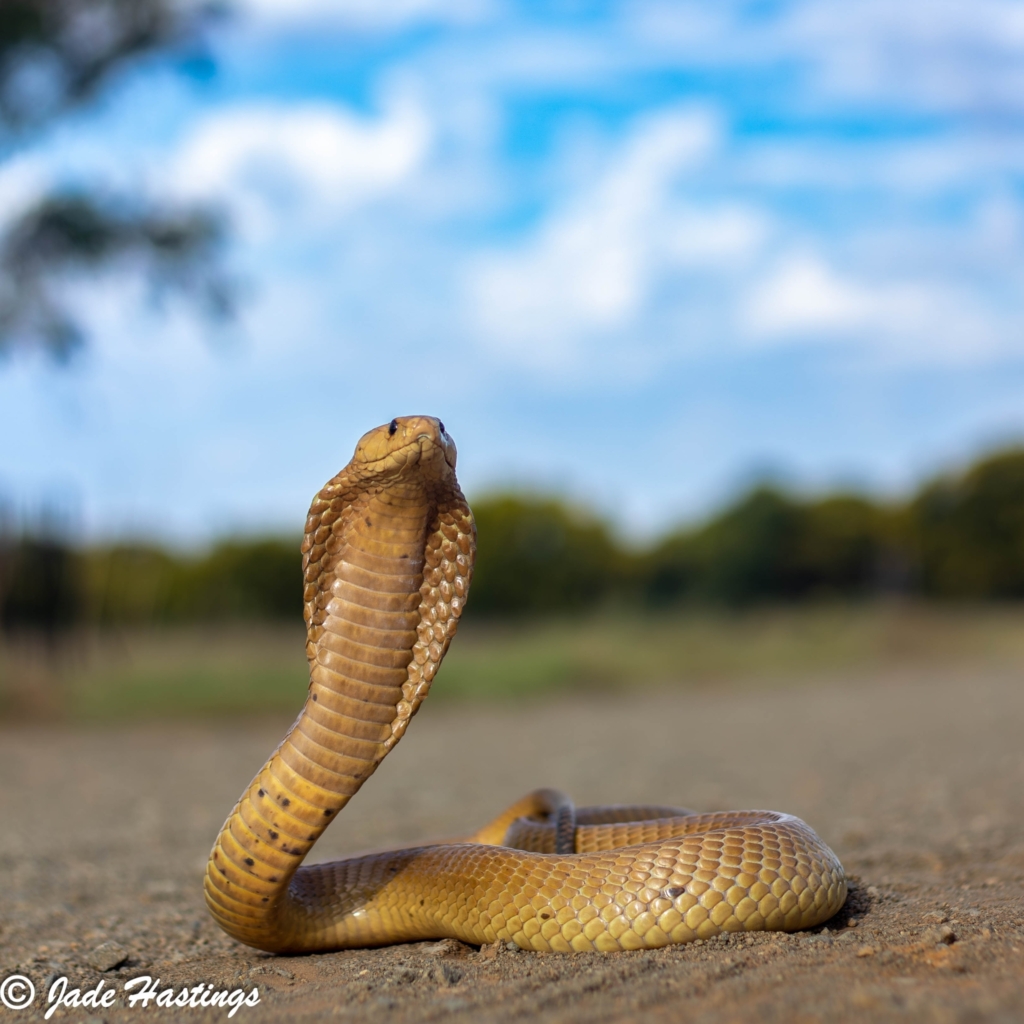
Cape Cobra (Naja nivea)
- Danger Level: Highly Venomous (Very Dangerous – has caused human fatalities).
- Venom Type: Potent Neurotoxic venom that causes rapid respiratory collapse.
- Description: A medium-sized cobra, usually between 1.2m and 1.5m. In the Free State, they are most commonly a uniform yellow, copper, or mahogany brown. It is a nervous snake that will raise a large hood and strike if it feels trapped.
- Free State Distribution: Widespread throughout the province, but particularly common in the drier western and southern regions.
Puff Adder from near Philippolis, Orange Free State © calfirecap, some rights reserved (CC-BY-NC)
DANGEROUS SNAKES OF THE FREE STATE PROVINCE
Puff Adder (Bitis arietans)
- Danger Level: Highly Venomous (Very Dangerous – has caused human fatalities).
- Venom Type: Potently Cytotoxic venom, causing severe pain, massive swelling, and tissue necrosis.
- Description: A heavy-bodied, sluggish snake with a large triangular head. It relies on its excellent camouflage and is responsible for many bites because it often refuses to move when approached, leading to people accidentally stepping on it.
- Free State Distribution: Widespread and common across the entire province, from suburban gardens to open farmland.
Rinkhals from Hlohlolwane (Clocolan) area, Orange Free State © Roelof van der Breggen – some rights reserved (CC BY-NC)
DANGEROUS SNAKES OF THE FREE STATE PROVINCE
Rinkhals (Hemachatus haemachatus)
- Danger Level: Highly Venomous (Very Dangerous – has caused human fatalities).
- Venom Type: Mixed Cytotoxic and Neurotoxic venom. It is also a capable “spitter.”
- Description: A cobra relative with keeled (rough) scales. It is famous for “playing dead” by rolling onto its back with its mouth open. It usually has 1–2 white bands on the throat.
- Free State Distribution: Common across the high-lying grasslands of the central and eastern Free State.
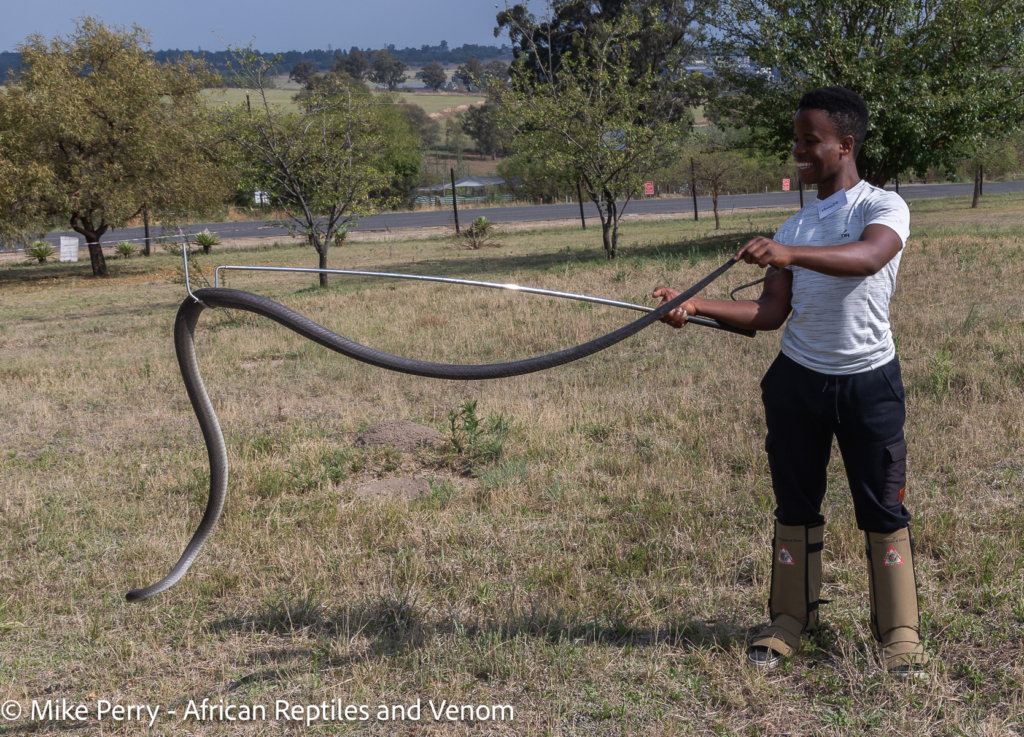
Boomslang © Mike Perry
DANGEROUS SNAKES OF THE FREE STATE PROVINCE
Boomslang (Dispholidus typus)
- Danger Level: Highly Venomous (Very Dangerous – has caused human fatalities).
- Venom Type: Potently Haemotoxic venom, which prevents blood from clotting and causes internal bleeding.
- Description: A slender, arboreal snake with very large eyes. Males are often bright green or black/yellow, while females are brown. It is very shy and rarely bites unless caught or handled.
- Free State Distribution: Found in areas with sufficient tree cover, such as riverine bush, orchards, and leafy suburban gardens.
Dangerous (Medically Important - painful bite, hospitalisation likely)
Southern Stiletto Snake from north of Bloemfontein, Orange Free State © Jade Hastings, some rights reserved (CC-BY-NC)
DANGEROUS SNAKES OF THE FREE STATE PROVINCE
Bibron's Stiletto Snake (Atractaspis bibronii)
- Danger Level: Dangerous (Medically significant – painful bite, often causes permanent tissue damage).
- Venom Type: Potent Cytotoxic venom.
- Description: A small, plain dark-brown to black snake that lives underground. It has unique, long fangs that can be rotated sideways, meaning it cannot be held safely behind the head.
- Free State Distribution: Primarily found in the northern and central parts of the province, often emerging on the surface after heavy summer rains.
Cape Coral Snake from near Trompsburg, Orange Free State © Ryan van Huyssteen, some rights reserved (CC-BY)
DANGEROUS SNAKES OF THE FREE STATE PROVINCE
Cape Coral Snake (Aspidelaps lubricus)
- Danger Level: Dangerous (Medically significant).
- Venom Type: Primarily Neurotoxic.
- Description: A small pretty snake with a thick orange/red body and bold black rings. It has a large “shield” scale on its nose for burrowing. It will hiss and strike repeatedly if provoked.
- Free State Distribution: Found in the drier, more arid regions of the western and southern Free State.
Rhombic Night Adder from close to Parys, Orange Free State © dout, some rights reserved (CC-BY-NC)
DANGEROUS SNAKES OF THE FREE STATE PROVINCE
Rhombic Night Adder (Causus rhombeatus)
- Danger Level: Venomous (Medically significant – painful bite, but not life-threatening to adults).
- Venom Type: Cytotoxic venom.
- Description: A greyish-brown snake with a series of dark, diamond-shaped markings on its back and a “V” marking on the head. It feeds almost exclusively on toads.
- Free State Distribution: Common in the wetter, eastern parts of the province and near dams or pans.
Berg Adder from Witsieshoek Mountain Lodge, Orange Free State © Lize-Mari van Schoor, some rights reserved (CC-BY-NC)
DANGEROUS SNAKES OF THE FREE STATE PROVINCE
Berg Adder (Bitis atropos)
- Danger Level: Dangerous (Medically significant – unique venom effects).
- Venom Type: Primarily Neurotoxic, uniquely affecting the sense of taste, smell, and sight (dropping eyelids).
- Description: A small, thick-set adder with three rows of dark “half-moon” markings.
- Free State Distribution: Restricted to the high-altitude mountainous areas along the Lesotho border, such as Golden Gate Highlands National Park.
Highveld Garter Snake © Conrad Prinsloo, all rights reserved
DANGEROUS SNAKES OF THE FREE STATE PROVINCE
Highveld Garter Snake (Elapsoidea sundevallii media)
- Danger Level: Venomous (Dangerous – few bites recorded, but potentially serious).
- Venom Type: Neurotoxic venom.
- Description: A secretive, fossorial snake. Juveniles are boldly banded with pink or orange-yellow, while adults fade to a plain dark brown or black. Although part of the cobra family, they are placid and rarely bite.
- Free State Distribution: Rarely seen but widespread across the high-altitude grasslands of the northern and central Free State.
Spotted Harlequin Snake from near Bethlehem, Orange Free State © Jonathan Breytenbach, some rights reserved (CC-BY-NC)
DANGEROUS SNAKES OF THE FREE STATE PROVINCE
Spotted Harlequin Snake (Homoroselaps lacteus)
- Danger Level: Venomous (Medically significant – painful bite).
- Venom Type: Small amounts of Neurotoxic venom.
- Description: A small, brightly coloured snake, often yellow or orange with black crossbars and a red stripe down the back. It is a burrowing species.
- Free State Distribution: Found in various habitats across the province, often uncovered while digging in gardens or under rocks.
Images used in this article are copyrighted and belong to Mike Perry, or labeled and obtained with permission from their respective owners,
or licensed under a Creative Commons Attribution-NonCommercial 4.0 International License (CC BY-NC 4.0).
We extend our sincere thanks to the respective photographers who generously
shared their work on iNaturalist, making the visual content of this article possible.
Safety and Medical Protocol
In the event of a snakebite, immediate hospitalization is mandatory. Treatment involves managing symptoms, pain control, and the administration of species-specific antivenom where applicable (available for Mambas, Puff Adders, and Cobras). Never attempt to use methods such as tourniquets, cutting the wound, or sucking out venom. The safest approach to coexistence is to maintain distance and allow all snakes to move away naturally.