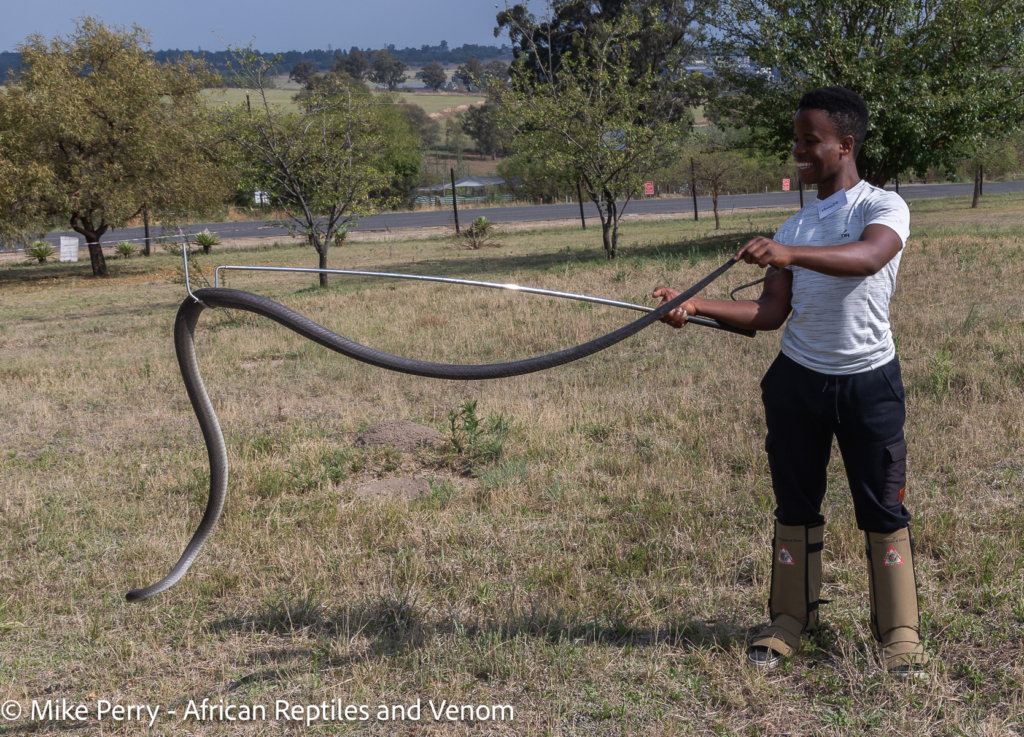
Alien Arrivals: Confirmed Records of Exotic Snakes in Southern Africa
While South Africa boasts a world-renowned diversity of indigenous snakes, our suburban landscapes occasionally play host to escaped pet snakes or “stowaways” from distant lands. Distinguishing between isolated escapes and truly established populations is crucial for accurate biodiversity monitoring.
According to reports from the South African National Biodiversity Institute (SANBI) and peer-reviewed literature on biological invasions, here is the current reality of non-native snakes on the South African mainland.
________________________________
The Established: Brahminy Blind Snake (Indotyphlops braminus)
-
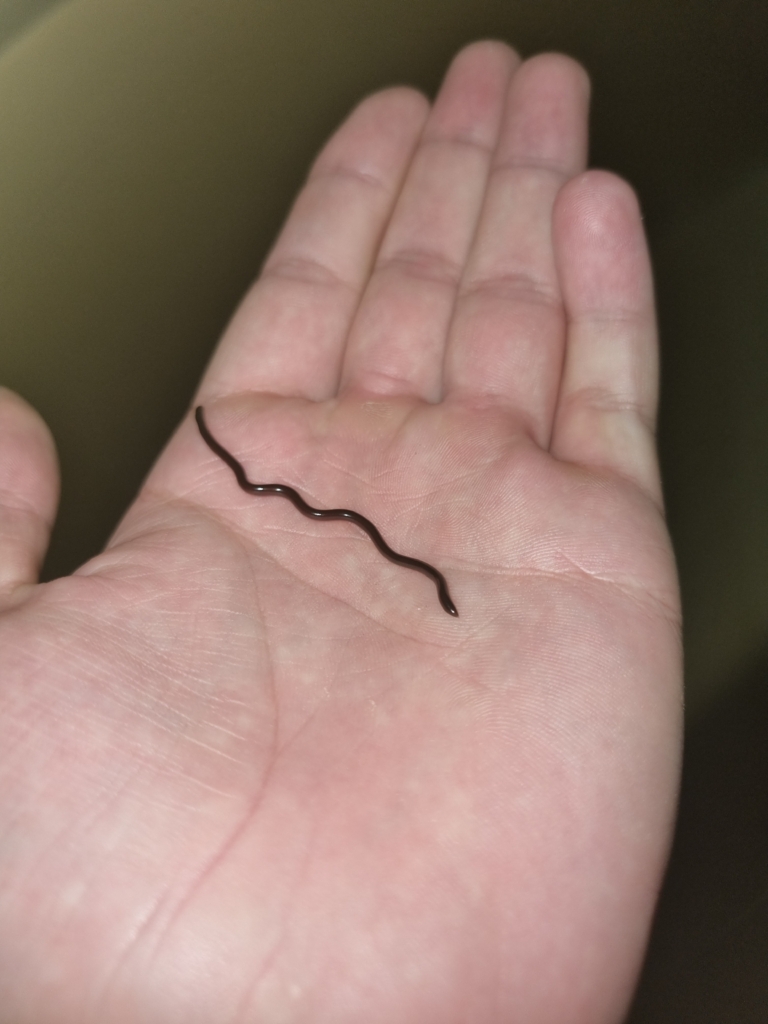
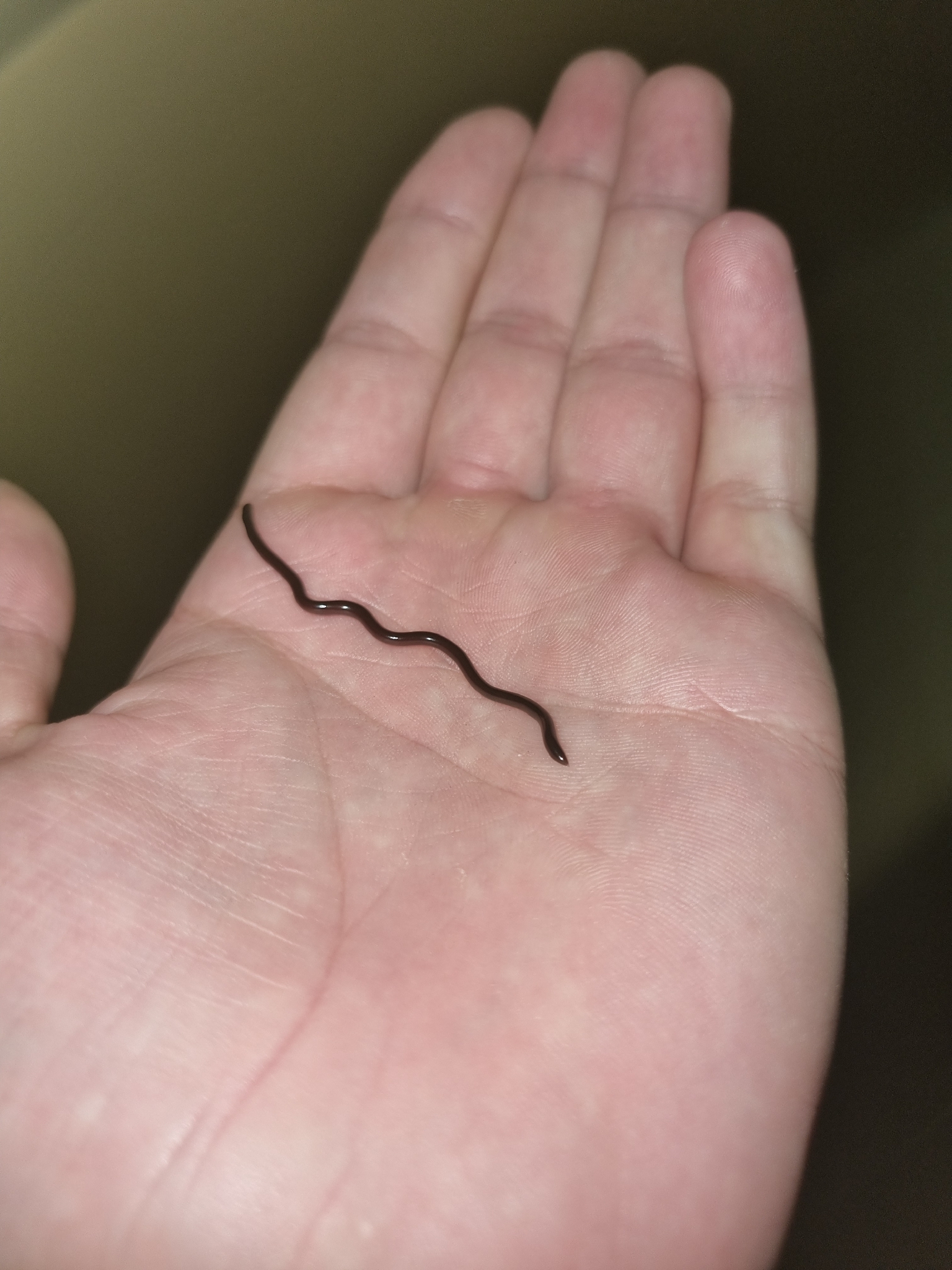
- Brahminy Blindsnake © Leo Du Toit, some rights reserved (CC BY NC)
-
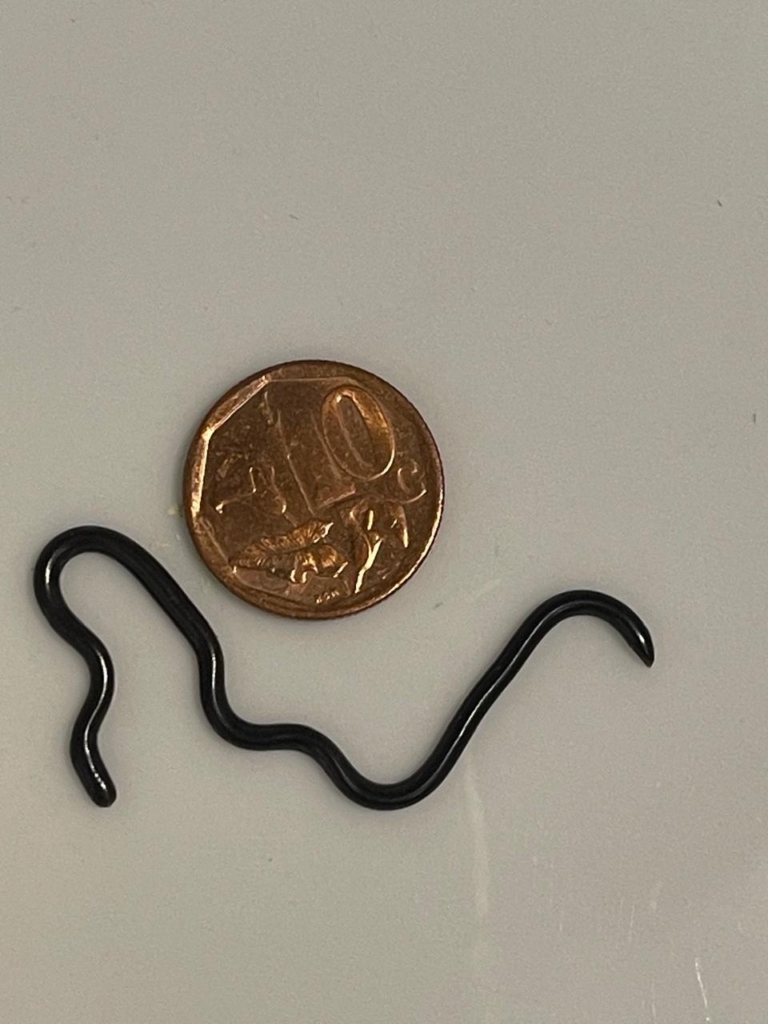
- Brahminy Blindsnake © bushtracker, some rights reserved (CC BY NC)
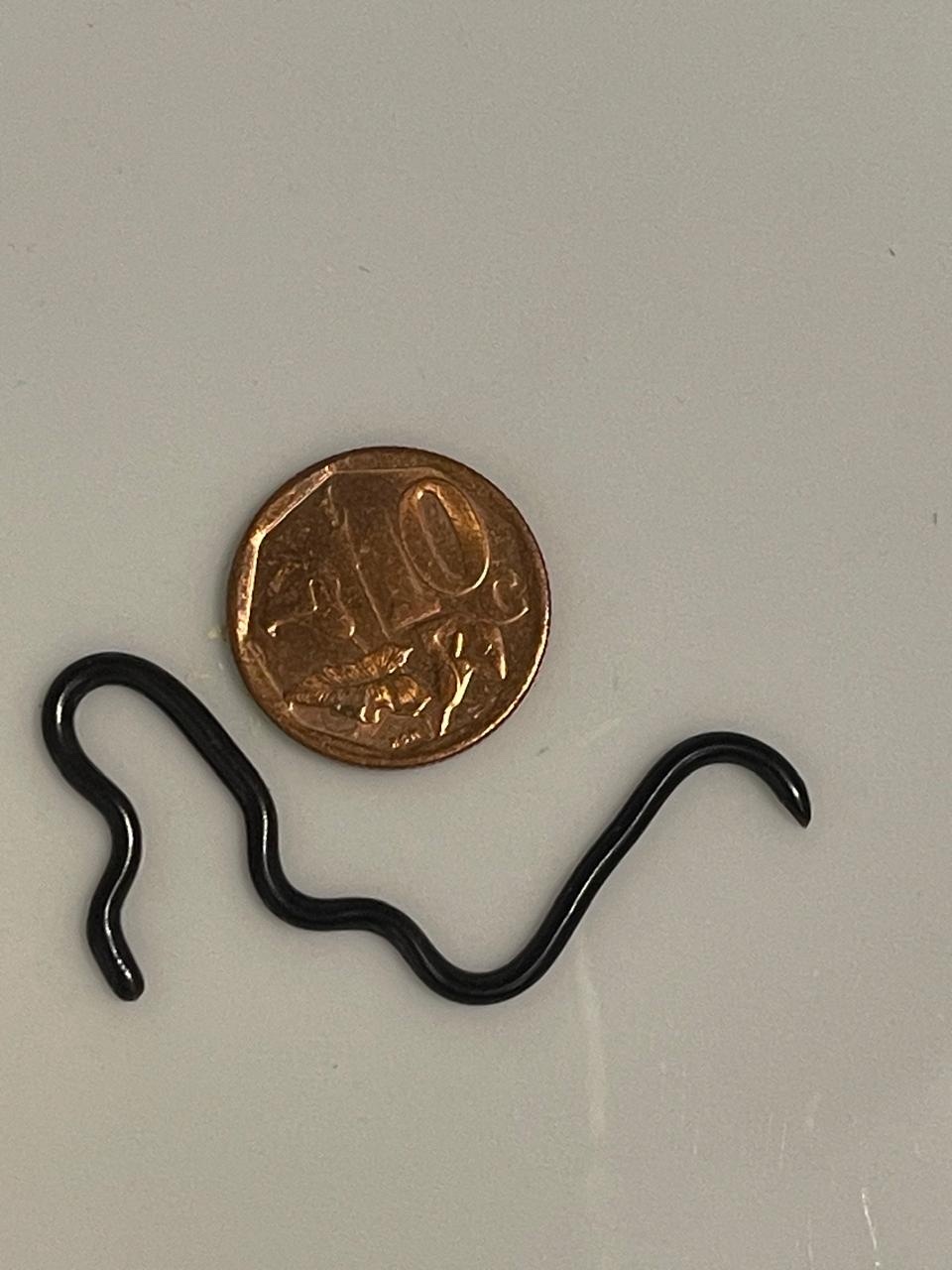
The Brahminy Blind Snake, or “Flowerpot Snake,” is the only non-native snake species with truly established, breeding populations in South Africa. Its success as an invader is attributed to parthenogenesis—an all-female reproductive strategy where a single individual can establish a new colony without the need for a mate.
- Distribution: They are primarily associated with the horticultural trade. They thrive in damp, disturbed soil environments, frequently turning up in suburban garden centers and private nurseries.
- Confirmed Presence: Established colonies are well-documented in the Cape Town metropolitan area and the coastal belt of KwaZulu-Natal, particularly in older, established suburbs (Zengeya & Wilson, 2021). Their presence is linked to the global movement of ornamental plants, where they hitchhike within soil root balls.
- Photograph & Report: To help monitor distribution and impact take clear close-up photos of the head and whole-body, note the location and upload to iNaturalist.
Pet Trade Escapes
Other exotic snake sightings in South Africa represent isolated escapes from the pet trade rather than self-sustaining wild populations.
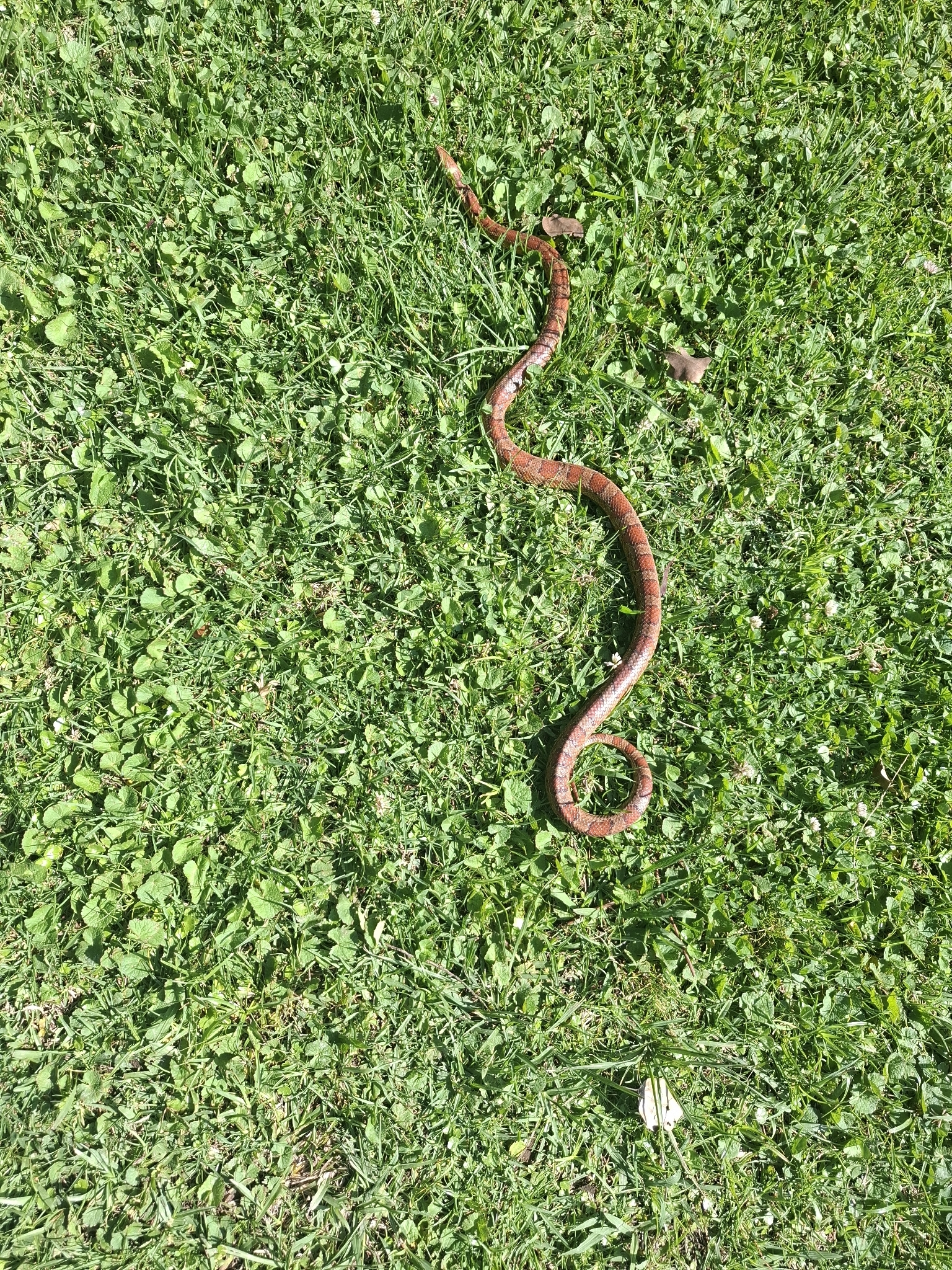
-
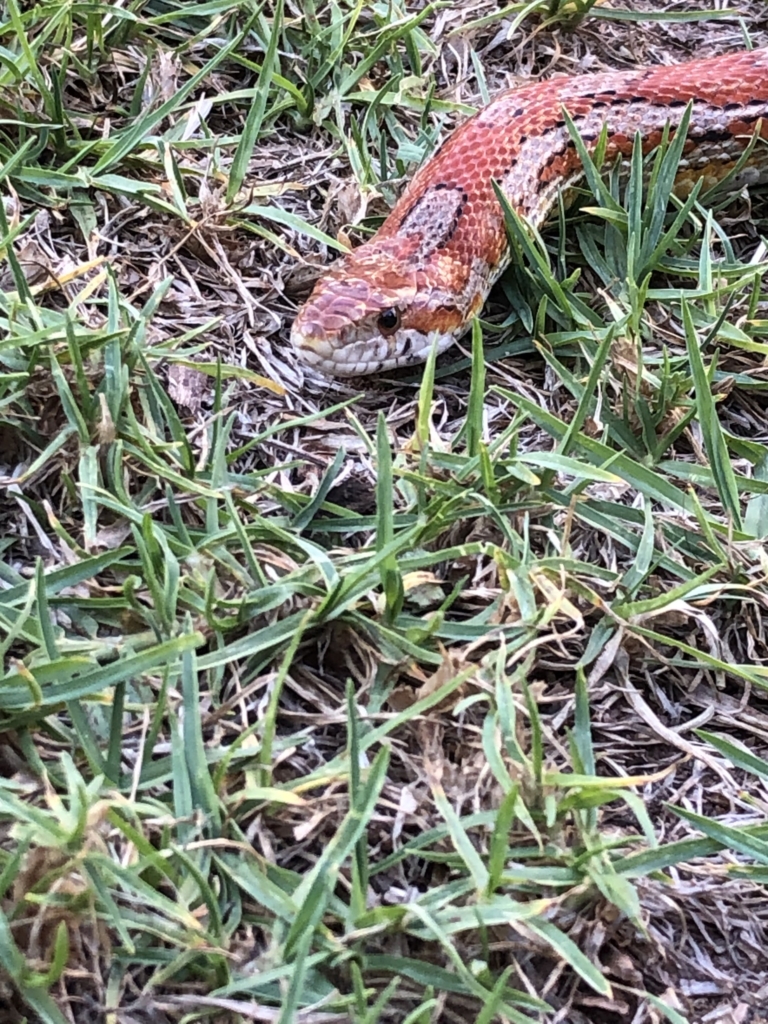
- American Cornsnake © marisjelouw from Durbanville, Western Cape, some rights reserved (CC BY NC)
-
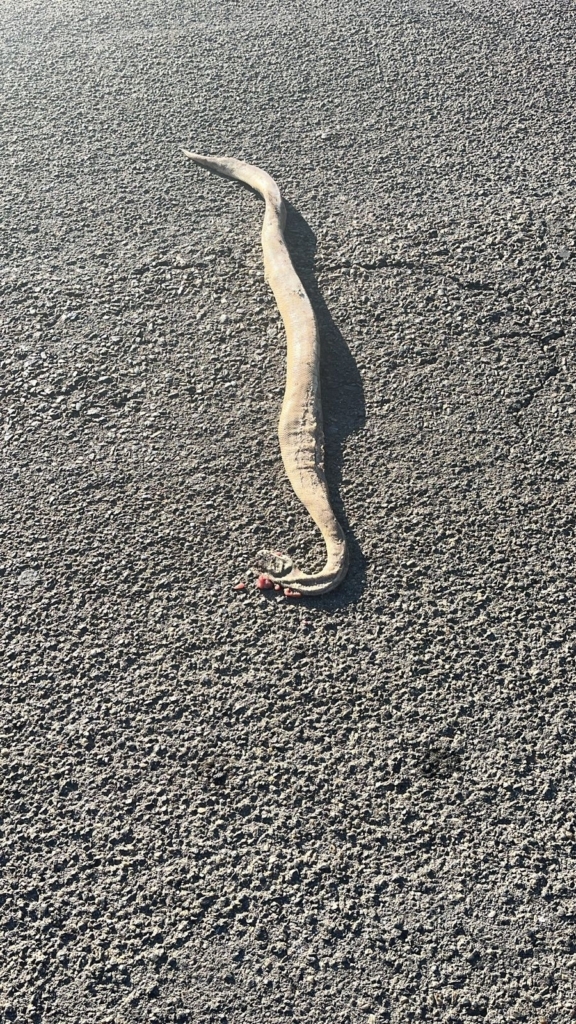
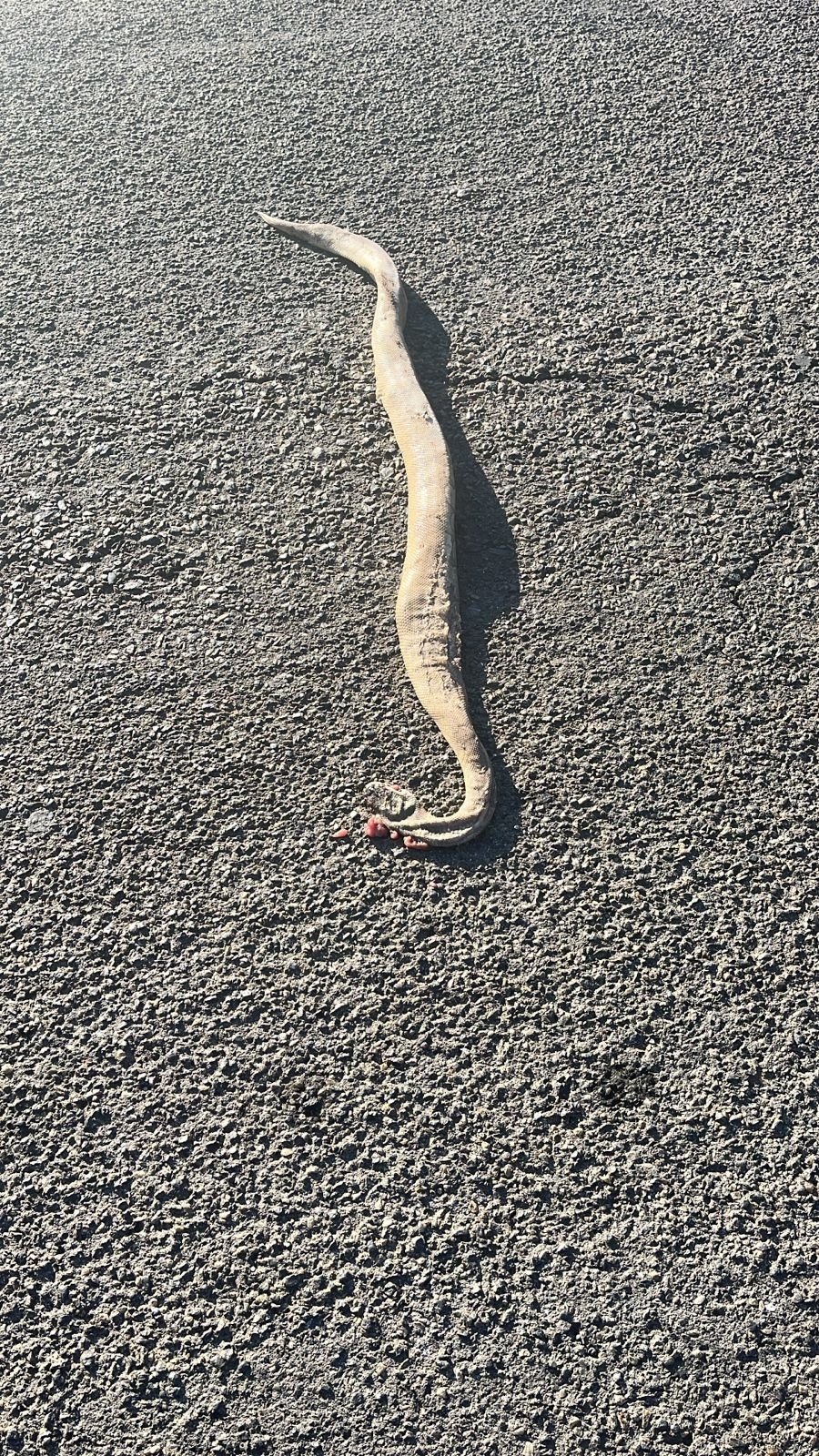
- Ball Python from near Carletonville © Kyle Campbell, some rights reserved (CC BY ND)
-
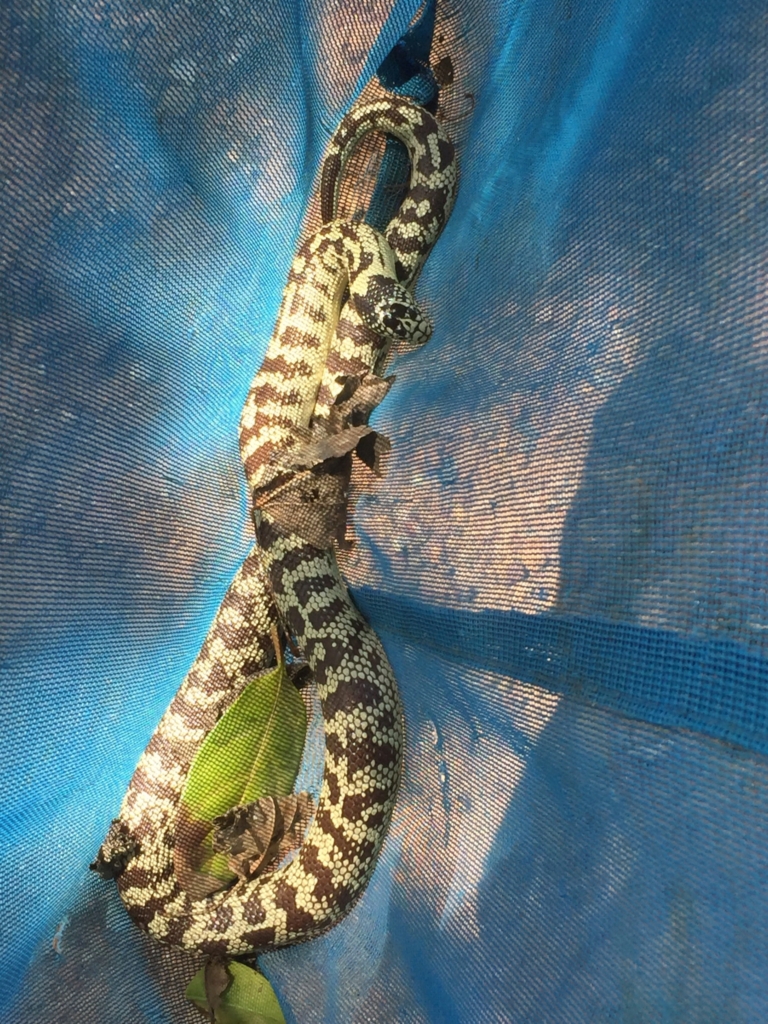
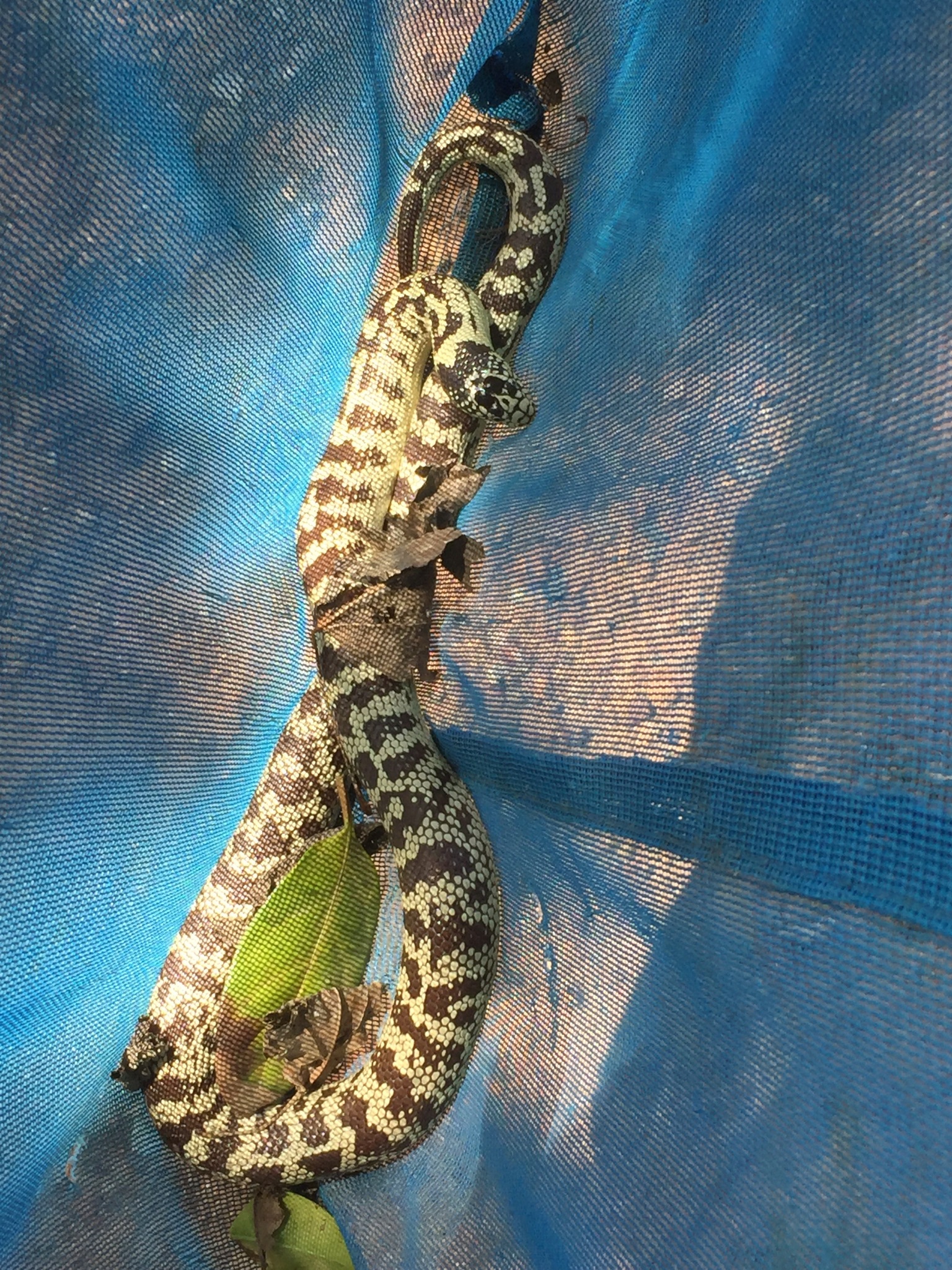
- California King Snake © Tony Rebelo, some rights reserved (CC BY SA)
-
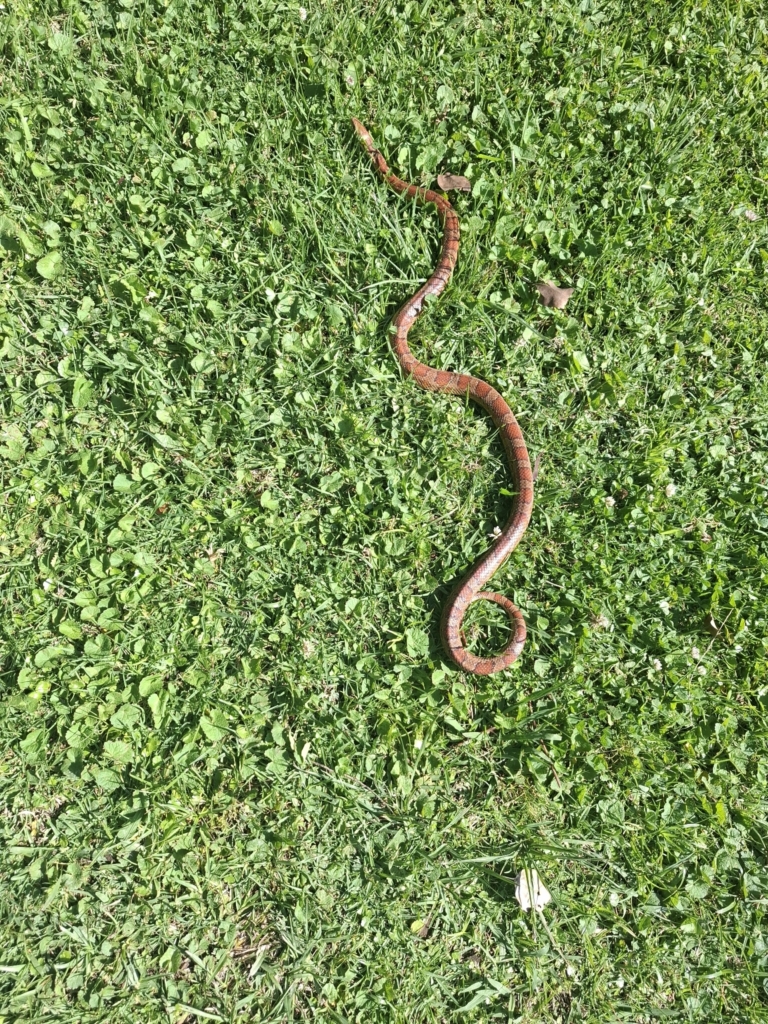
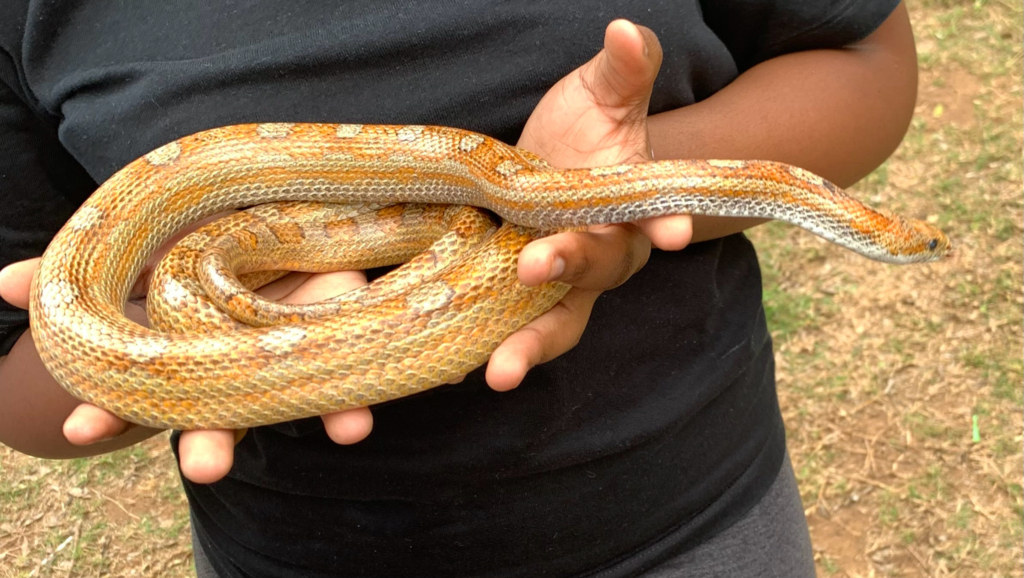
- American Corn Snake from Umvoti, Kwazulu Natal © pitjomt, some rights reserved (CC BY NC SA)
-
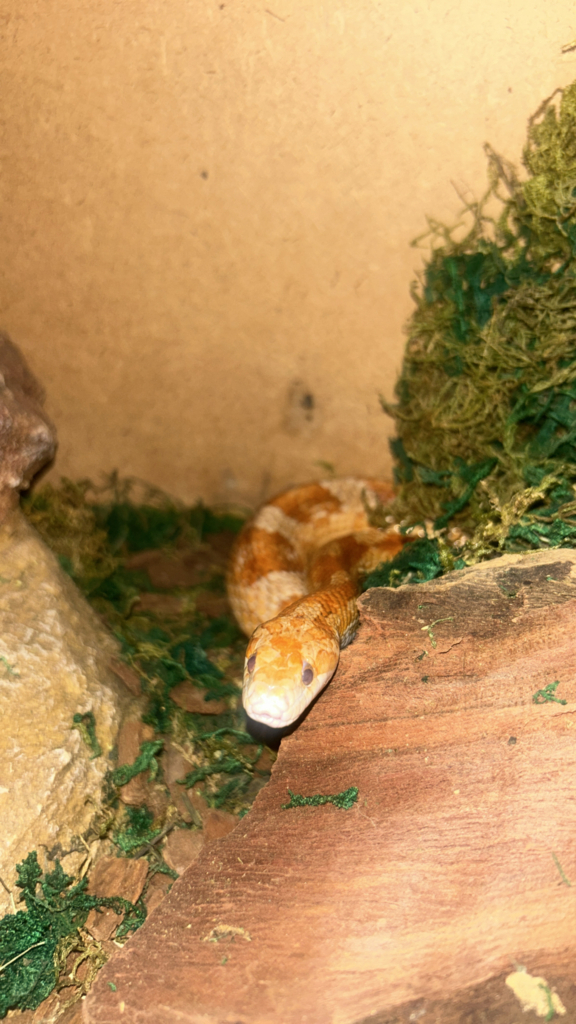
- American Cornsnake © adiliamjake from Sandton, Gauteng, some rights reserved (CC BY NC)
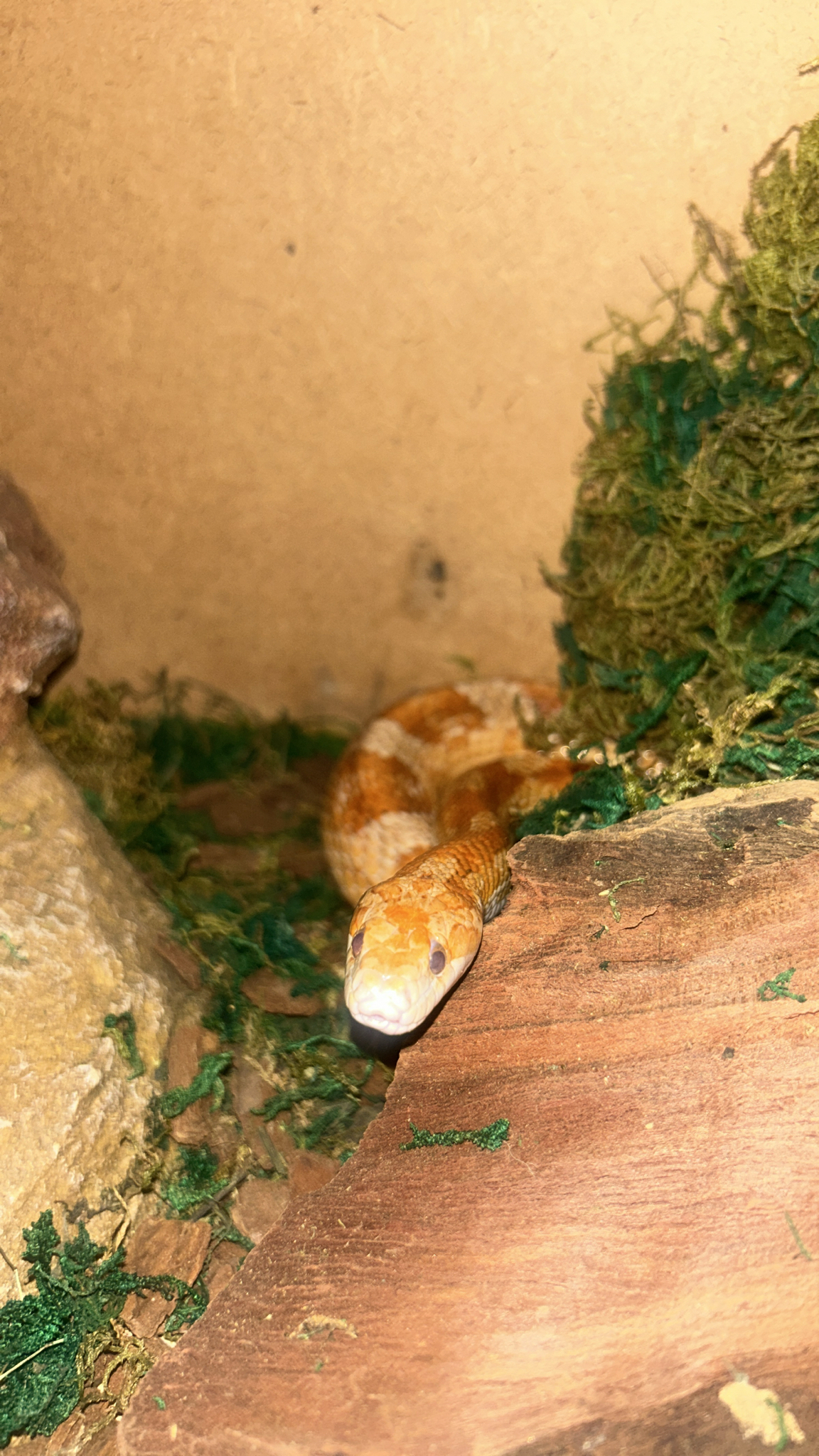
-
- American Cornsnake © Lindelwa Sengiphiwe from Berea, KwaZulu Natal, some rights reserved (CC BY NC)
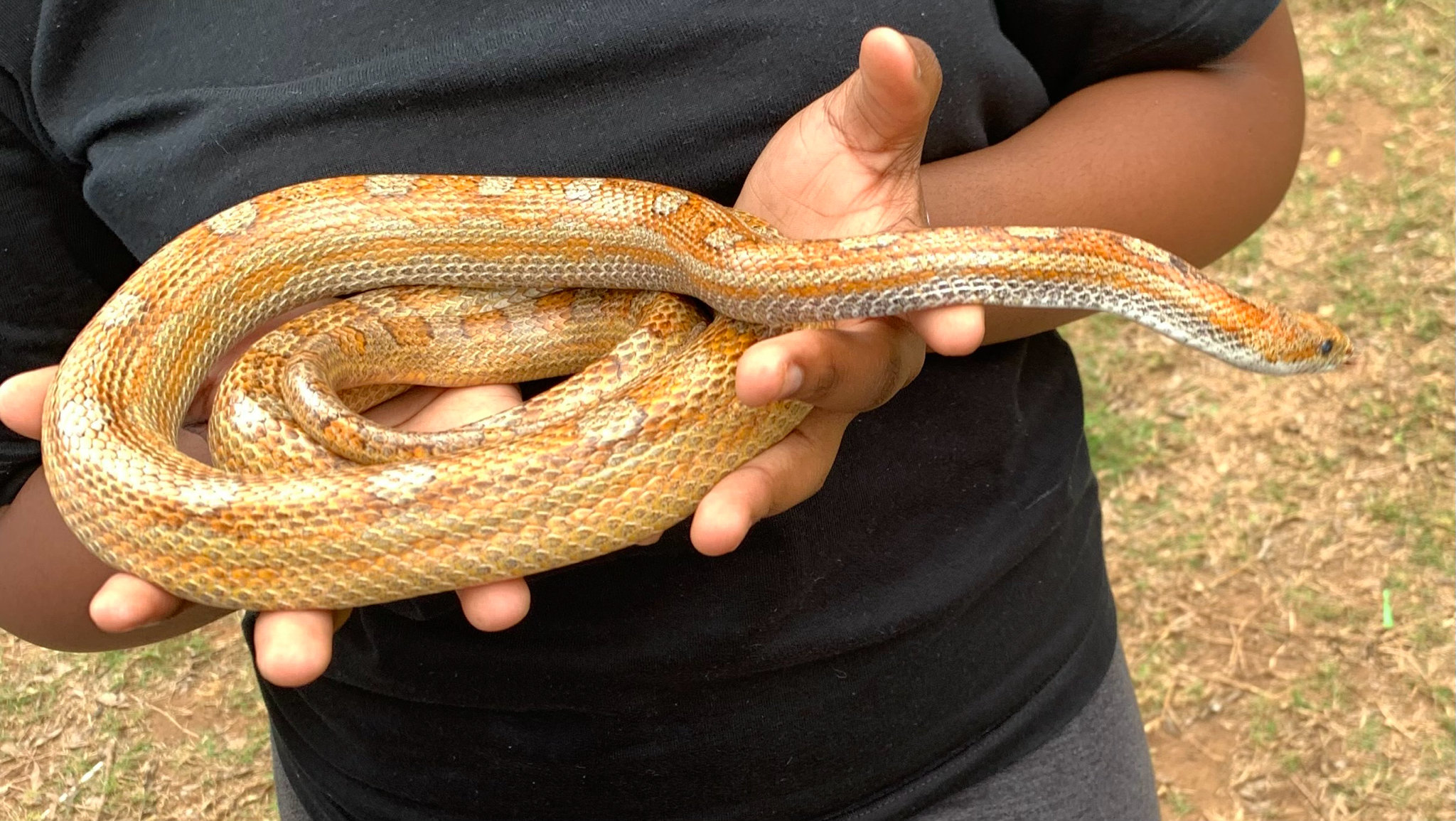
Common and rare “Escaped Pet” Sightings:
| Species | Native Range | Status/Context |
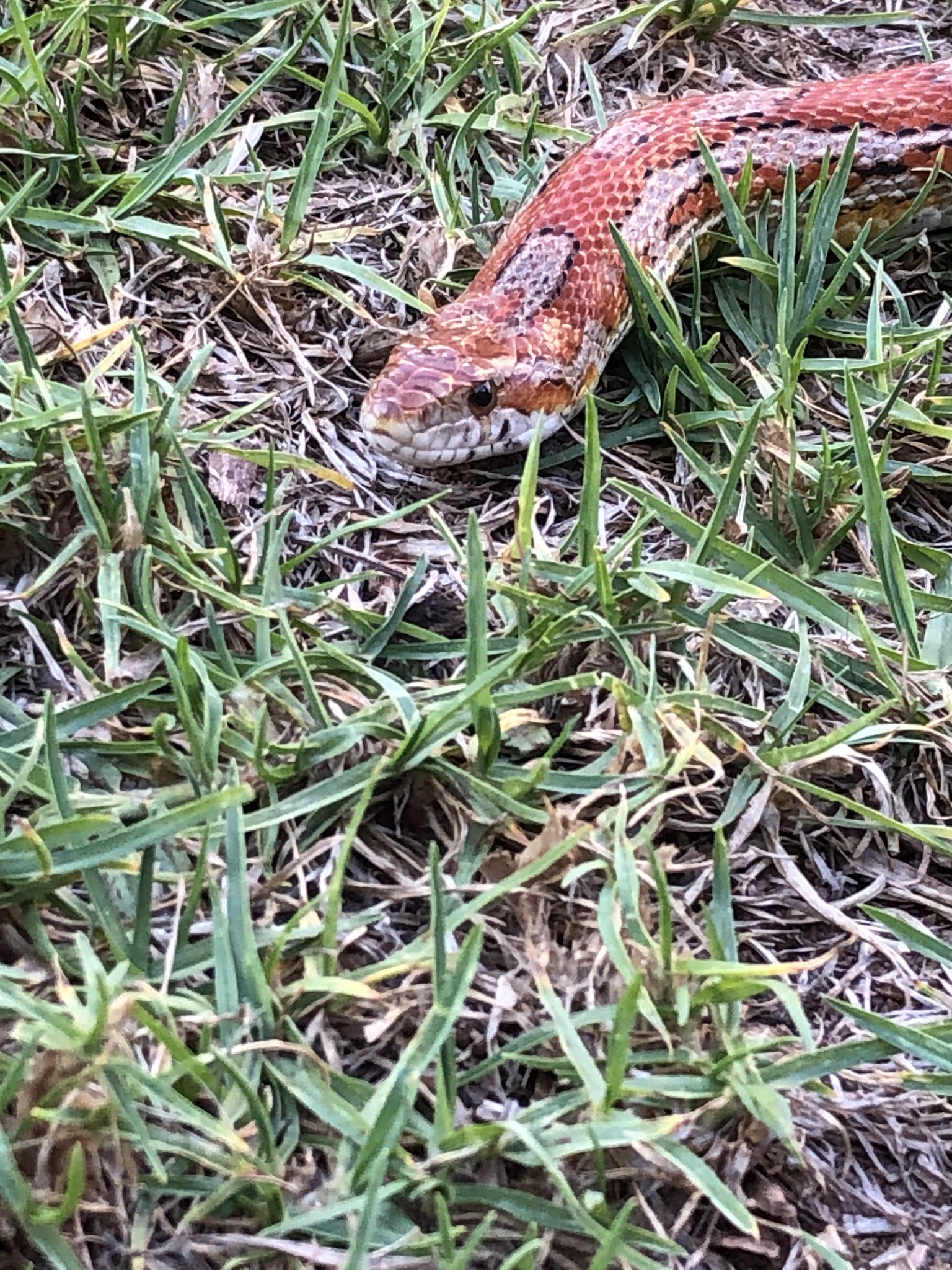
| Corn Snake (Pantherophis guttatus) | North America | Frequently encountered as escaped pets in urban centers; no breeding populations. |
| Ball Python (Python regius) | Central & West Africa | Several reports; fails to compete with the native Python natalensis. |
| California Kingsnake (Lampropeltis californiae) | North America | Occasionally reported escapes; potential for competition but not established. |
| Honduran Milksnake (Lampropeltis triangulum hondurensis) | Central America | Very few records; no threat of invasion. |
| Anaconda (Eunectes murinus) | South America | Very few records; no potential for survival in local climates. |
| Boa imperator (Boa imperator) | Central & South America | Occasional reports from urban areas. |
| Burmese Python (Python bivittatus) | Southeast Asia | Very few records; no immediate threat of invasion. |
| White-lipped Tree Viper (Trimeresurus albolabris) | Southeast Asia | Around 1988 one was found near Kempton Park, Johannesburg. Venomous. |
| Western Diamondback Rattlesnake (Crotalus atrox) | North America | Some reports from Fourways area from a long time ago. Venomous. |
Expert Advice: If you encounter a snake that appears unusual, especially one with “exotic” features, avoid handling it. The primary risks are being bitten by an exotic venomous snake, and with antivenom availability unlikely, could have fatal consequences. Also, a biosecurity risk of escaped exotics is the potential to become established and introduce foreign pathogens—such as Inclusion Body Disease—to our highly adapted native snake populations.
How to Report Sightings
If you capture or photograph a suspected exotic snake, community-led identification groups are an excellent resource for verification:
- Document it: Take clear, high-resolution photos of the head and mid-body.
- Upload for ID: You can post your photos to the Snakes and Snakebite of Africa Facebook Group for assistance from experts and experienced enthusiasts.
- Use iNaturalist: For permanent, geographic records, upload your sighting to iNaturalist; this is the primary tool used by researchers to track species distributions in South Africa.
Primary Sources
- Zengeya, T. A., & Wilson, J. R. (2021). The status of biological invasions and their management in South Africa. South African National Biodiversity Institute (SANBI).
- Kopij, G. (2026). Herping the African Continent: Alien Amphibians and Reptiles in sub-Saharan Africa. Biology.