Key Characteristics & Identification
Unlike its more ubiquitous relative, the Brown House Snake (Boaedon capensis), Lamprophis fiskii exhibits a highly distinctive, vibrant color profile.
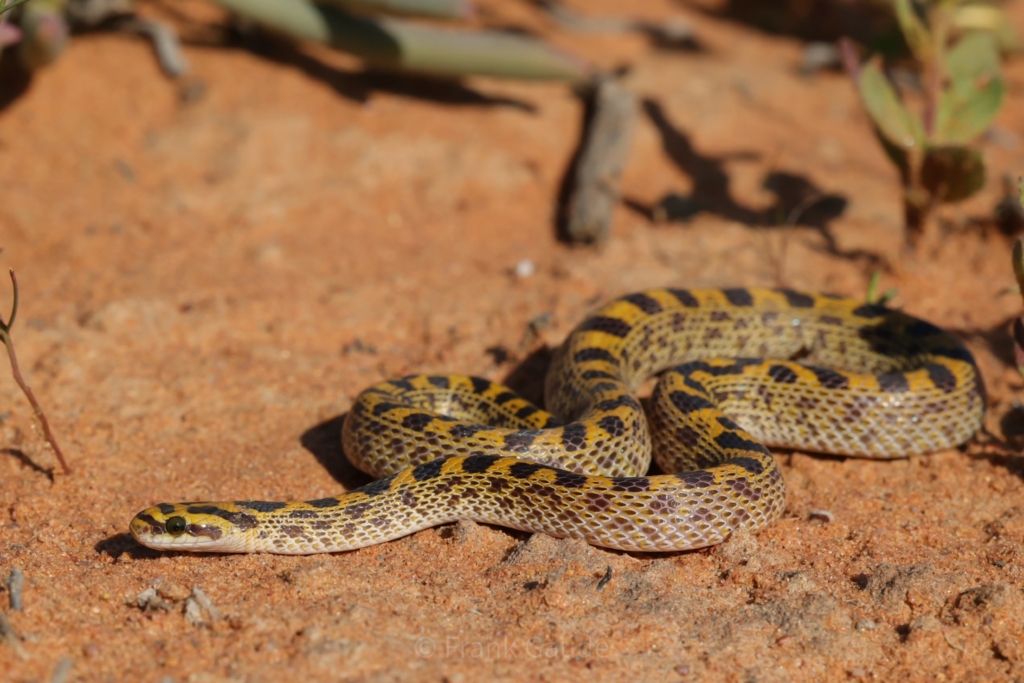
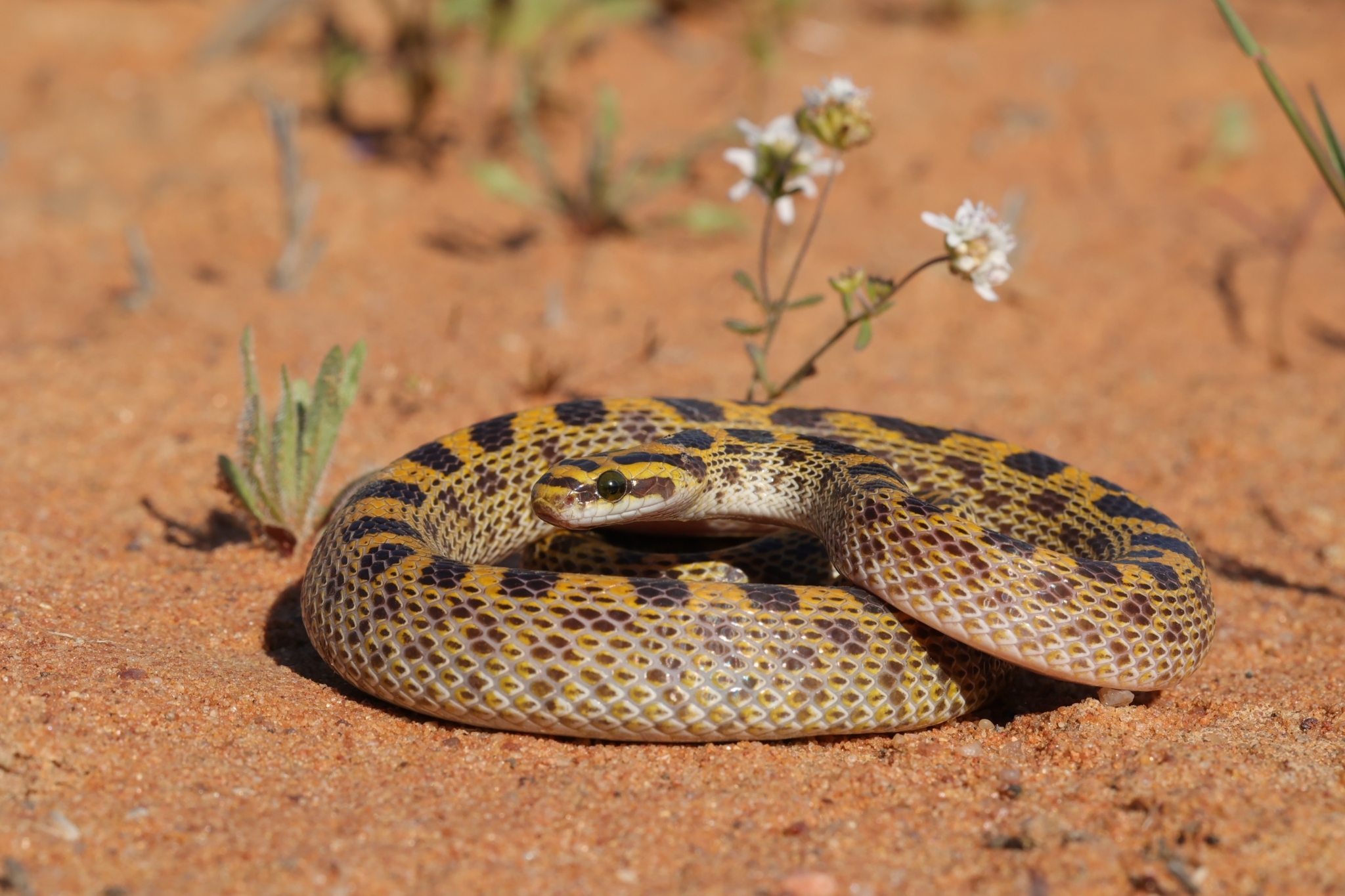
Coloration: The dorsal base color ranges from a rich lemon-yellow to pale orange, sharply contrasted by a series of dark purple-to-brown paired blotches running down the spine. The flanks are highly mottled, with individual scales frequently showing dark edging.
Size: This is a notably small lamprophiid. Adults average between 25 and 35 cm in total length, rarely maxing out at 40 cm.
Head and Eyes: It features a distinctively rounded snout and large, prominent eyes with vertical pupils, typical of nocturnal hunters navigating arid environments.
Distribution and Habitat
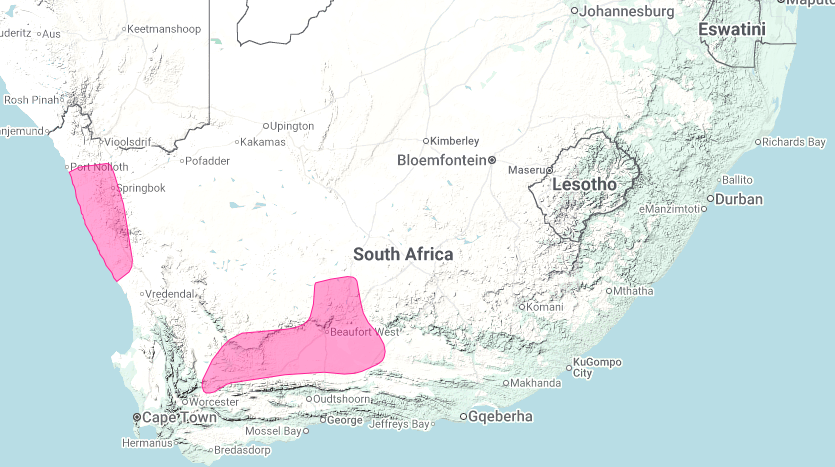
Fisk’s House Snake is endemic to South Africa, specifically occupying the arid, sparsely populated western regions. Its range is highly fragmented, localized primarily within:
The Great Karoo (Western Cape)
Parts of the Northern Cape (with historical records extending as far north as Springbok in Namaqualand)
The preferred microhabitat consists of arid Karoo scrubland, where it utilizes loose soil, rock crevices, and abandoned rodent burrows to escape the intense daytime heat.
Behavior and Life History
Because of its strictly nocturnal and highly secretive lifestyle, field observations of live individuals are exceptionally rare. The vast majority of distribution records are derived from specimens found crossing roads at night or retrieved as roadkill.
Diet
Wild dietary records are sparse, though a preserved museum specimen was famously documented containing a lizard in its stomach. In captive or controlled settings, they are known to readily accept small geckos and skinks.
Defense
Lamprophis fiskii is completely harmless and non-venomous. When threatened or accosted, it rarely attempts to bite. Instead, it relies on erratic defensive displays, moving with short, sharp, jerky movements. It may hiss while tightly coiling and uncoiling its body, or loosely roll its tail to protect its head.
Reproduction
Like other members of the Lamprophis genus, it is oviparous (egg-laying). Data on clutch sizes is limited, but a historical captive breeding record documented a female laying 8 eggs.
Conservation Status
Currently, the species is categorized as Least Concern (LC) on the regional IUCN Red List. However, its true population density is incredibly difficult to assess due to its fossorial tendencies. The primary threat facing localized populations is vehicular mortality on roads cutting through the Karoo, alongside habitat degradation from intensive agricultural expansion in the western regions.
-
- Fisk’s House Snake © Frank Gaude, some rights reserved (CC-BY-NC)
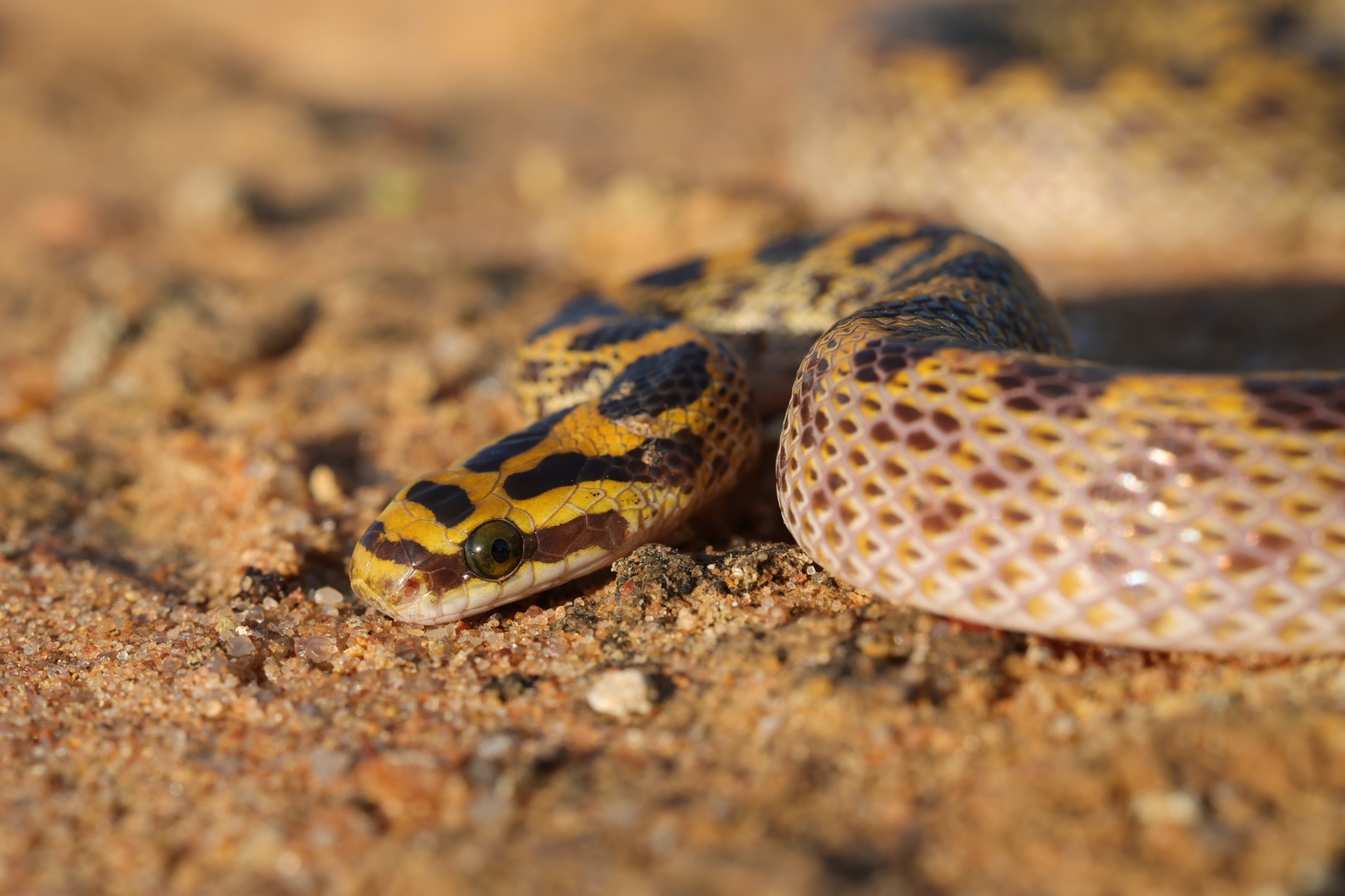
-
- Fisk’s House Snake © Frank Gaude, some rights reserved (CC-BY-NC)
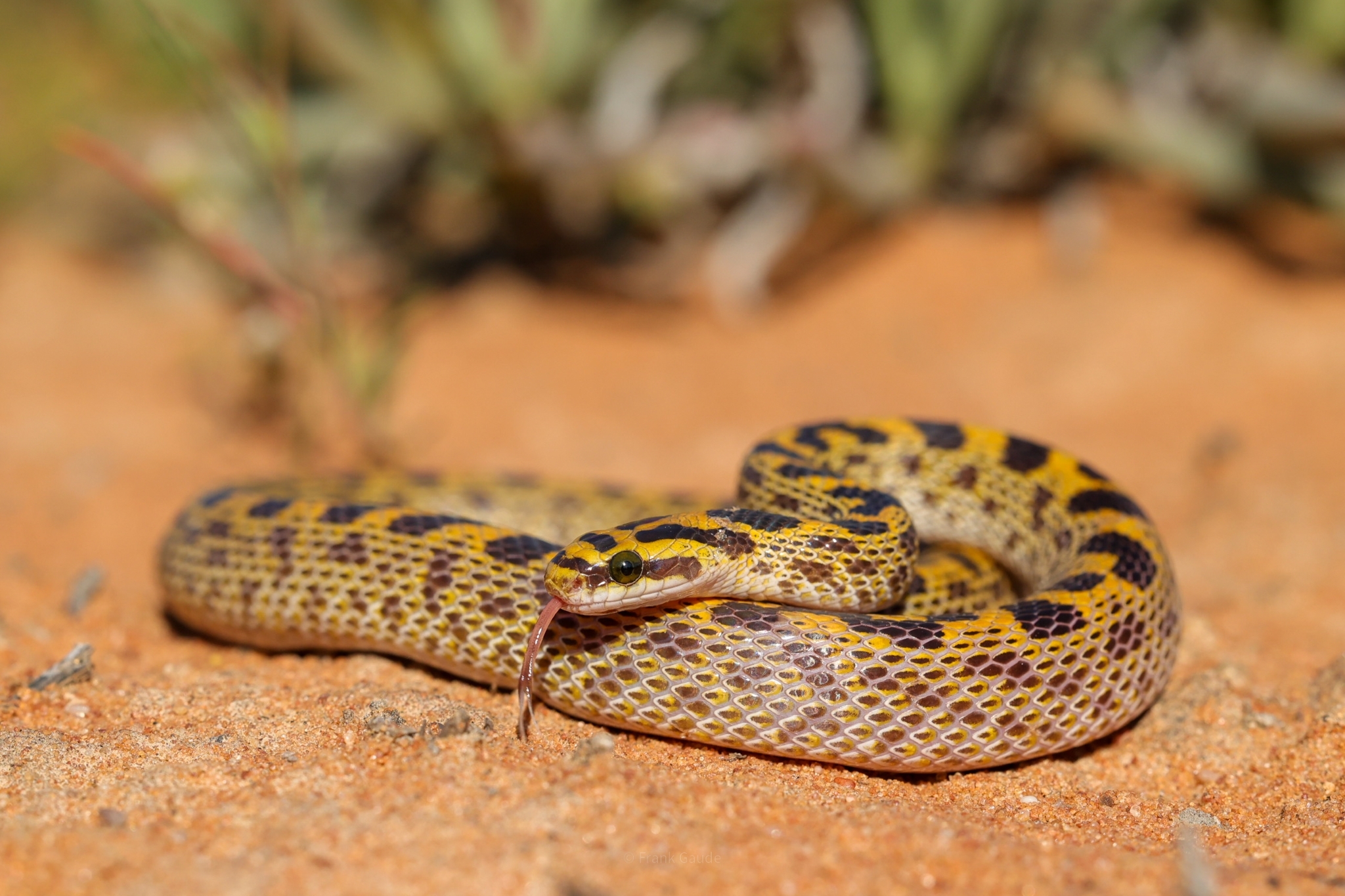
-
- Fisk’s House Snake © Frank Gaude, some rights reserved (CC-BY-NC)
-
- Fisk’s House Snake © Frank Gaude, some rights reserved (CC-BY-NC)
-
- Fisk’s House Snake © Frank Gaude, some rights reserved (CC-BY-NC)
-
- Fisk’s House Snake © Frank Gaude, some rights reserved (CC-BY-NC)