
Designing the Microclimate, Furnishings & Hygiene Protocols
Snakes are ectothermic (cold-blooded), meaning they cannot regulate their own body temperature. They rely entirely on their environment to warm up or cool down. Because of this, you cannot simply put a snake in a box and leave it at room temperature.
Thermal Gradients
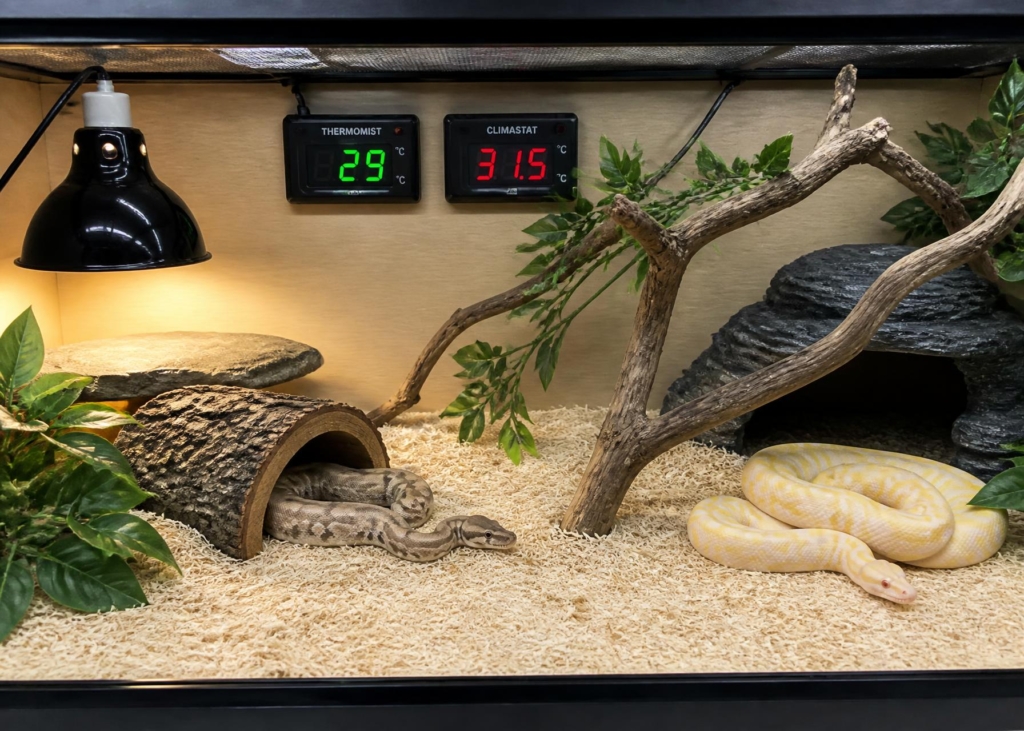
Your enclosure needs to feature a thermogradient—a warm side and a cool side:
- The Warm Side: Use an under-tank heating pad or an overhead ceramic heat emitter controlled by a thermostat to prevent overheating. This side helps them digest their food.
- The Cool Side: This allows the snake to escape the heat and cool its core temperature down.
- The Golden Rule of Hides: You must provide at least two identical hiding spots—one on the hot side and one on the cool side. If the snake has to choose between feeling safe or being at the right temperature, it will choose safety, which can lead to illness.
Enclosure and Tub Furnishings
Whether housing your snake in a glass terrarium, a wooden vivarium, or a plastic tub system, internal furnishings must balance security, safety, and hygiene.
- Stable, Non-Tip Water Bowls: Water dishes must be heavy or structurally anchored (e.g., heavy ceramic dishes, resin rock bowls, or wide-base plastic crocks). Lightweight or tall dishes will be knocked over as the snake moves, soaking the substrate. Excess moisture leads directly to belly rot (ulcerative dermatitis) and respiratory distress. Ensure the bowl is large enough for soaking during a shed cycle, but weighted so it cannot tip under the snake’s weight.
- Secure Hides: Hides should fit the snake snugly—snakes feel secure when their back and sides touch the walls of the hide. Plastic plant saucers with entry holes cut out, resin rock caves, or commercial black hide boxes work exceptionally well.
Sterilizing and Reusing Furnishings (Logs, Decor, and Hides)
Moving branches, cork bark, or wooden decor from one cage to another without complete sterilization is a primary vector for parasites (like snake mites) and bacterial infections.
- The Bleach Soak & Sun-Drying Protocol: For natural wooden logs, branches, or reusable hides being transferred between cages, soak them thoroughly in a strong household bleach solution (1 part bleach to 10 parts water) for at least 30 to 60 minutes. This breaks down organic matter, bacteria, and parasite eggs.
- Rinsing and Sun-Drying: After soaking, rinse the decor thoroughly in fresh water until the chlorine smell fades. Place the items in direct, intense sunlight to dry completely for 24 to 48 hours. Sunlight provides natural UV sterilization, and complete drying ensures no residual bleach fumes linger in the wood pores before returning the item to a snake’s enclosure.
- Non-Porous Items: Plastic hides and resin bowls should be scrubbed with a veterinary-grade disinfectant (such as F10 SC) or diluted bleach, rinsed thoroughly, and dried before re-use.
Feeding and Nutrition
Most common pet snakes eat rodents, typically mice or rats.
Important Safety Note: Always feed your pet snake frozen-thawed prey, never live animals. Live rodents will fight for their lives and can severely bite, scratch, or even kill a pet snake.
A young snake usually eats once every 5 to 7 days, while an adult may only need to be fed once every 10 to 14 days. Always ensure a heavy, tip-proof bowl of fresh water is available at all times.
South African Provincial Permit Rules
Reptile legislation varies drastically depending on the province:
- Gauteng, Limpopo, Free State, & Mpumalanga: Unless restricted/invasive, any exotic snake species is fully allowed to be kept without local keeping permits or facility inspections. Indigenous species require full permitting.
- KwaZulu-Natal (KZN): Requires no permits to keep or catch either exotic OR indigenous snakes, unless the animal is classified as a protected species or listed as a restricted/invasive alien species under national (NEMBA) regulations.
- North West: Functions under similar principles to GP/Limpopo, allowing exotic species without keeping permits, but strictly regulating indigenous wildlife under provincial conservation frameworks.
- Western Cape, Eastern Cape, & Northern Cape: ALL snake species require permits (possession/captivity, transport, and trade), regardless of whether they are exotic or indigenous.
- Import Quarantine Requirements: National regulations require a mandatory 30-day quarantine period, within in a Government approved quarantine facility, for all legally imported reptiles entering the country.
National Alien and Invasive Species (AIS) Regulations
Regardless of your province, certain exotic species are classified under national law as invasive or restricted. For example, some large constrictors (like the Burmese Python) require specific Permits for Alien and Invasive Species to import, breed, or move across provincial lines.
Before You Buy: Always ask your seller or breeder for proof of their legal breeding or import permits. A legitimate dealer will always be able to provide the exact paperwork required to ensure your new pet is legally accounted for.
The Importance of Detailed Record Keeping
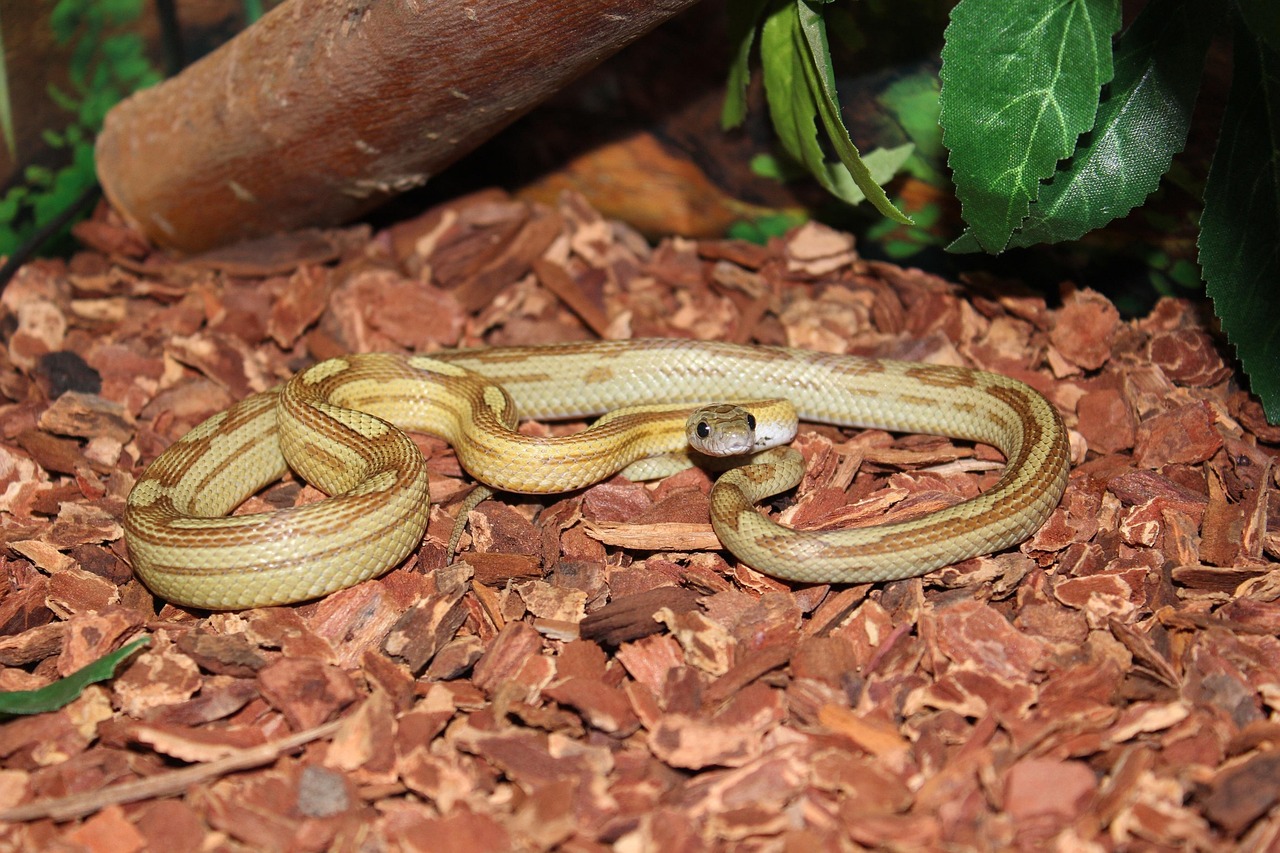
Whether you are keeping a single corn snake as a pet or managing a larger collection of indigenous species, maintaining a dedicated records log is one of the pillars of responsible husbandry. In the reptile hobby, memory is a poor substitute for accurate documentation.
Keeping a clean, chronological history for each animal in your care is vital for three major reasons:
Tracking Health and Growth Dynamics
Snakes are masters of hiding illness. Subtle shifts in behavior or physiology are often the only early warning signs you will get. By tracking routine metrics, you can easily spot trends before they become critical health issues:
- Feeding Frequency: Documenting when your snake eats, the size of the prey, and any refused meals. Consistent refusal of food can point to incorrect enclosure temperatures, stress, an impending shed cycle, or underlying parasites.
- Shedding Cycles: Note the date and quality of every shed. A clean, one-piece shed indicates optimal humidity. Frequent patchy, retained sheds (dysecdysis) signal that your microclimate needs immediate adjustment.
- Weight and Growth: Weighing your snake monthly using a digital gram scale helps track its growth curve and ensures it is maintaining a healthy body condition rather than becoming obese or emaciated.
Veterinary Care and Diagnosis
If your snake ever requires a visit to an exotic veterinarian, having a detailed printout or digital log of their history is invaluable. It removes the guesswork for the vet, allowing them to look directly at historical feeding patterns, recent weights, and shed frequencies to diagnose issues faster and more accurately.
Regulatory Compliance and Proof of Captivity
In South Africa, meticulous record-keeping is not just good practice—it is often a legal requirement.
- Permit Audits: Provincial nature conservation authorities have the right to inspect permit holders. They will expect to see an up-to-date registry of every animal on your permits.
- Proof of Captive Breeding: If you keep indigenous species, you must be able to legally account for every individual. If a snake lays eggs, you need to document the clutch size, incubation dates, and hatching dates. This “paper trail” serves as definitive proof that your animals are legally captive-bred and were not poached from the wild.
Choosing Your Logging System: Electronic vs. Old-School Paper
How you maintain these records comes down to personal preference—what matters most is consistency.
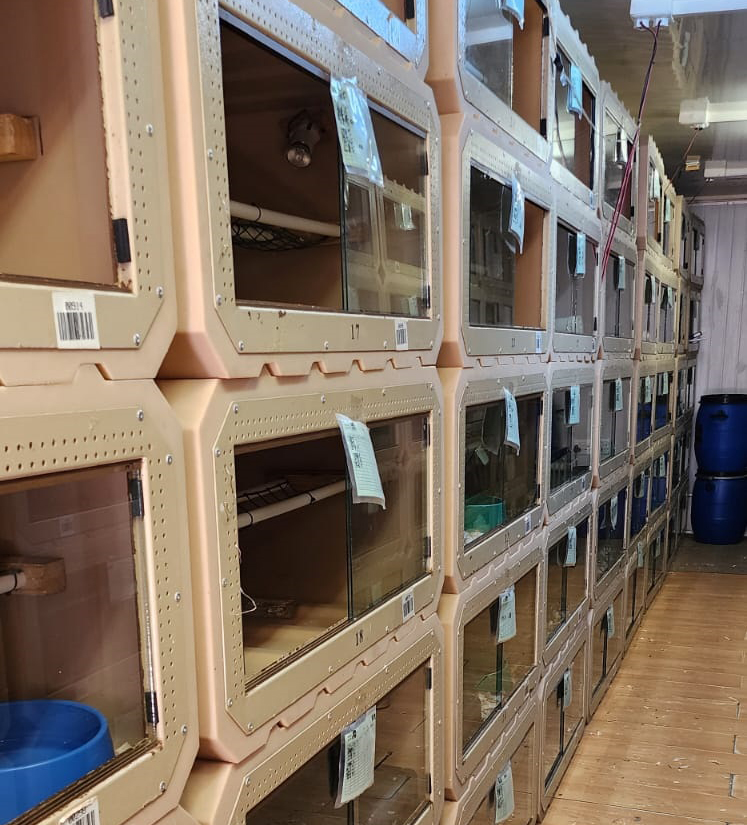
- Electronic Methods & Tracking Apps: Modern reptile management platforms (such as Husbdr, Herpstat, or ExoticKeeper) allow keepers to log events digitally. Some advanced setups use scannable QR code stickers attached directly to the tub or enclosure. Scanning the QR code with a phone instantly opens the snake’s profile to log feedings, sheds, weights, or cleaning in seconds.
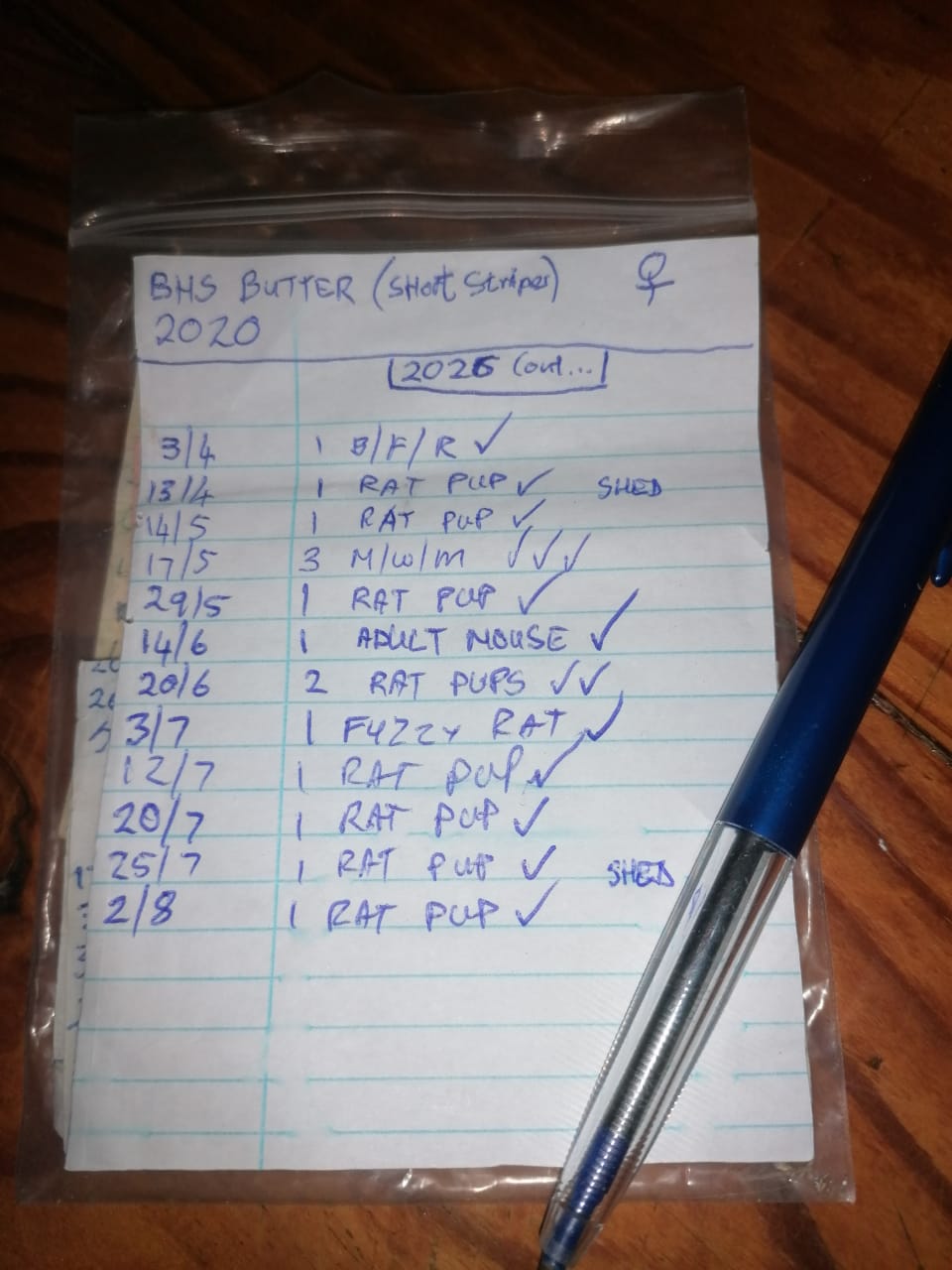
- The Practical “Old-School” Card Method: If you don’t use mobile apps or don’t have access to a printer to create formal computer-printed sheets, a simple handwritten system works brilliantly.
A Tried-and-Tested Paper Setup:
Use standard A6 sheets of fine-lined paper. At the top of the card, write the core animal details: Name, Species, Sex, ID#, and Acquisition / Born / Hatched Date.
Below the header, draw two columns: a narrow left column for the Date and a wider right column for the Event. Events can include Blue, Shed, Food, Mate, Deworm, or specific feeder sizes (e.g., f/m for fuzzy mouse, p/m for pinkie mouse). Next to food entries, mark a simple X or Tick, along with any relevant comments.
Keep the A6 sheet inside a small ziplock money pouch placed right next to (or on) the enclosure or tub. Fold completed past sheets closed and slip them behind the active sheet inside the bag. If you ever rehome or sell the snake, the entire physical feeding chart moves along with the animal directly to the new owner—providing them with a complete, unbroken history.
Strict Quarantine Protocols: Protecting Your Existing Collection
If this is your first snake, you can set up their enclosure in your main living space right away. However, if you already have reptiles at home, bringing in a new snake requires a strict quarantine protocol.
Introducing a new animal directly to your existing collection without a quarantine period is one of the most common ways diseases and parasites spread. Many reptile pathogens can decimate an entire collection before you even realize a new animal is sick.
Why Quarantine is Non-Negotiable
Many common reptile ailments have incubation periods that last weeks or even months. A snake can look perfectly healthy at a reptile expo or pet shop, only to manifest signs of illness once stress triggers a dip in its immune system.
By implementing a quarantine, you protect your established animals from devastating threats, including:
- Mites (Ophionyssus natricis): Tiny, highly contagious external parasites that feed on snake blood and vector disease.
- Respiratory Infections (RI): Highly contagious bacterial or viral infections of the lungs and airways.
- Inclusion Body Disease (IBD): A fatal, untreatable retrovirus found primarily in boid and python species.
- Cryptosporidiosis: A highly resilient protozoan parasite that causes severe gastrointestinal destruction and has no reliable cure.
The Rules of a Solid Quarantine Protocol
To run an effective quarantine, you must implement the following physical and behavioral boundaries for a minimum of 90 days (though 180 days is highly recommended for advanced keepers or when importing animals):
- Physical Isolation (The “Different Room” Rule)
The quarantine enclosure must be kept in an entirely different room from your main reptile collection.
- Airflow: Ideally, choose a room with a separate ventilation source or keep the door closed at all times. Air drafts can easily carry airborne pathogens or wandering snake mites from room to room.
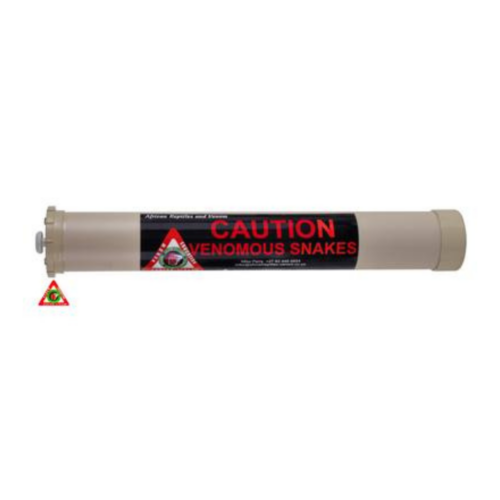
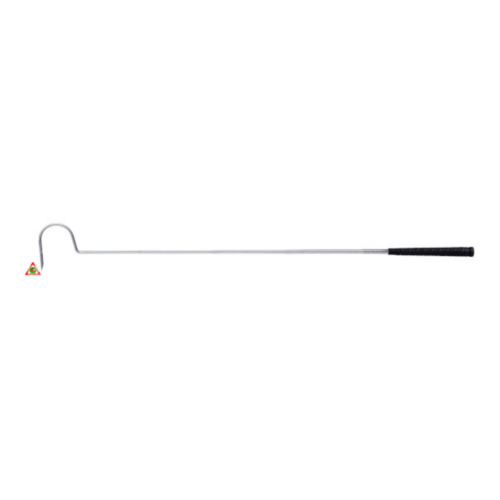
- No Shared Equipment: Do not share feeding tongs, snake hooks, water bowls, or cleaning supplies between your quarantine snake and your existing animals.
- The Clean-Simple Enclosure Setup
While you want your quarantine snake to be comfortable, their temporary enclosure should be designed for high visibility and easy sanitization.
- Substrate: Use plain white paper towels as substrate. Avoid loose soils or wood chips during this phase. White paper towels make it incredibly easy to spot snake mites, abnormal feces, or discharge.
- Simplified Decor: Use cheap, easily sanitizable hides (like plastic bowls with a doorway cut out) and simple water dishes. Avoid complex, porous wooden branches or cork bark that cannot be easily bleached or baked.
- Strict Husbandry Workflow
Always handle your reptiles in a specific order to prevent cross-contamination:
- Clean to Dirty: Always feed, clean, and handle your established, healthy reptile collection first.
- Quarantine Last: Only interact with your quarantined snake at the very end of your daily routine.
- Hygiene: Once you have touched the quarantine snake, its enclosure, or its equipment, thoroughly wash and sanitize your hands and arms. Change your clothes if you had the quarantine snake draped over your shoulders.
What to Look For During Quarantine
During the 90-day isolation period, monitor the new arrival daily for any of the following red flags:
- Small, moving black or red specks on the snake or paper towels (mites).
- Frequent soaking in the water bowl (often a sign of mites or high heat stress).
- Bubbles, mucus, or clicking/wheezing sounds from the nose or mouth (respiratory infection).
- Regurgitated meals or abnormally foul-smelling, loose feces.
- Unusual neurological behavior, such as “star-gazing” (staring straight up for no reason) or an inability to right itself when turned upside down.
If your new snake completes its 90 days with a clean bill of health, consistent feeding, perfect sheds, and no signs of disease, it can finally be introduced to your main reptile room. Taking these precautions may seem tedious, but it is the single best way to ensure your passion for keeping snakes remains safe, ethical, and successful!