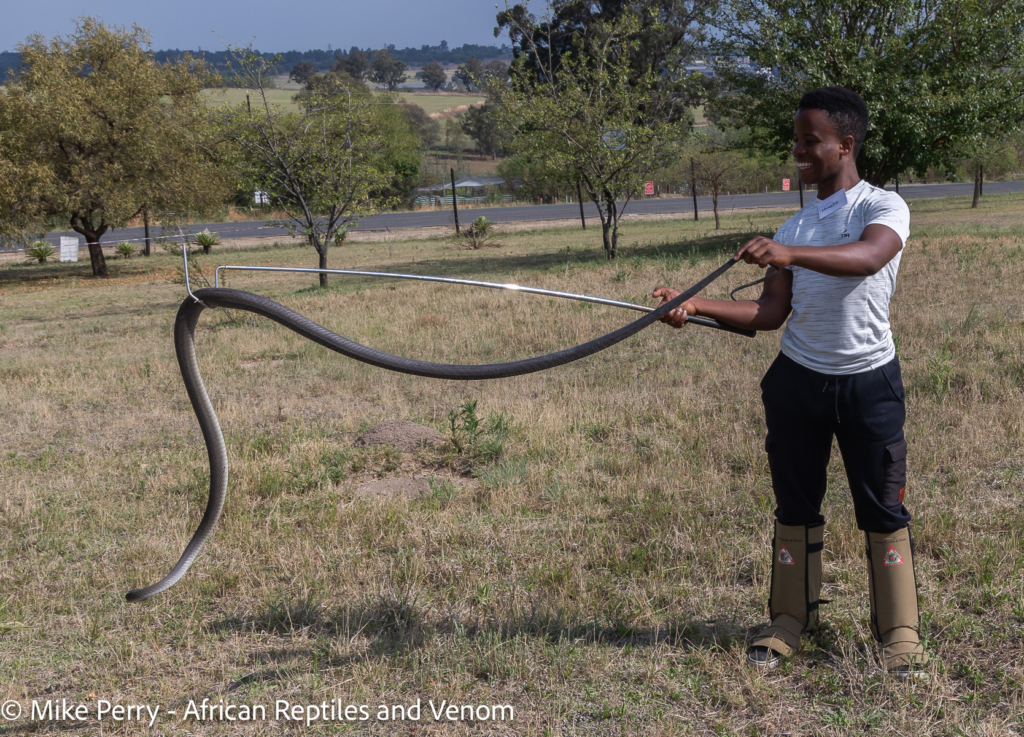
The Snouted Cobra (Naja annulifera) and the Mozambique Spitting Cobra (Naja mossambica) are two of Southern Africa’s most prominent elapids. While both occupy overlapping ranges across savanna, bushveld, and lowveld regions, they belong to distinct subgenera within Naja (Uraeus for N. annulifera and Afronaja for N. mossambica).
These evolutionary paths reflect stark variations in size, defense mechanics, color polymorphism, scale counts, and daily behaviors.
1. Biological & Venomous Differences
The most critical biological division lies in venom composition and defensive mechanics.
| Feature | Snouted Cobra (Naja annulifera) | Mozambique Spitting Cobra (Naja mossambica) |
|---|---|---|
| Primary Defensive Mechanism | Bites; rears high, spreads a broad, impressive hood, and lunges aggressively if cornered. Cannot spit. | Spits venom up to 2–3 meters with high precision, targeting eyes. Bites readily if touched or stepped on. |
| Fang Design | Standard front-fanged (proteroglyphous) design optimized for deep venom delivery. | Modified fangs with forward-facing discharge orifices angled at ~90° for projectile ejection. |
| Venom Type & Effects | Potent Neurotoxic with secondary cytotoxic elements. Causes respiratory paralysis, ptosis, and tissue damage. | Potent Cytotoxic (necrotizing). Causes severe local swelling, tissue necrosis, and blistering requiring debridement. |
| Reproductive Output | Oviparous: Clutches typically range from 8 to 33 eggs. | Oviparous: Clutches typically range from 10 to 22 eggs. |
2. Morphological Differences & Scale Counts
Naja annulifera is a heavy-bodied giant among African cobras, whereas N. mossambica is noticeably smaller and slighter in build.
Size & Body Structure
-
Snouted Cobra: Adult lengths average 1.2 to 1.8 meters, but exceptional specimens frequently exceed 2.0 to 2.5 meters. Body is stout, muscular, and cylindrical.
-
Mozambique Spitting Cobra: Adult lengths average 0.9 to 1.2 meters, rarely exceeding 1.5 meters. Body is moderately slender and streamlined.
Key Head Structure & Scalation
-
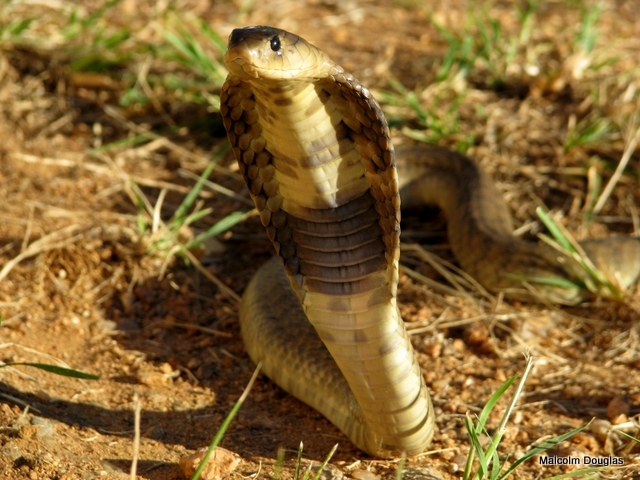
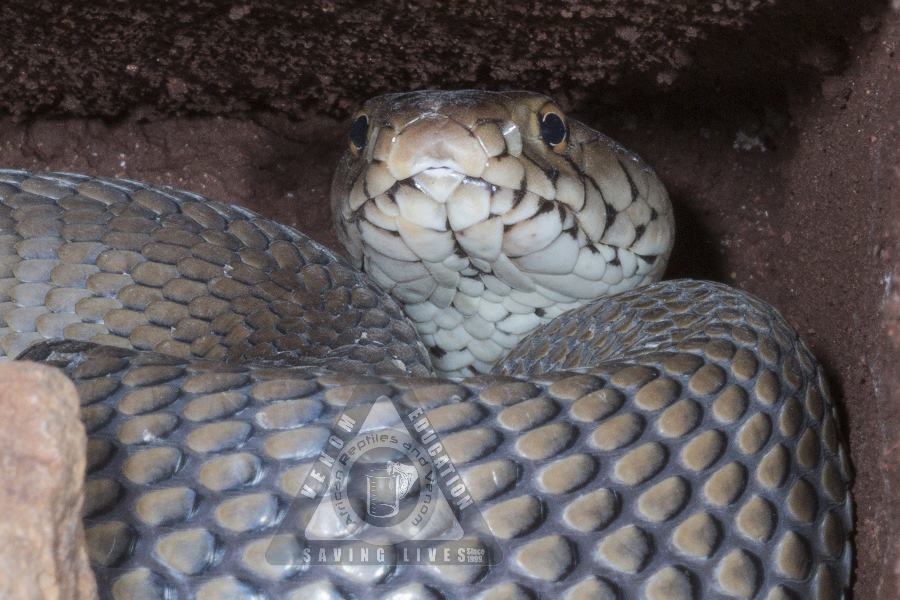
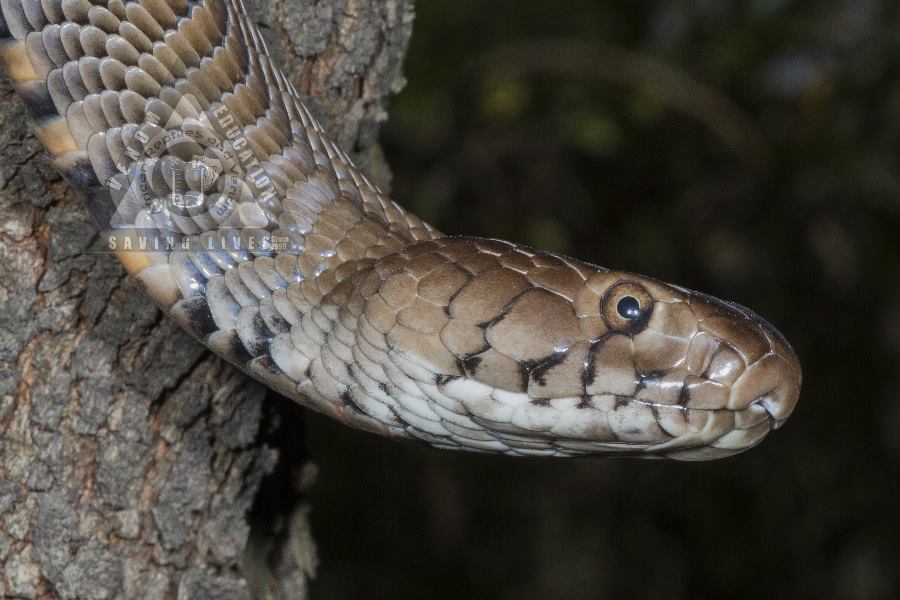
Rostral Scale: The snouted cobra takes its common name from a modified, enlarged, prominent rostral scale (snout) adapted for root-burrowing and soil movement. In contrast, N. mossambica features a standard rounded rostral scale.
-
Midbody Scale Rows:
-
Naja annulifera: Usually 19 (rarely 21) smooth scale rows at midbody.
-
Naja mossambica: Usually 23 to 25 (rarely 21 or 27) smooth scale rows at midbody.
-
-
Ventral & Subcaudal Counts:
-
N. annulifera: 175–203 ventrals; 51–65 subcaudals (paired).
-
N. mossambica: 177–205 ventrals; 52–67 subcaudals (paired).
-
3. Colour Forms & Visual Identification
Both species display distinct color variations, though N. annulifera exhibits far more pronounced sexual and geographic dimorphism/polymorphism.
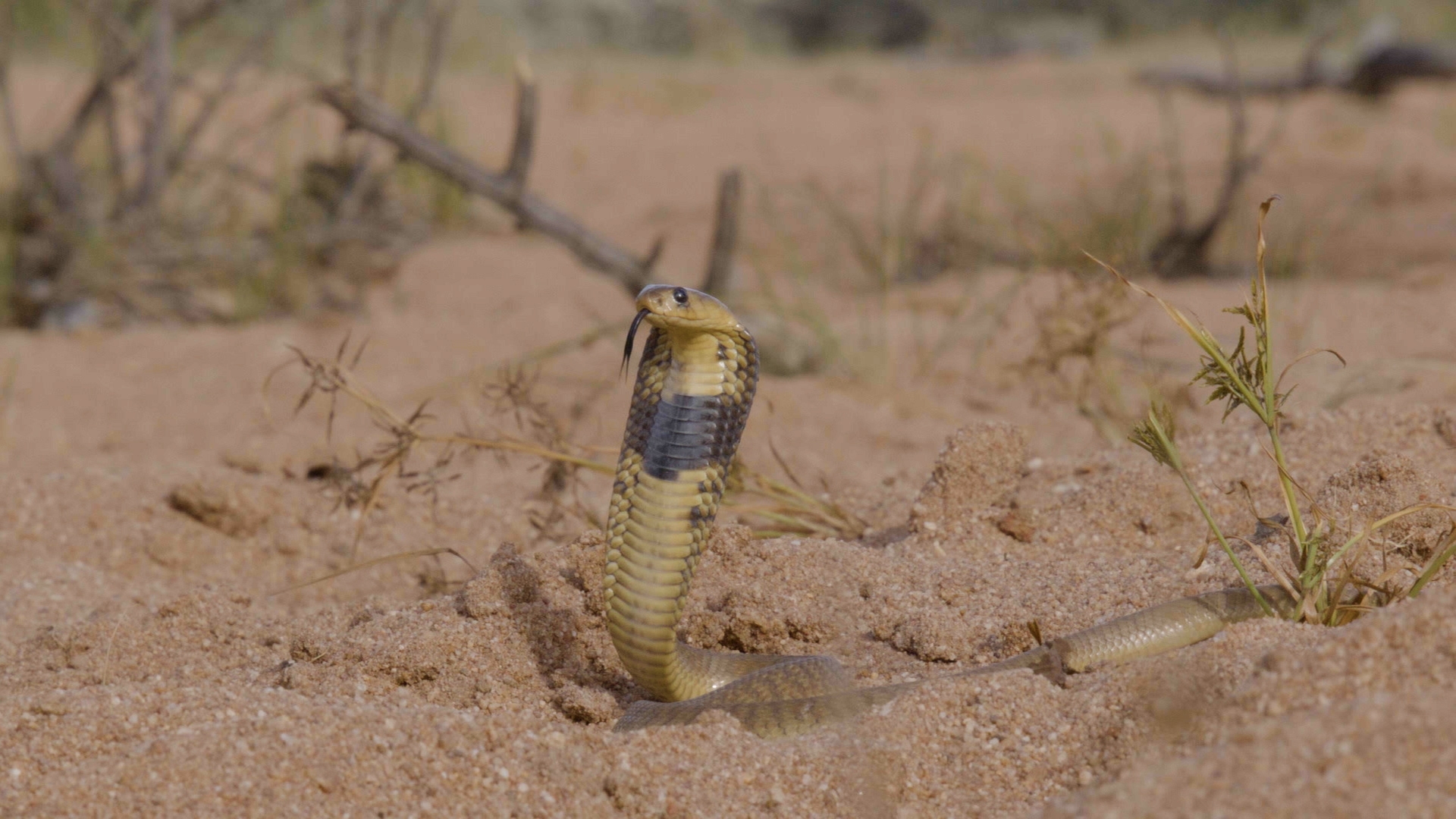
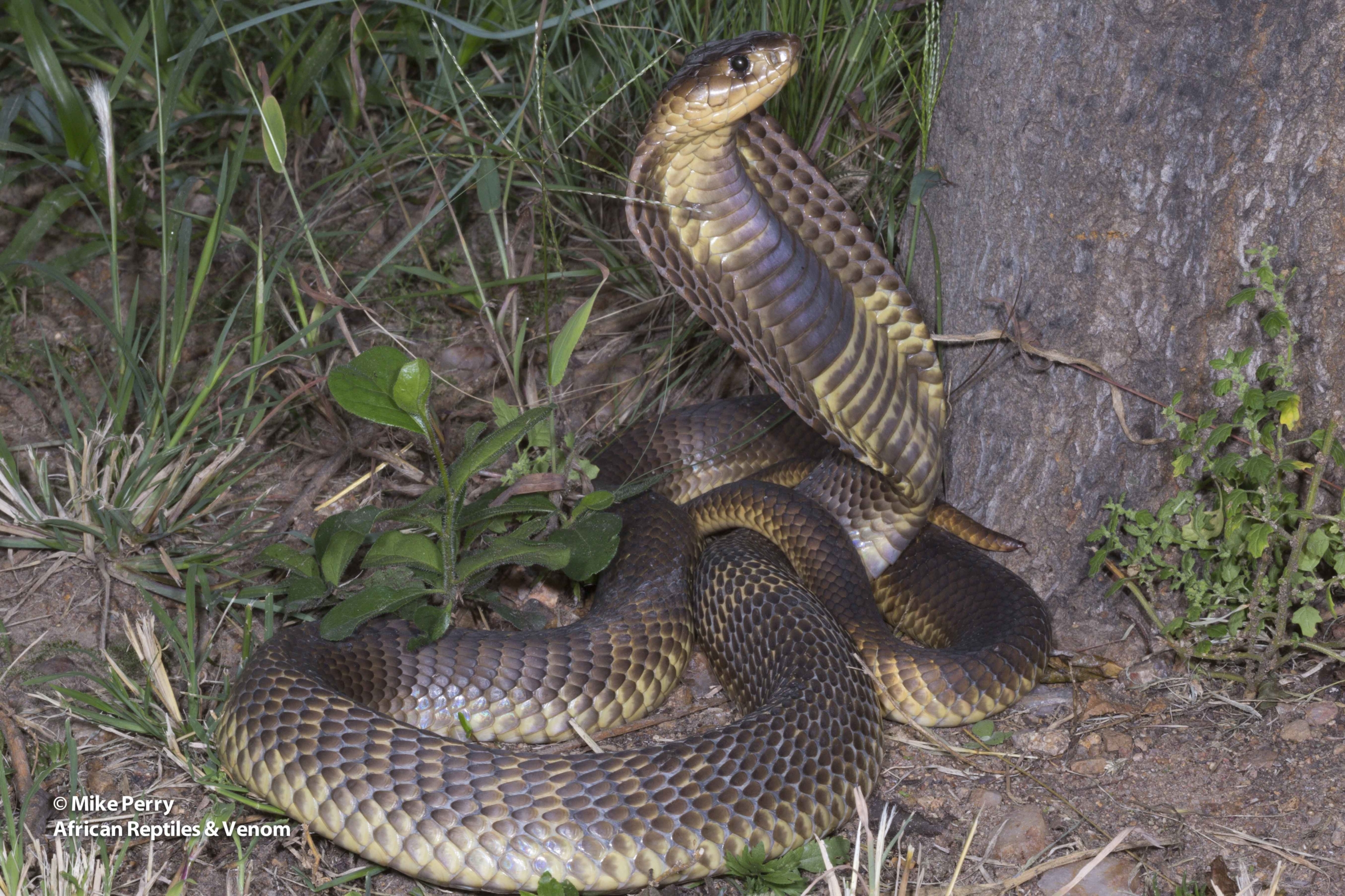
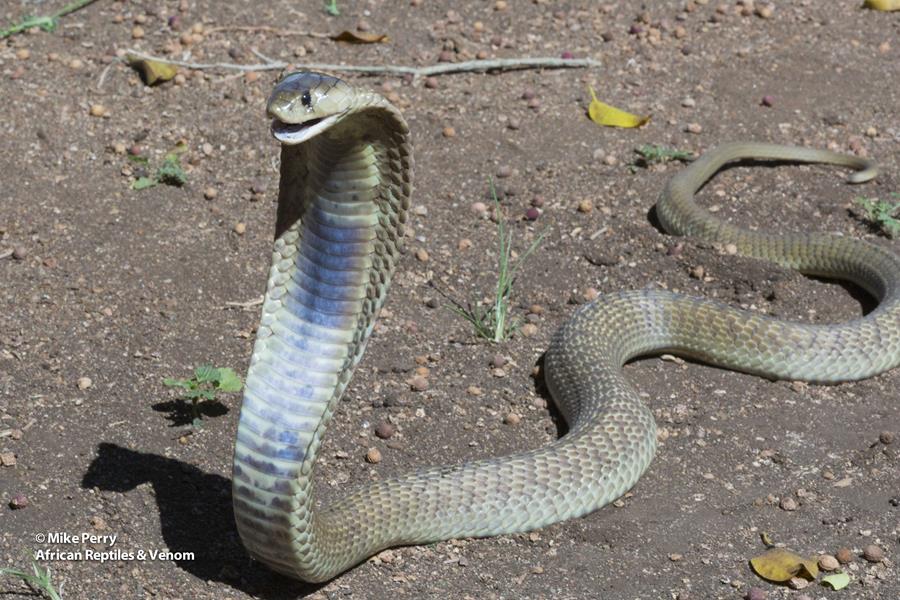
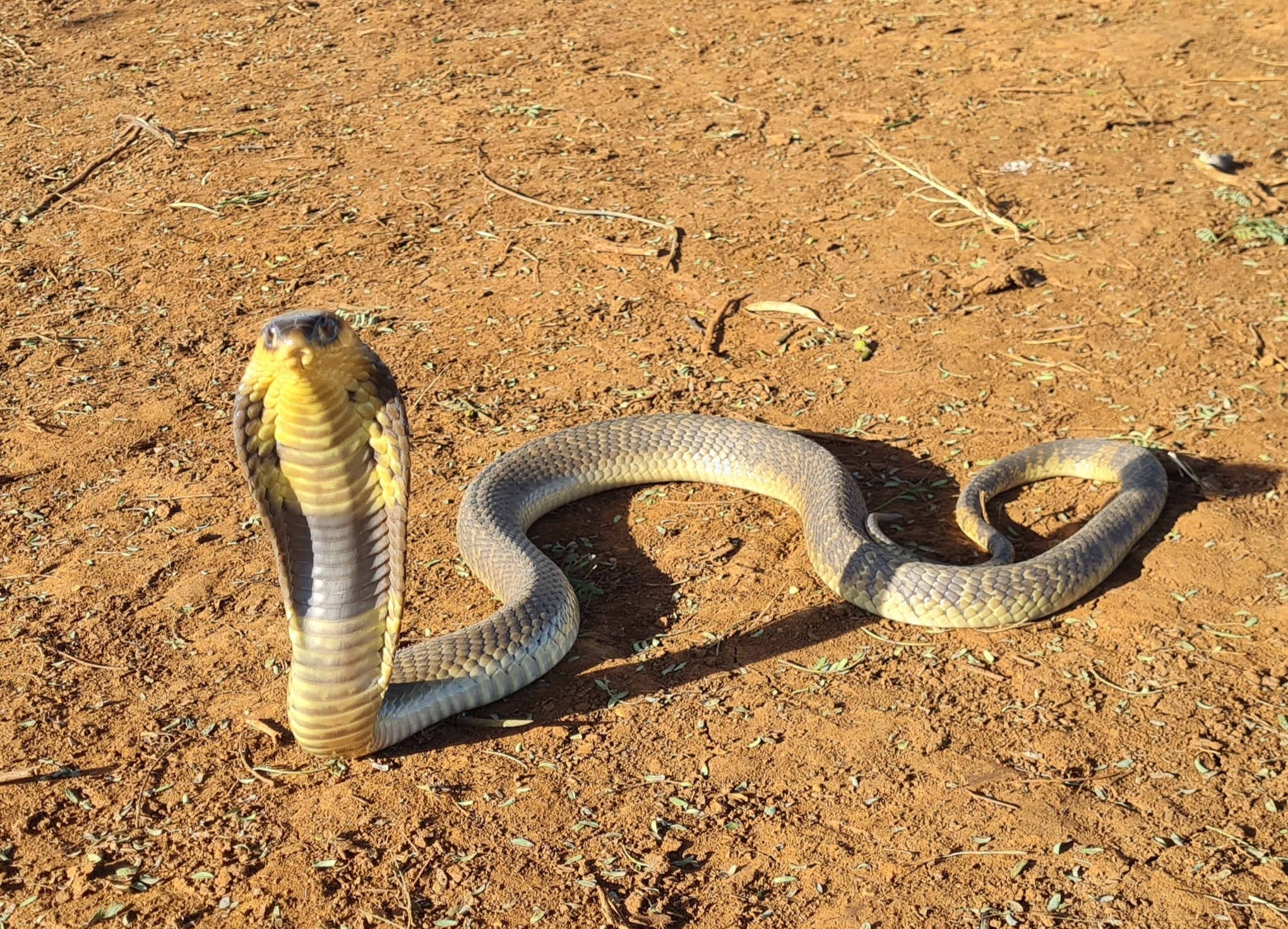
Snouted Cobra (Naja annulifera) Color Morphologies
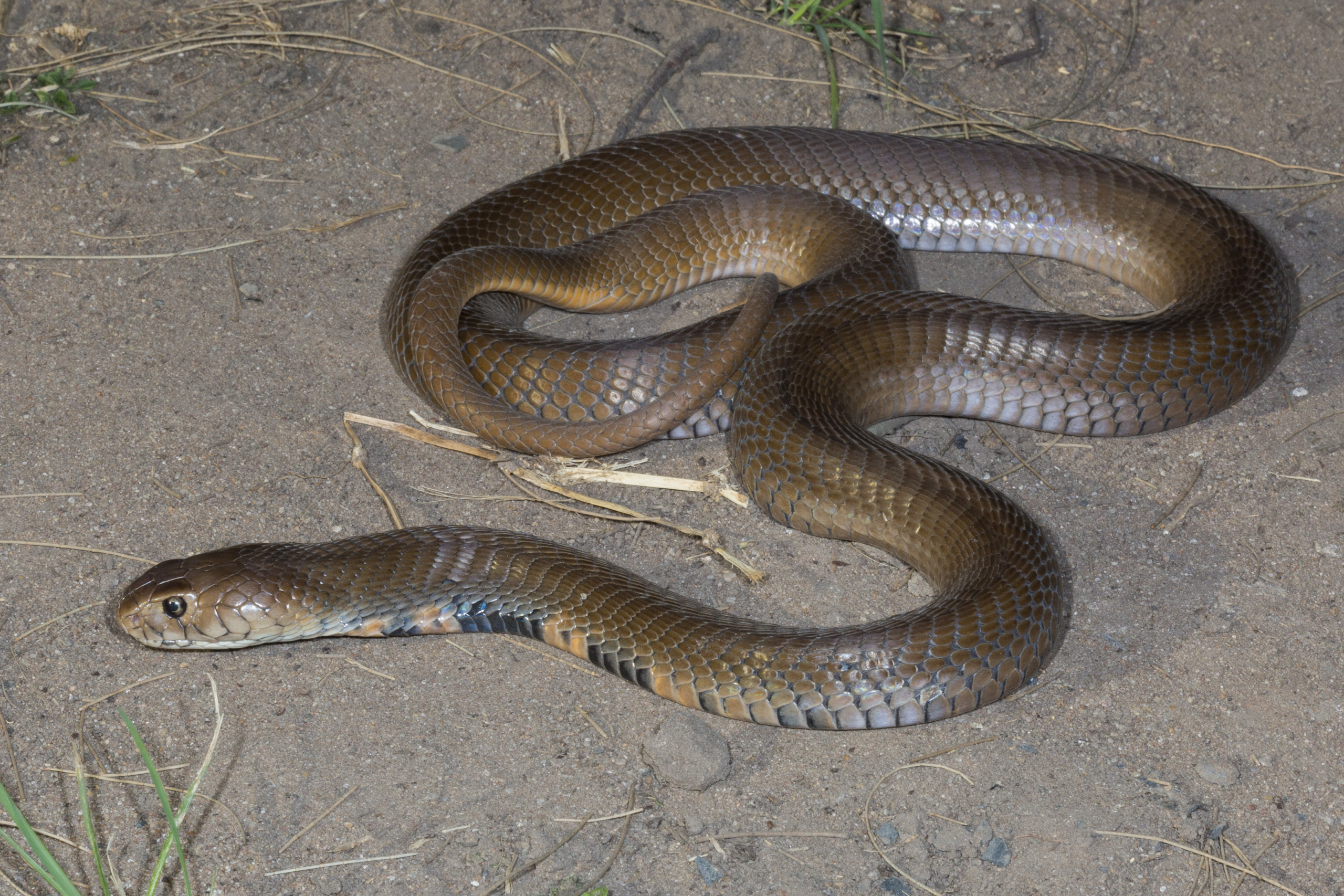
N. annulifera presents two distinct color phases across wild populations:
-
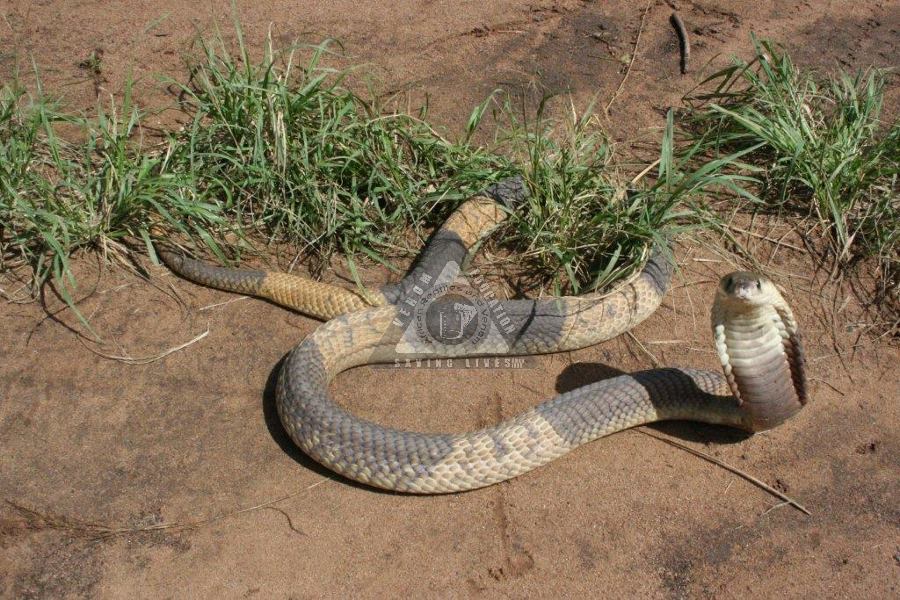
Yellow / Brown Uniform Phase:
-
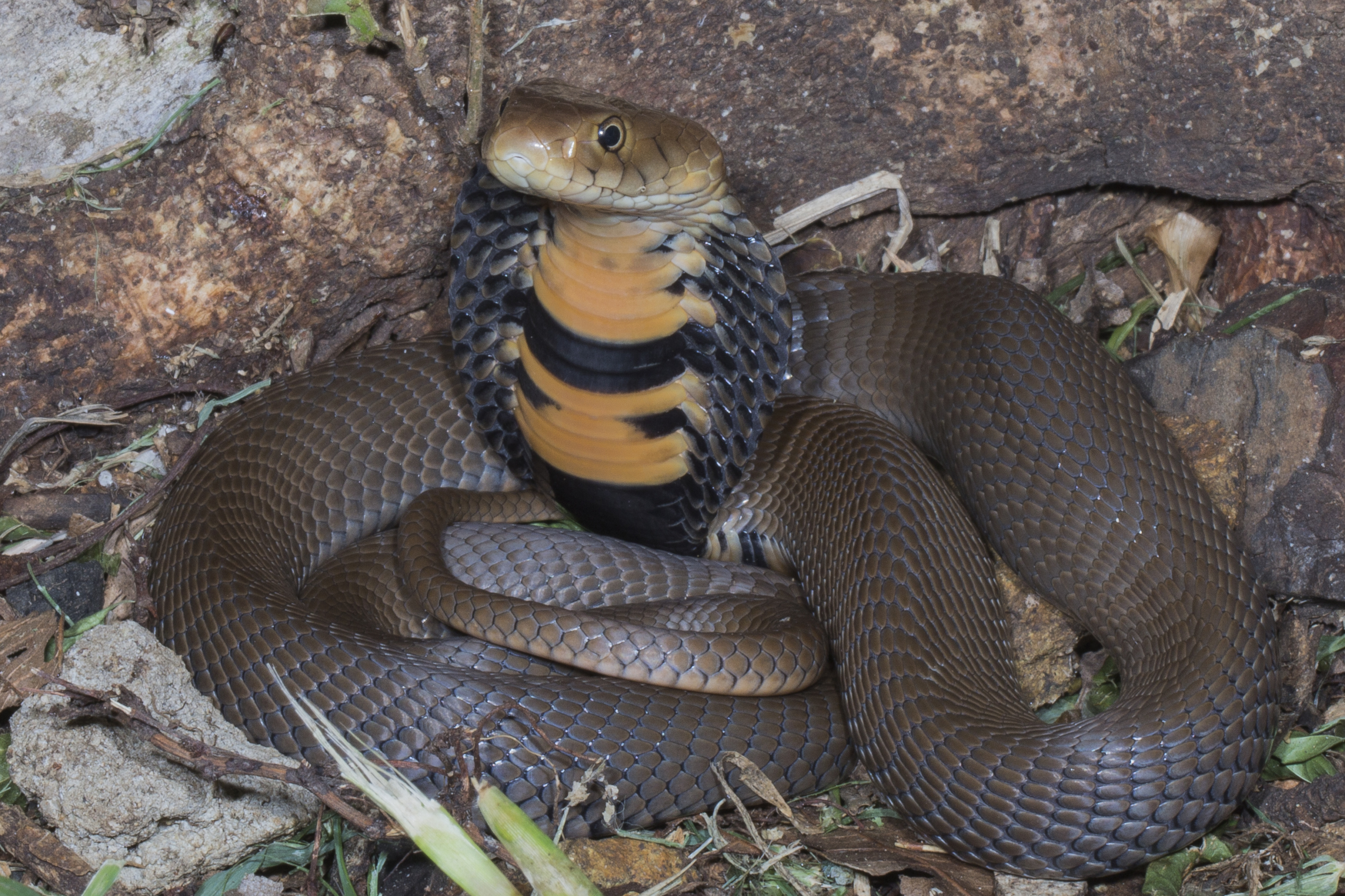
Dorsal: Uniform yellowish-brown, olive-brown, or dark hazel. As snakes age, the dorsal surface often darkens to dark mahogany or slate gray.
-
Ventral: Cream, pale yellow, or bright yellow with dark blotches.
-
Neck/Throat Marking: Features a broad, single dark brown to black throat band (covering 15 to 20 ventral scales) visible when the snake rears its broad hood.
-
-
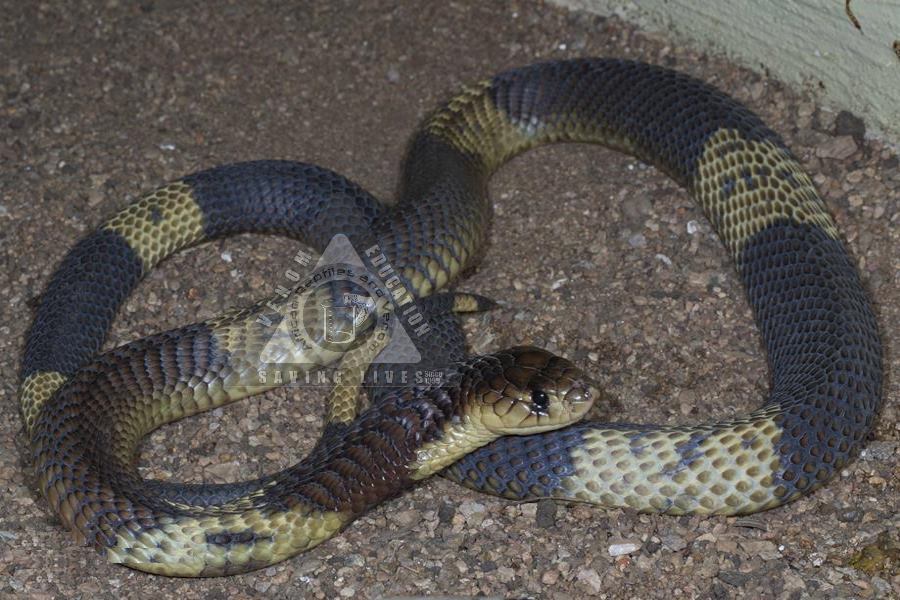
Banded Phase ("Banded Cobra"):
-
Dorsal: High-contrast alternating broad bands across the entire body. Typically 7 to 11 dark blue-black or brownish-black bands separated by bright yellow to golden-orange interspaces.
-
Ventral: Yellowish base color interrupted by the dark bands continuing down across the underside.
-

Mozambique Spitting Cobra (Naja mossambica) Coloration
Coloration in N. mossambica is consistent, though shade intensity varies by locality:
-
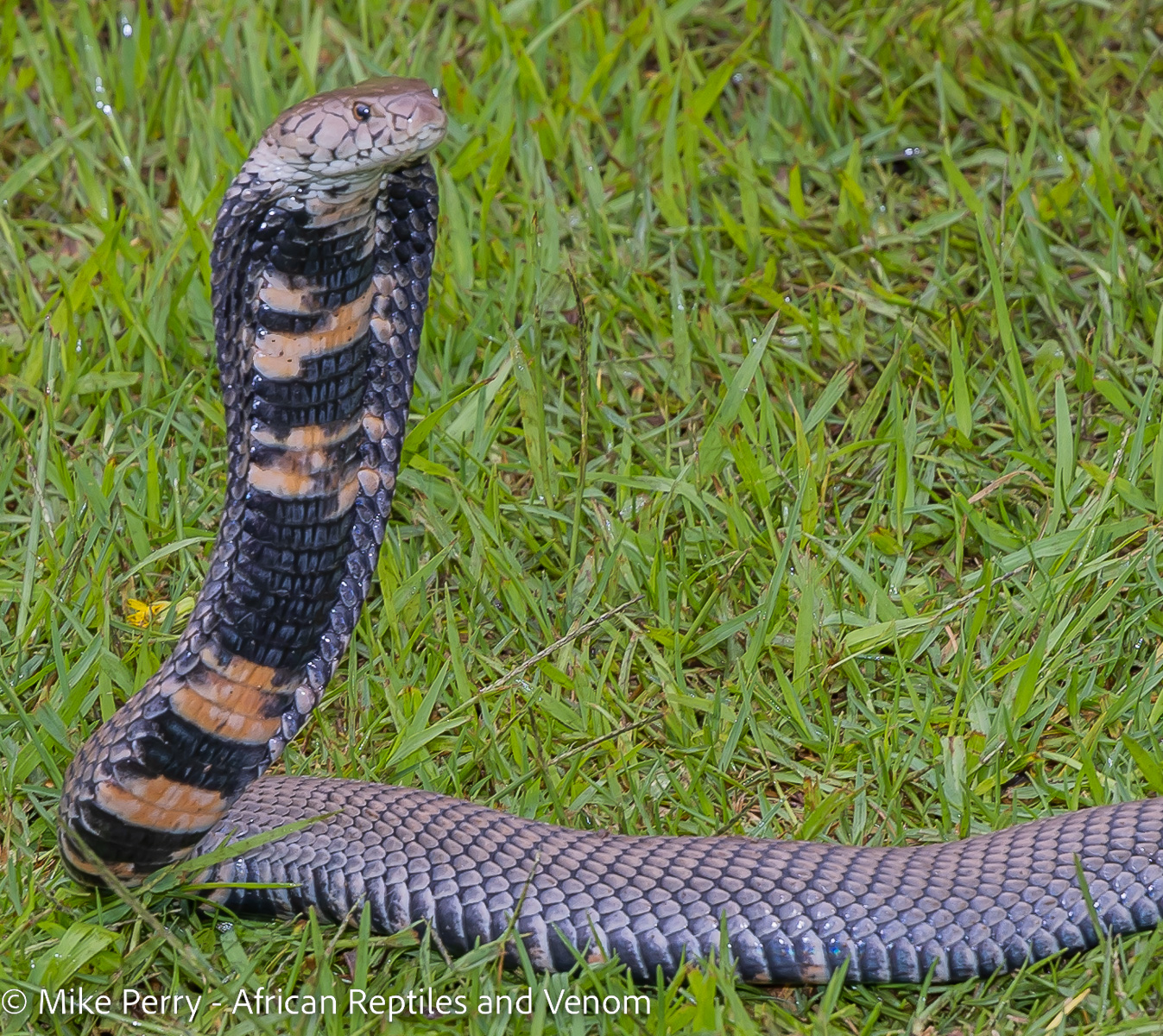
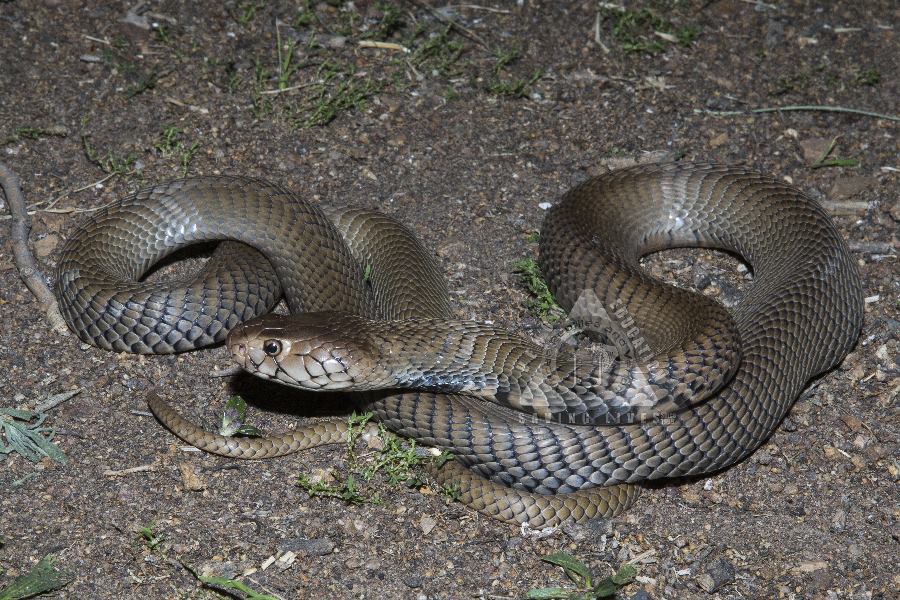
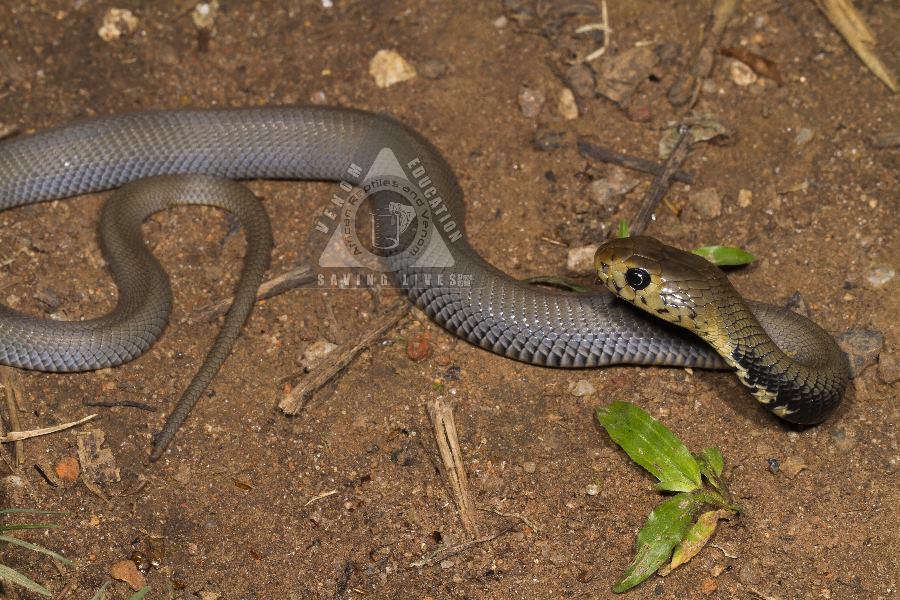
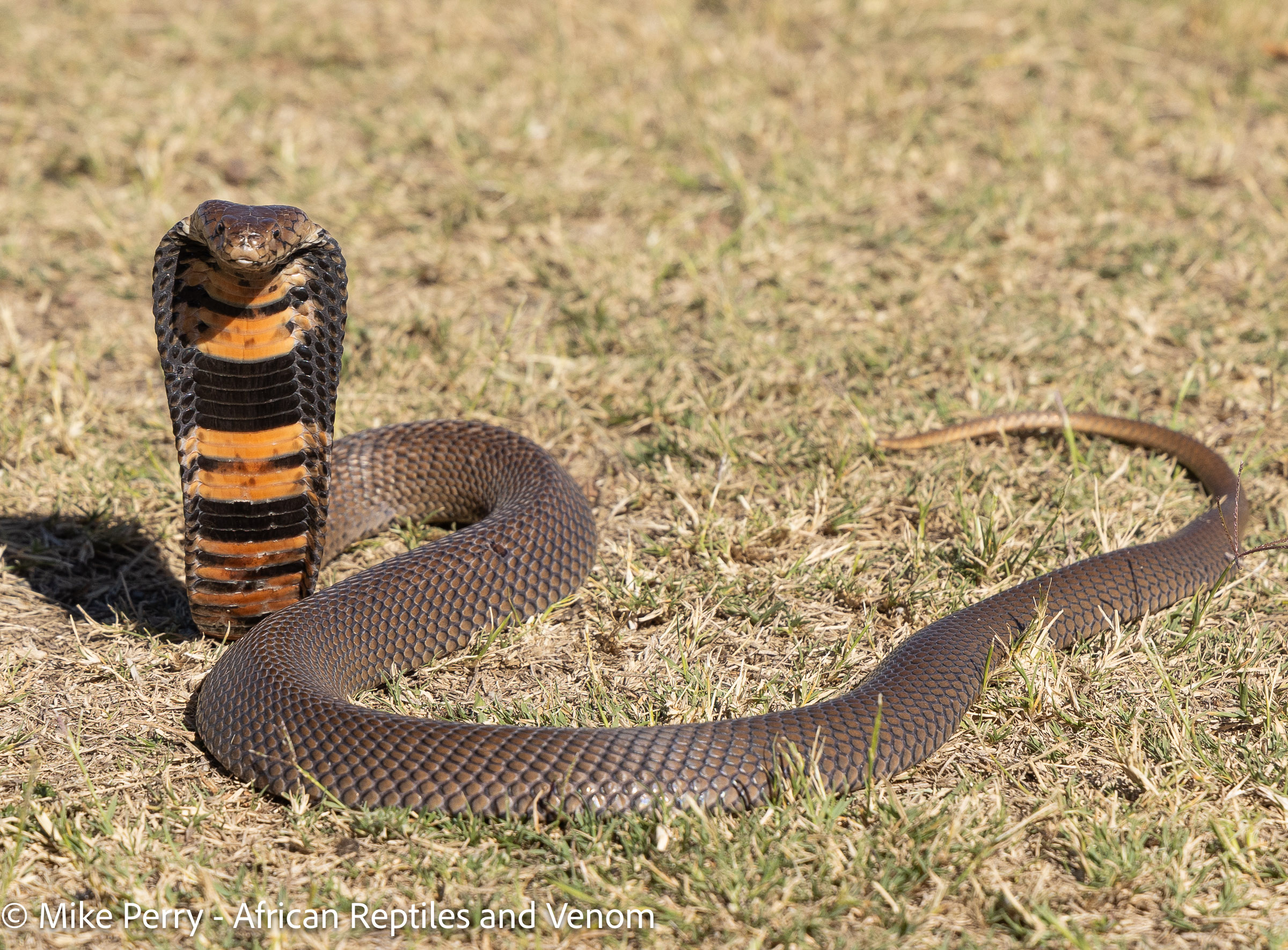
Dorsal Surface: Slate gray, olive-brown, or tawny gray, with each individual scale sharply outlined in dark brown or black, giving a speckled or reticulated appearance.
-
Ventral Surface: Distinctive salmon-pink, yellowish-pink, or coral red.
-
Throat Markings: Crucial field marker. Features a series of irregular dark bar-like bands and throat spots on a salmon-pink background. Unlike the solid broad band of the snouted cobra, these appear as broken, stacked horizontal bars.
4. Habitual, Ecological & Behavioral Differences
While both inhabit bushveld, woodland savanna, and rocky ridges, their micro-habitat usage, activity cycles, and foraging behaviors diverge significantly.
| Attribute | Snouted Cobra (N. annulifera) | Mozambique Spitting Cobra (N. mossambica) |
|---|---|---|
| Diurnal / Nocturnal | Crepuscular to Diurnal | Nocturnal to Crepuscular |
| Primary Activity | Active hunter during late afternoon and warm daylight hours. | Active prowler from dusk through the night; occasionally daylight. |
| Preferred Retreats | Termite mounds, abandoned rodent burrows, hollow tree stumps. | Rock crevices, hollow logs, urban debris, gaps in walls. |
| Diet & Predation | Generalist: Toads, rodents, birds, eggs, lizards, and other snakes. Strong preference for poultry/eggs. | Opportunistic generalist: Toads, frogs, rodents, lizards, snakes, and invertebrates (insects). |
| Human Interaction Behavior | Tends to retreat rapidly. Only holds ground if cornered/threatened before striking. | High occurrence in homes/lodges. Will spit without warning; bites sleepers if stepped on in bed. |
Activity & Movement
-
Snouted Cobra: Primarily active during late afternoon and early evening, soaking up ambient heat. It hunts large prey items (including young poultry, birds, and other reptiles) and frequently establishes a long-term home base around a large termite mound or hollow log.
-
Mozambique Spitting Cobra: Highly nocturnal. It spends the night patrolling terrain, riverbeds, and human dwellings in search of frogs, toads, and small mammals. Because it wanders widely into homes seeking shade or prey during warm nights, it accounts for a large percentage of snakebite incidents in rural Sub-Saharan Africa.