Southern Africa's Shield-Nosed Snakes

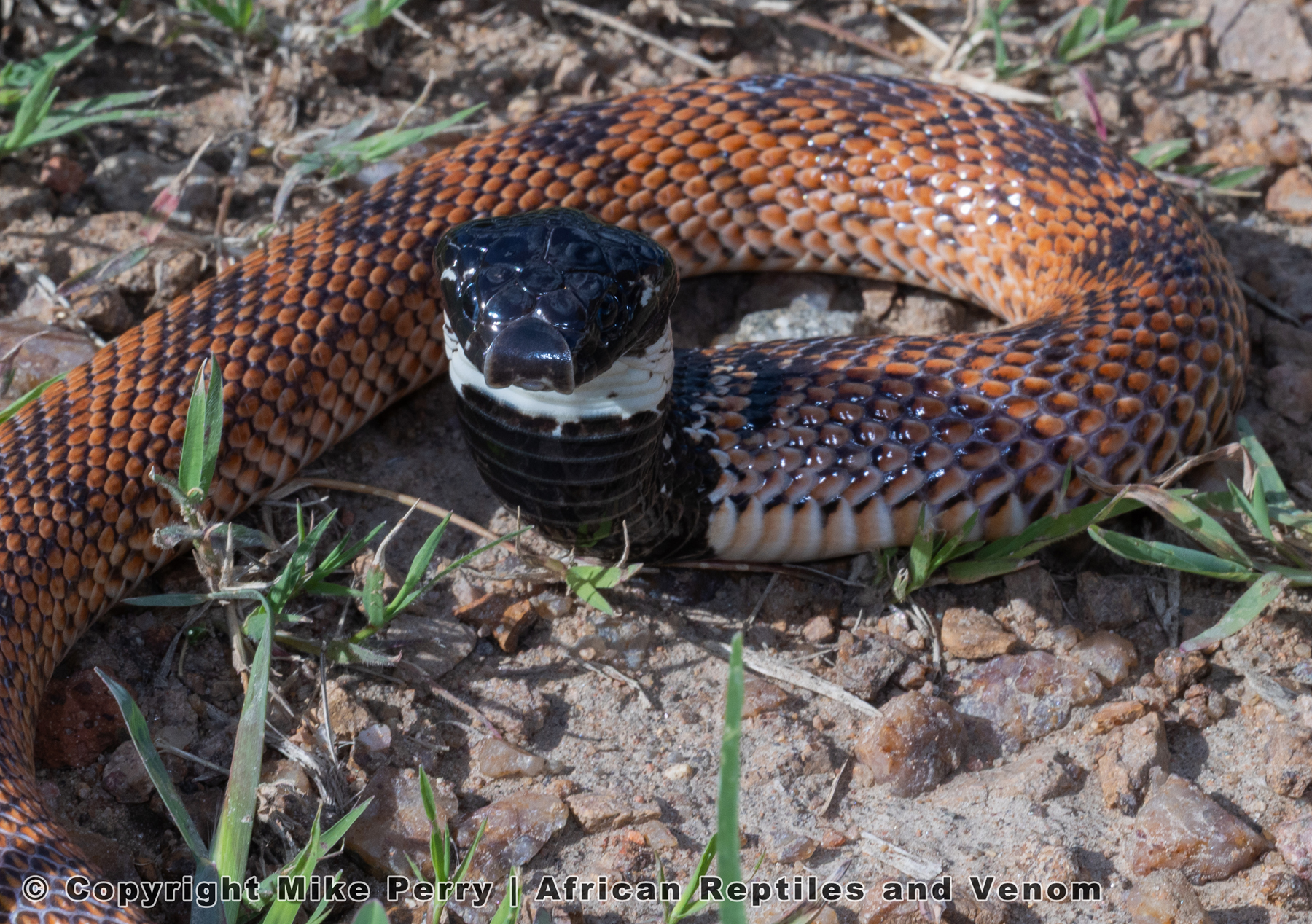
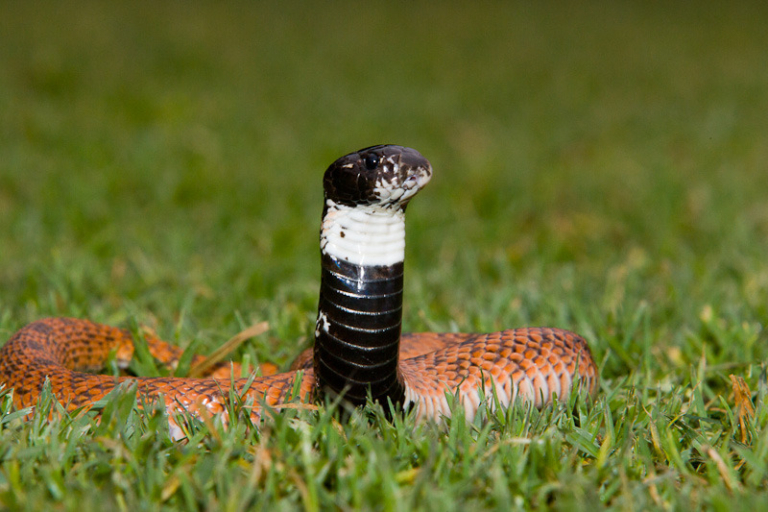
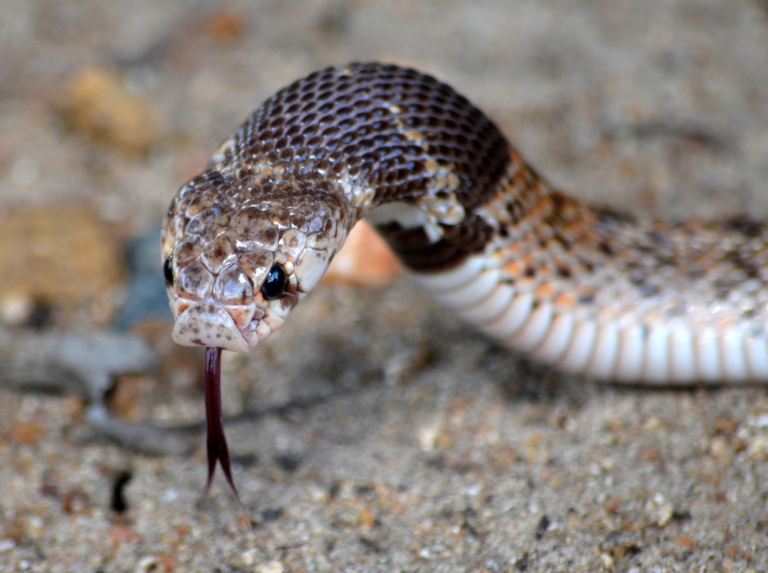
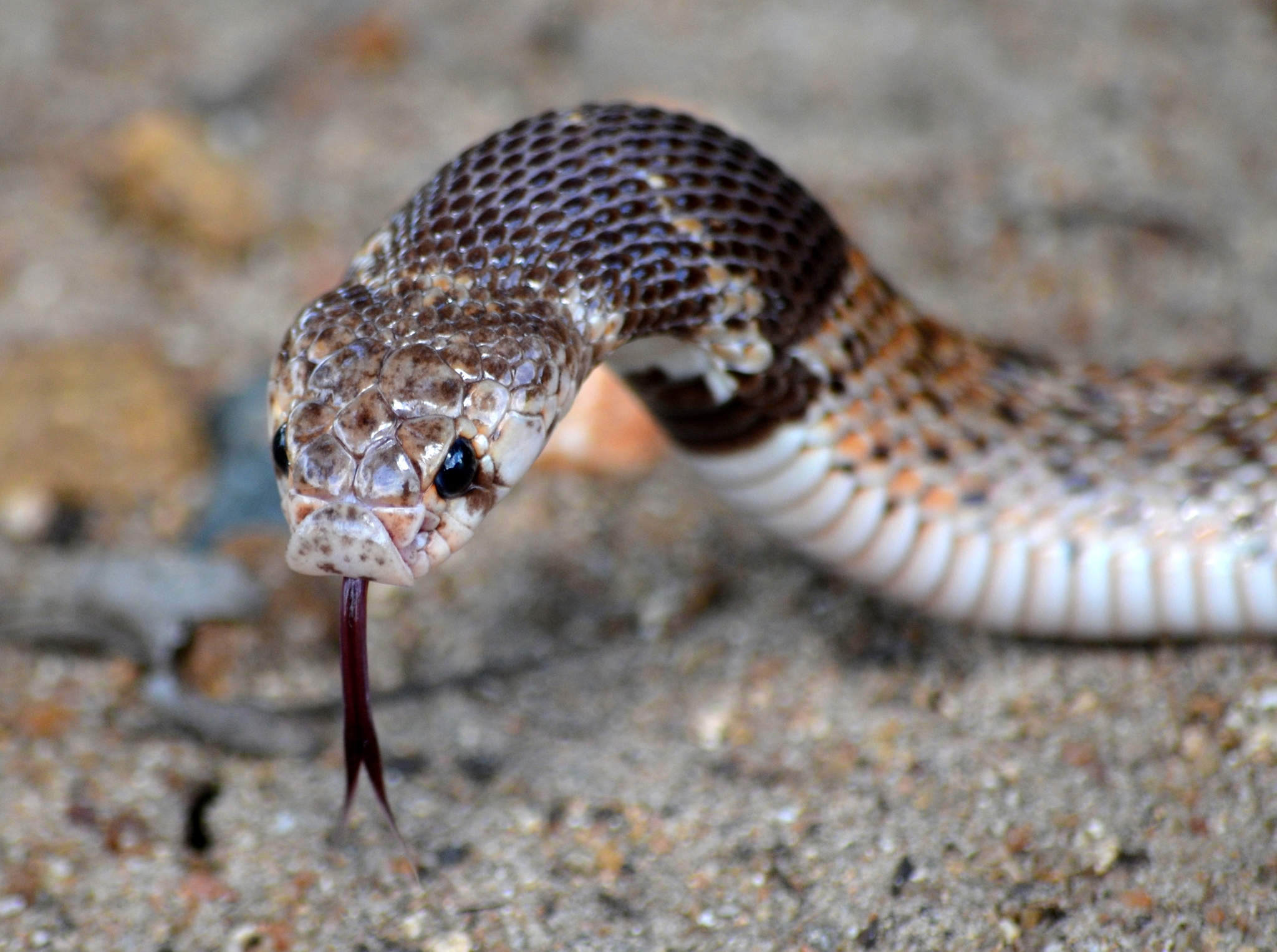
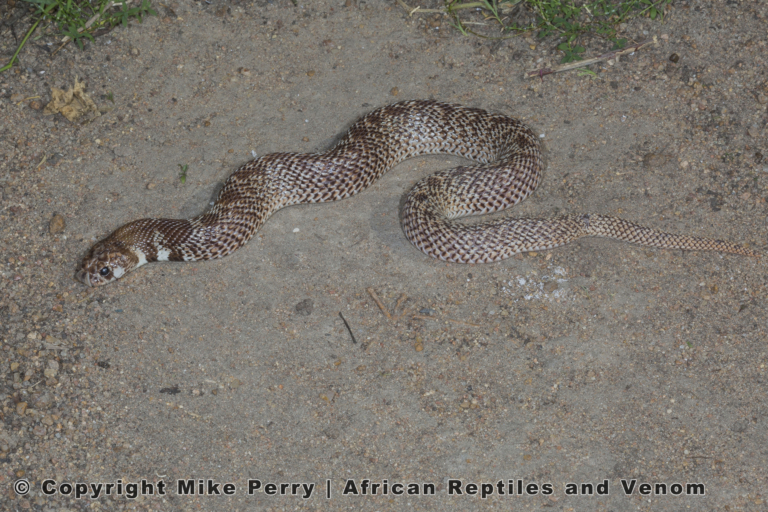
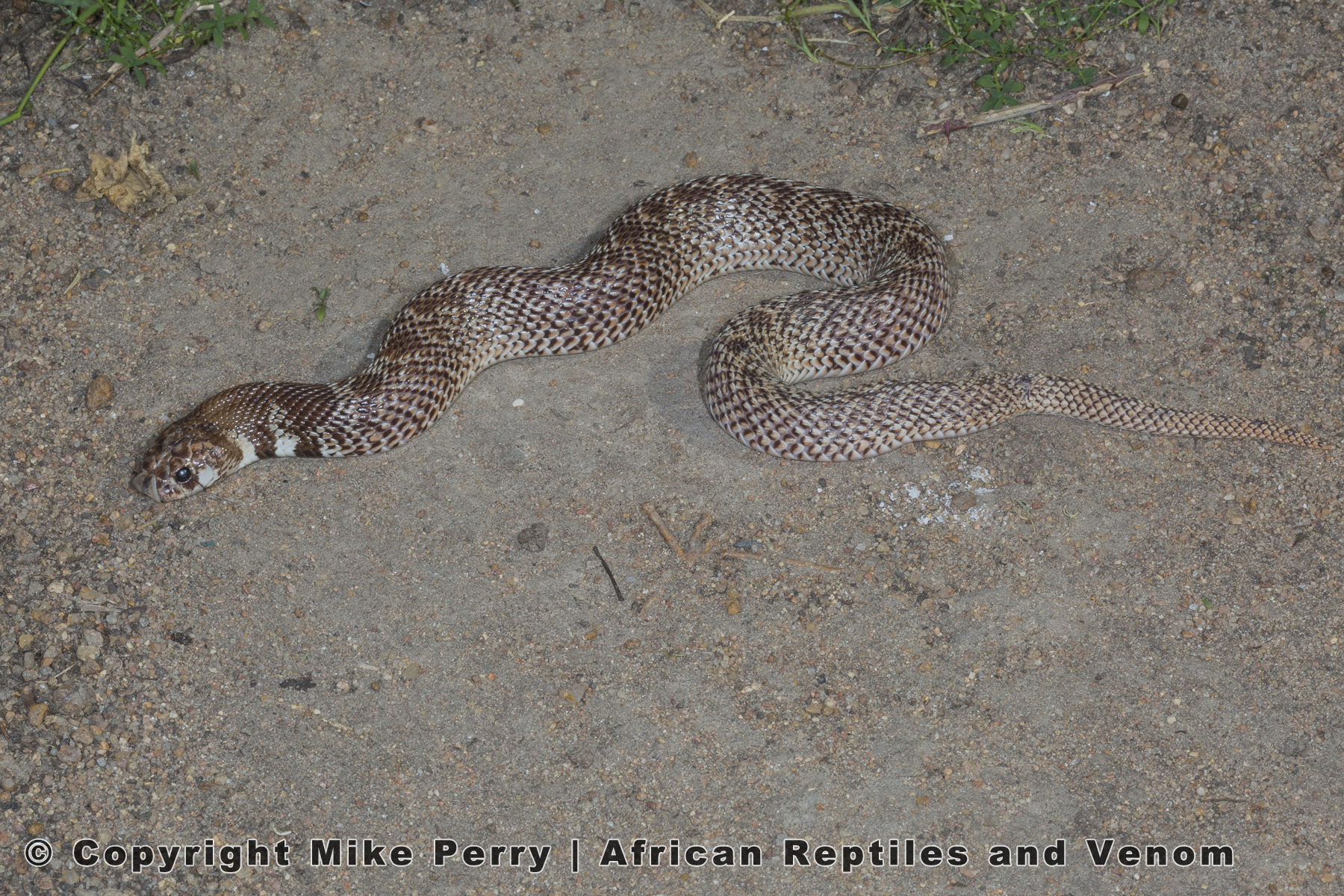
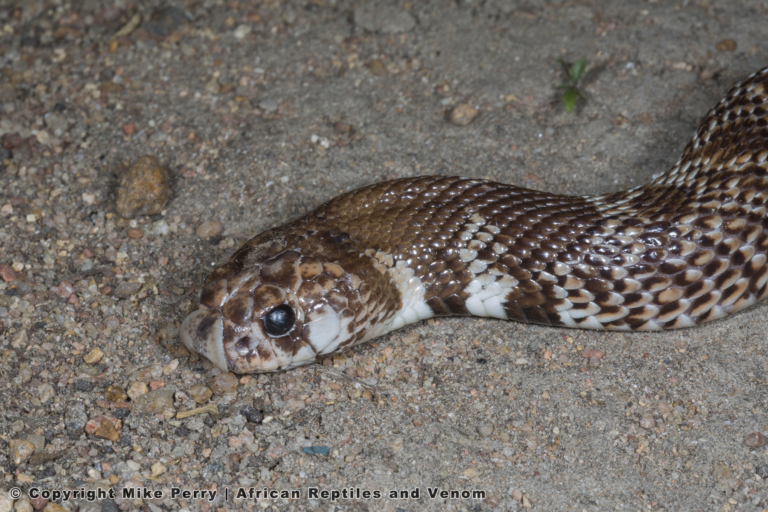
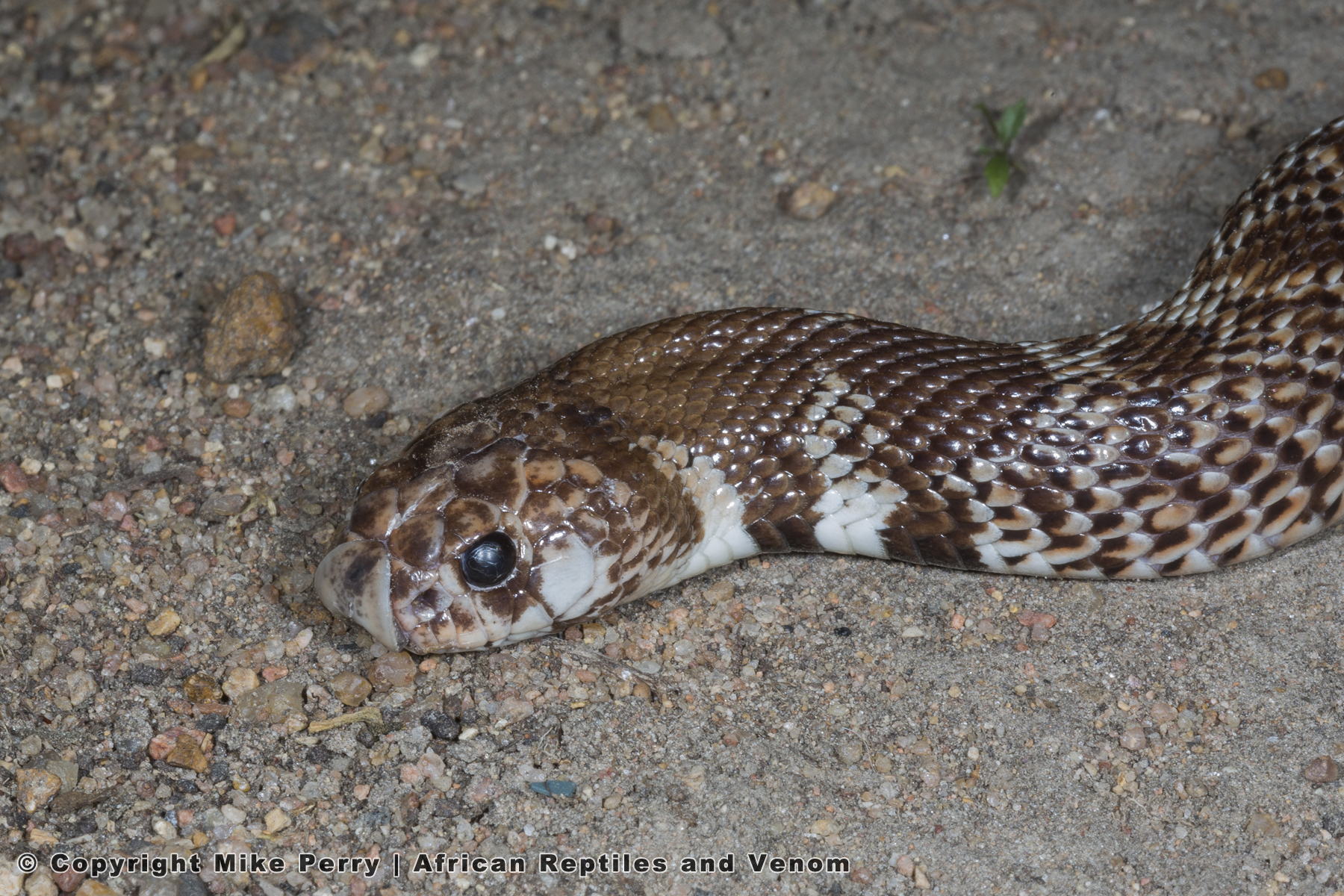
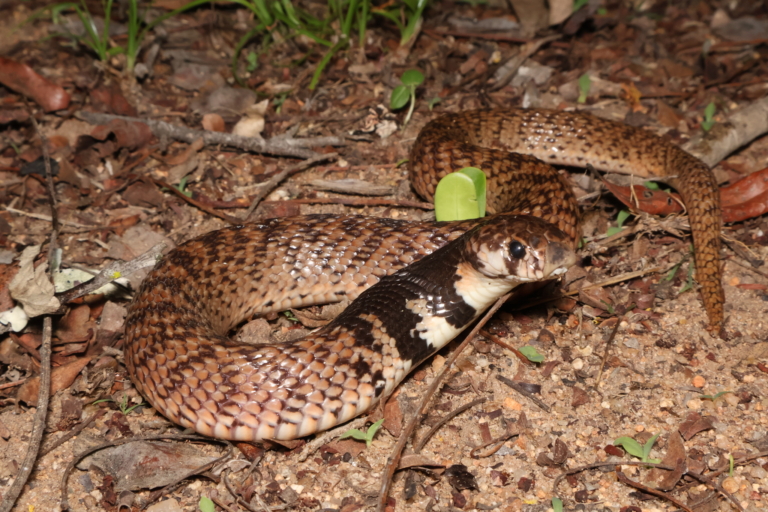
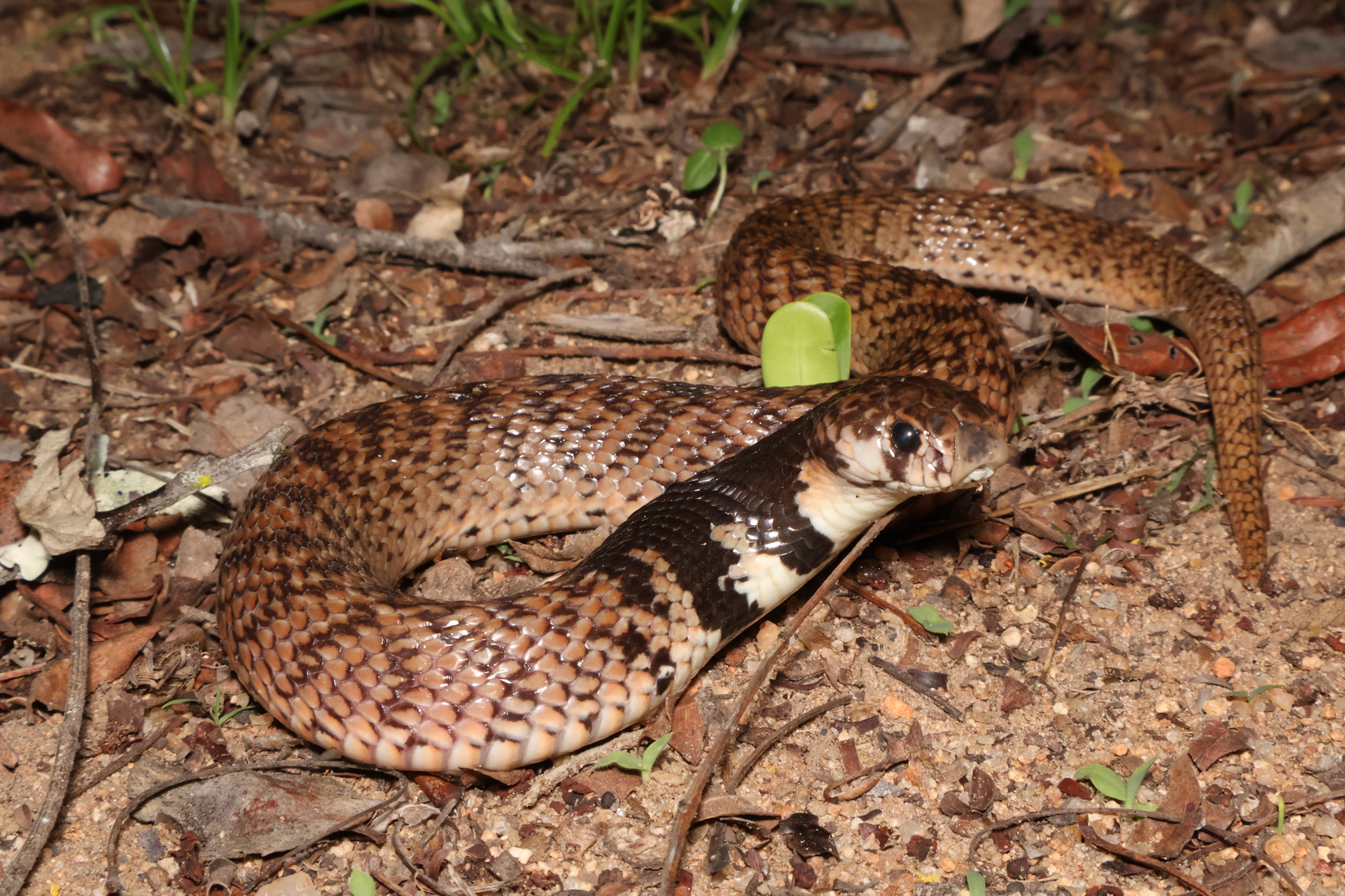
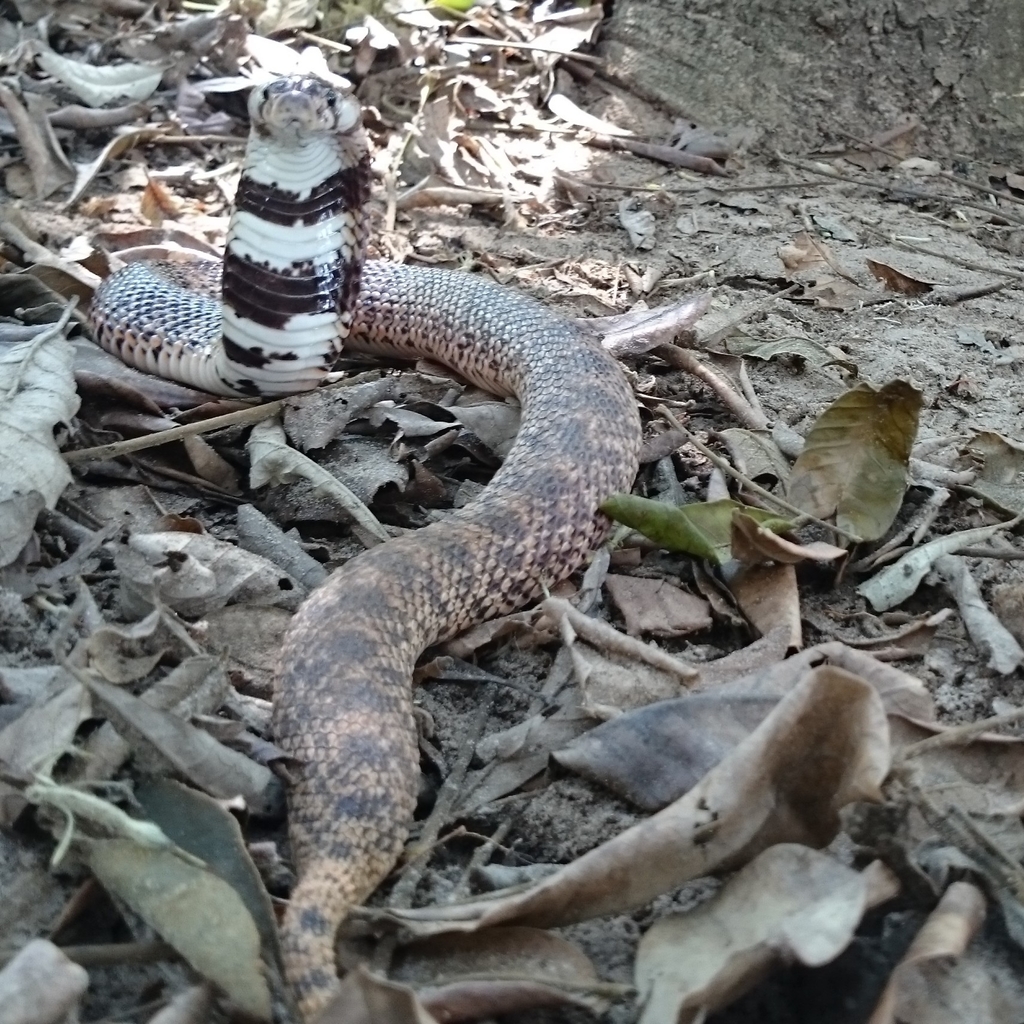
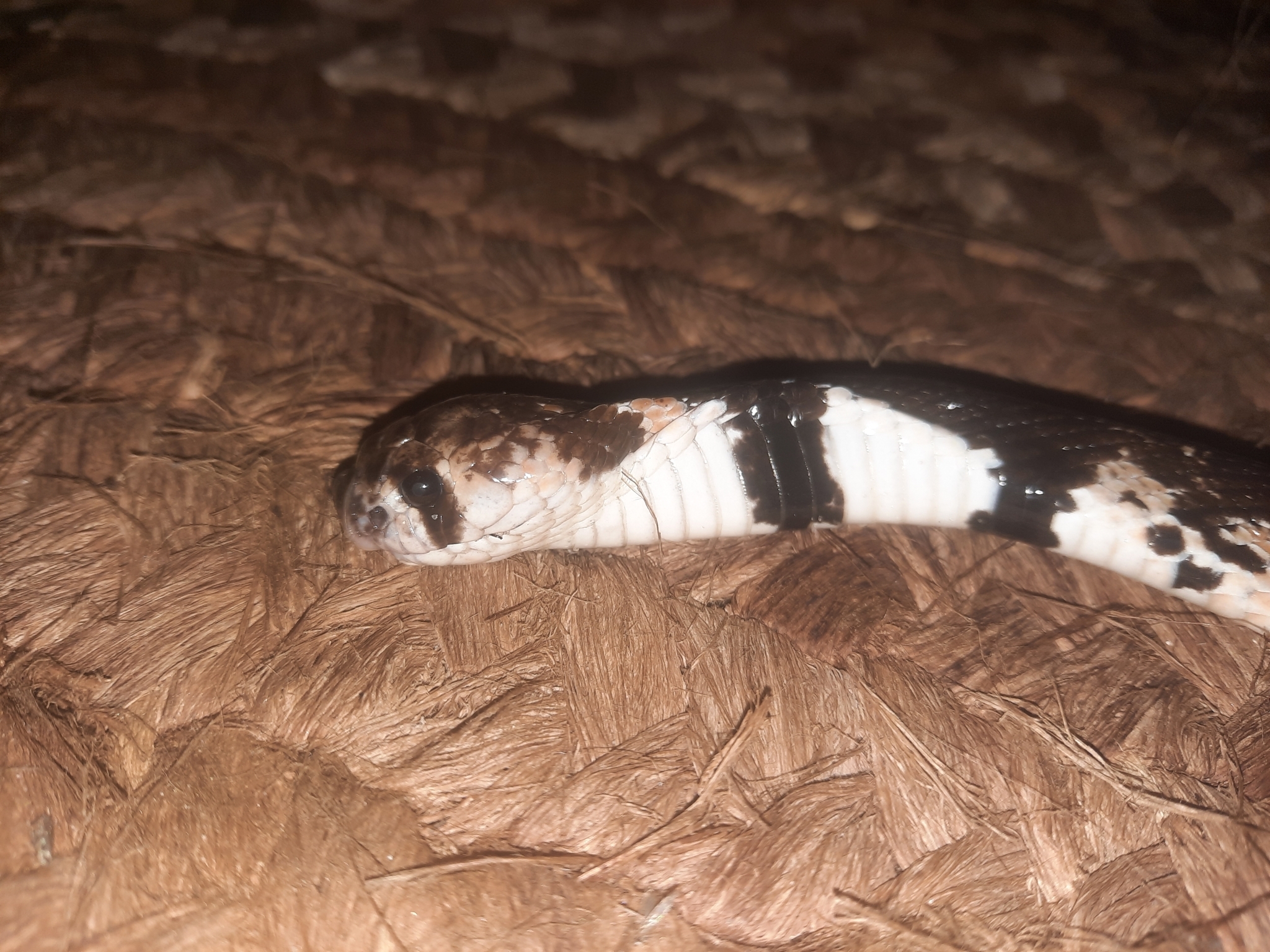
Speckled Shield nose Snake (Aspidelaps scutatus scutatus) (1) from near Nylsvley, Limpopo Province, South Africa © Greg Lasley
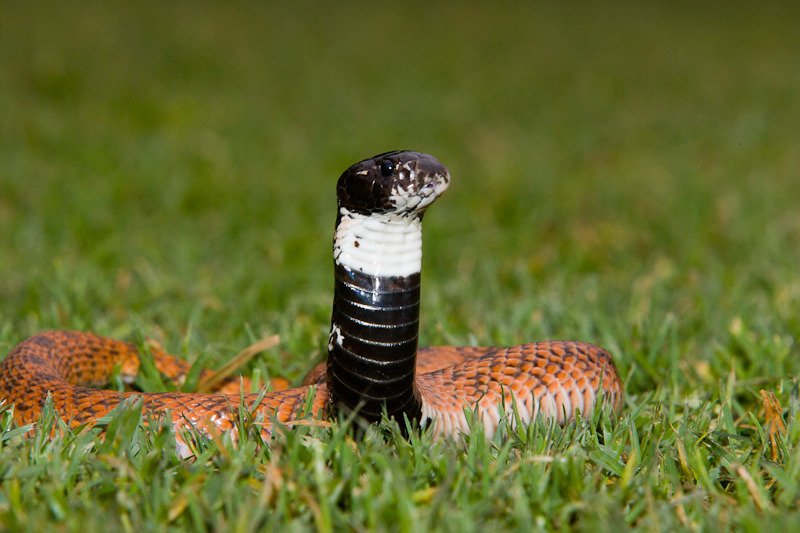
The genus Aspidelaps, commonly known as Shield-Nosed Snakes or Shield Cobras, represents a unique group of venomous elapids (cobra family) in Southern Africa. Defined by their distinct, enlarged rostral (nose) scale adapted for burrowing, these fascinating snakes are often secretive but can display a narrow hood when threatened. While Aspidelaps lubricus is a distinct species often referred to as a “coral snake,” the discussion here focuses on the three primary forms within the Aspidelaps scutatus complex: the Speckled Shield Cobra (Aspidelaps scutatus scutatus), the Intermediate Shield Cobra (Aspidelaps scutatus intermedius), and the Eastern Shield Cobra (Aspidelaps scutatus fulafula). Understanding their subtle differences is key for accurate identification and appreciating the region’s diverse herpetofauna.

The Speckled Shield Cobra (Aspidelaps scutatus scutatus)

Unless otherwise noted, all images used in this article are sourced from iNaturalist.org and licensed under
a Creative Commons Attribution-NonCommercial 4.0 International License (CC BY-NC 4.0). 
We extend our sincere thanks to the respective photographers who generously
shared their work on iNaturalist, making the visual content of this article possible.

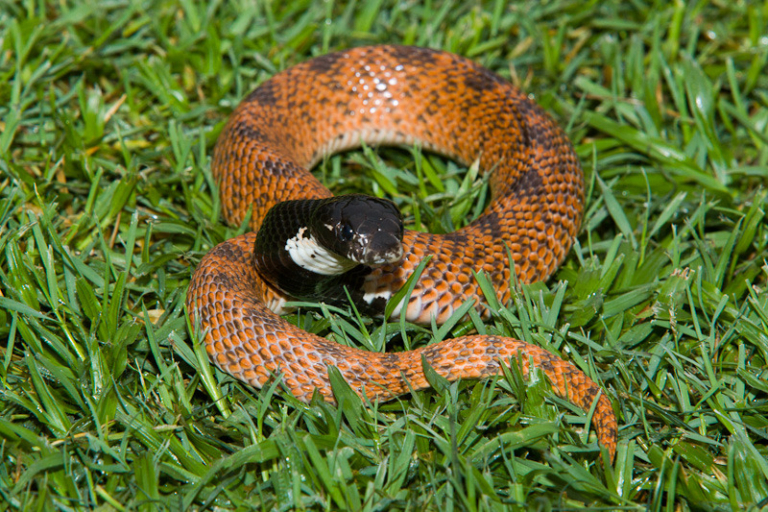
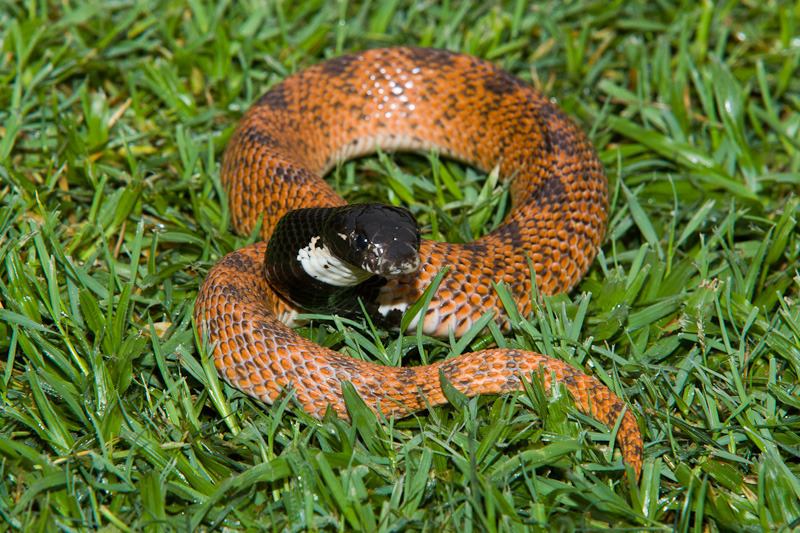
This is the nominate subspecies and perhaps the most iconic representation of the shield-nosed snakes.

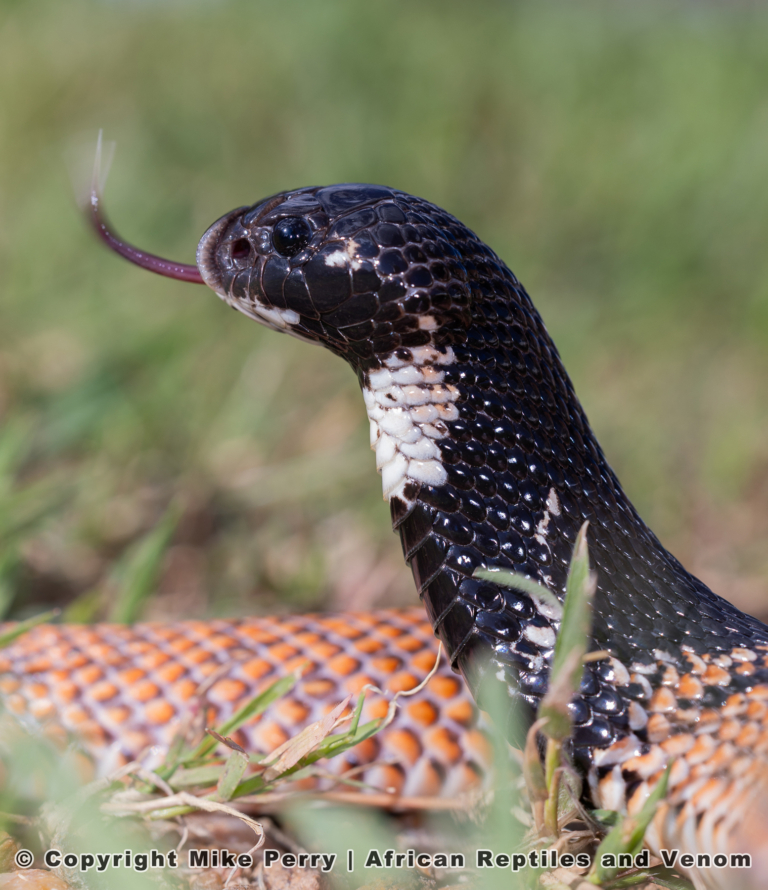
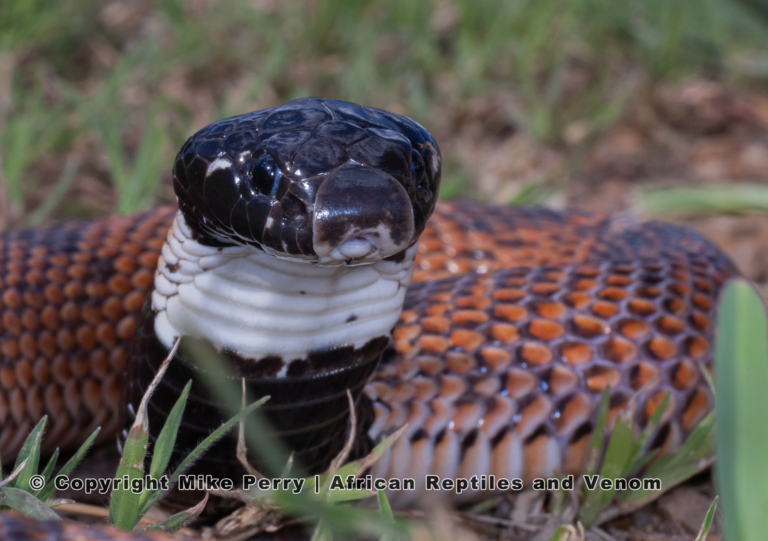
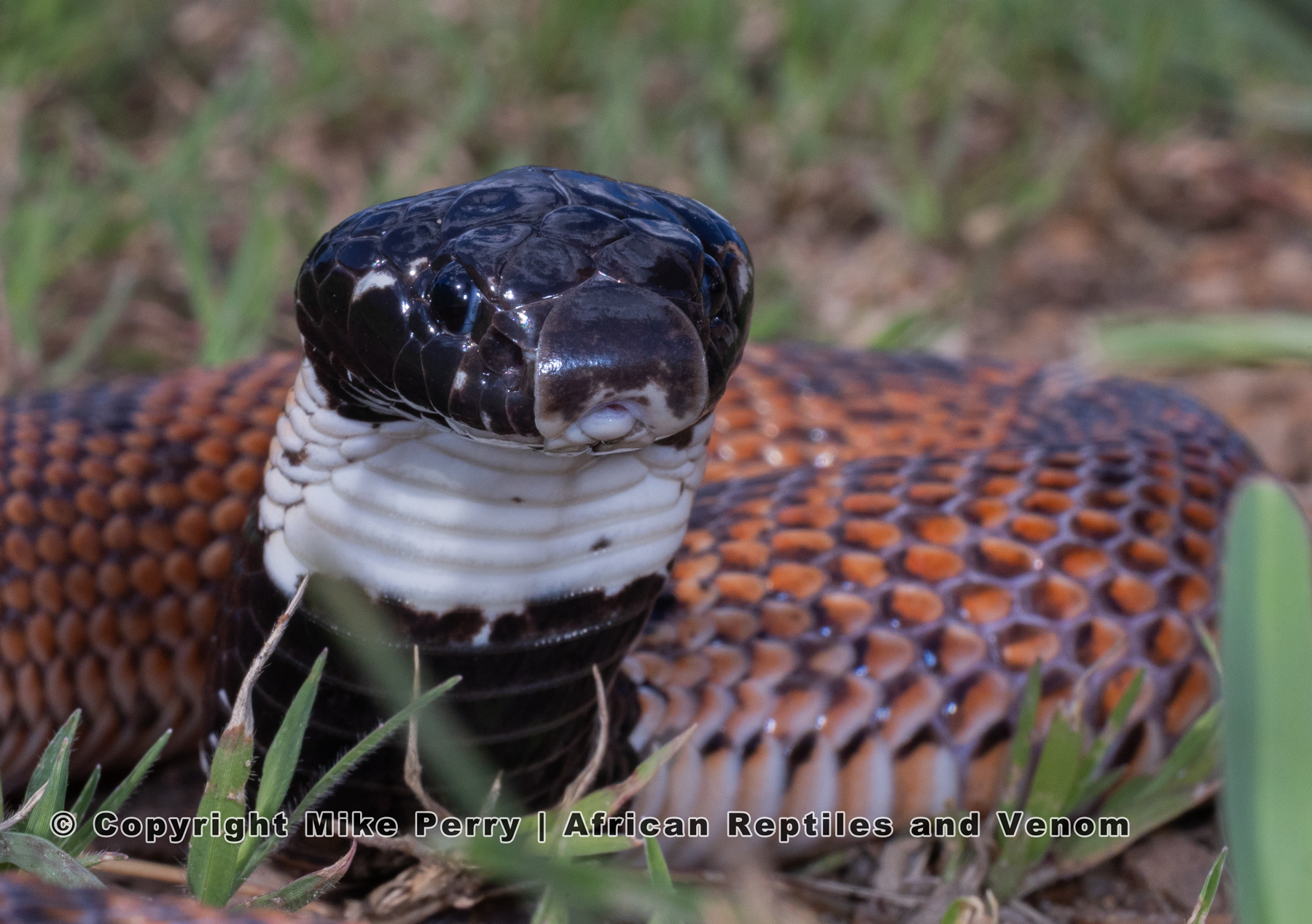
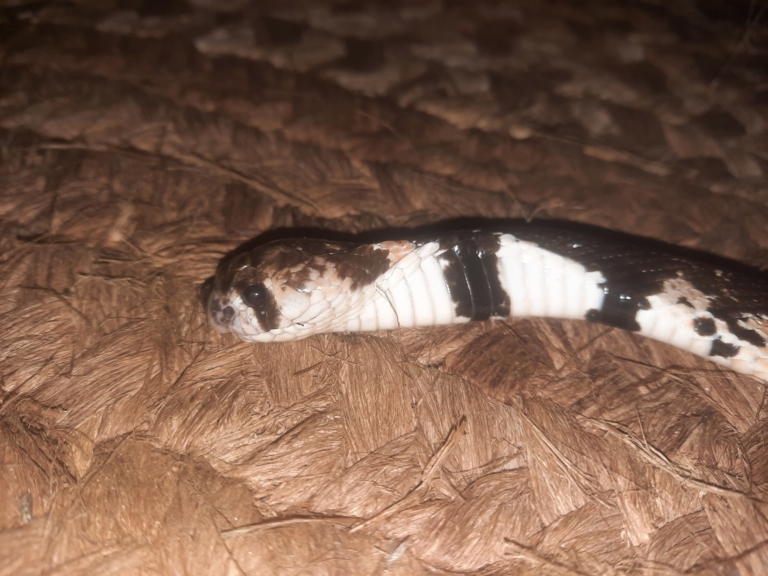
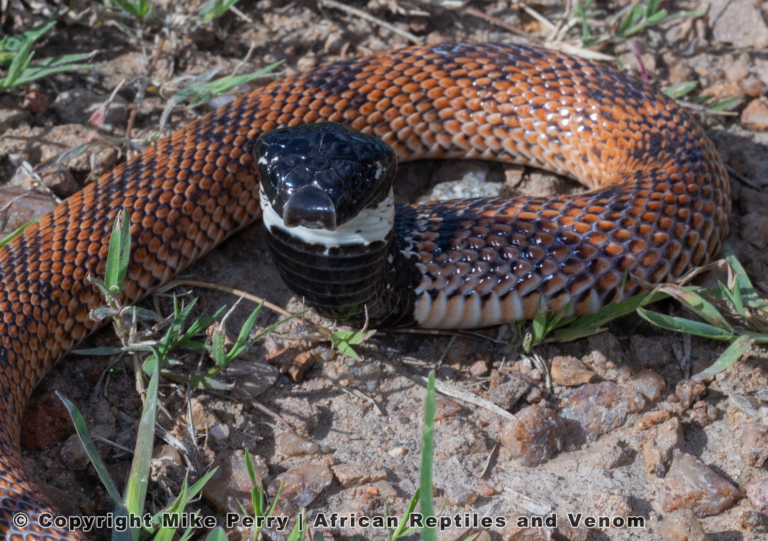
  • Description: Typically reaching 60-75 cm in length, the Speckled Shield Cobra usually has a pale grey-brown, salmon pink, or reddish-brown base color. Its dorsal pattern consists of variable darker blotches or faint, irregular bands. The head and neck may feature more distinct black and white markings, particularly when agitated. Its most defining feature is the large, shovel-like rostral scale, which is crucial for its burrowing lifestyle.
  • Distribution: This subspecies has a broad distribution across the drier, sandy regions of Southern Africa. Its range includes Namibia, Botswana, western Zimbabwe, and the Kalahari regions of South Africa (Northern Cape, North West, and Limpopo provinces).
  • Habitat: It is highly fossorial (burrowing), preferring sandy-soiled savannas, grasslands, and semi-arid areas. It spends most of its time underground, emerging primarily at night, often after rainfall, to hunt. It utilizes self-dug burrows, as well as abandoned rodent tunnels or natural crevices.
  • Diet: A nocturnal hunter, the Speckled Shield Cobra preys on a variety of small vertebrates including frogs, toads, lizards, other snakes, and small mammals like rodents. It uses its excellent sense of smell to locate hidden prey.
  • Venom: Aspidelaps scutatus scutatus possesses a potent neurotoxic and mildly cytotoxic venom. While bites are infrequent, often occurring when the snake is handled or accidentally stepped on, they are medically significant. Symptoms can include local swelling, pain, and potentially more serious neurological effects like slurred speech or partial paralysis. There is no specific antivenom for this species, requiring symptomatic treatment.

The Intermediate Shield Cobra (Aspidelaps scutatus intermedius)

Unless otherwise noted, all images used in this article are sourced from iNaturalist.org and licensed under
a Creative Commons Attribution-NonCommercial 4.0 International License (CC BY-NC 4.0). 
We extend our sincere thanks to the respective photographers who generously
shared their work on iNaturalist, making the visual content of this article possible.

This subspecies represents a transition zone in appearance and distribution within the Aspidelaps scutatus complex.

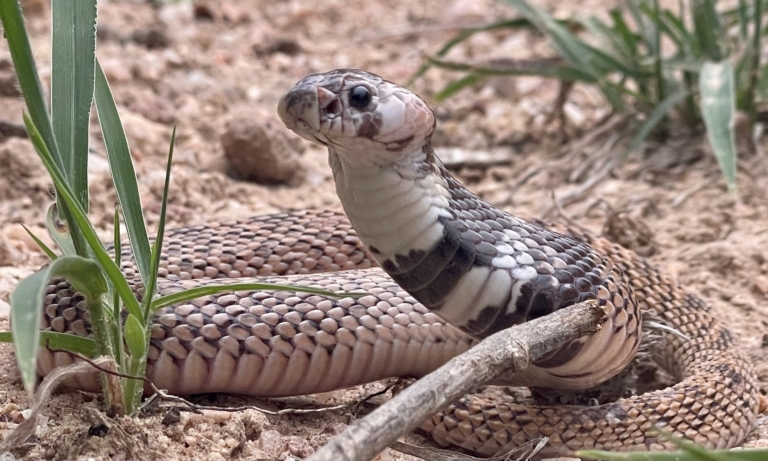
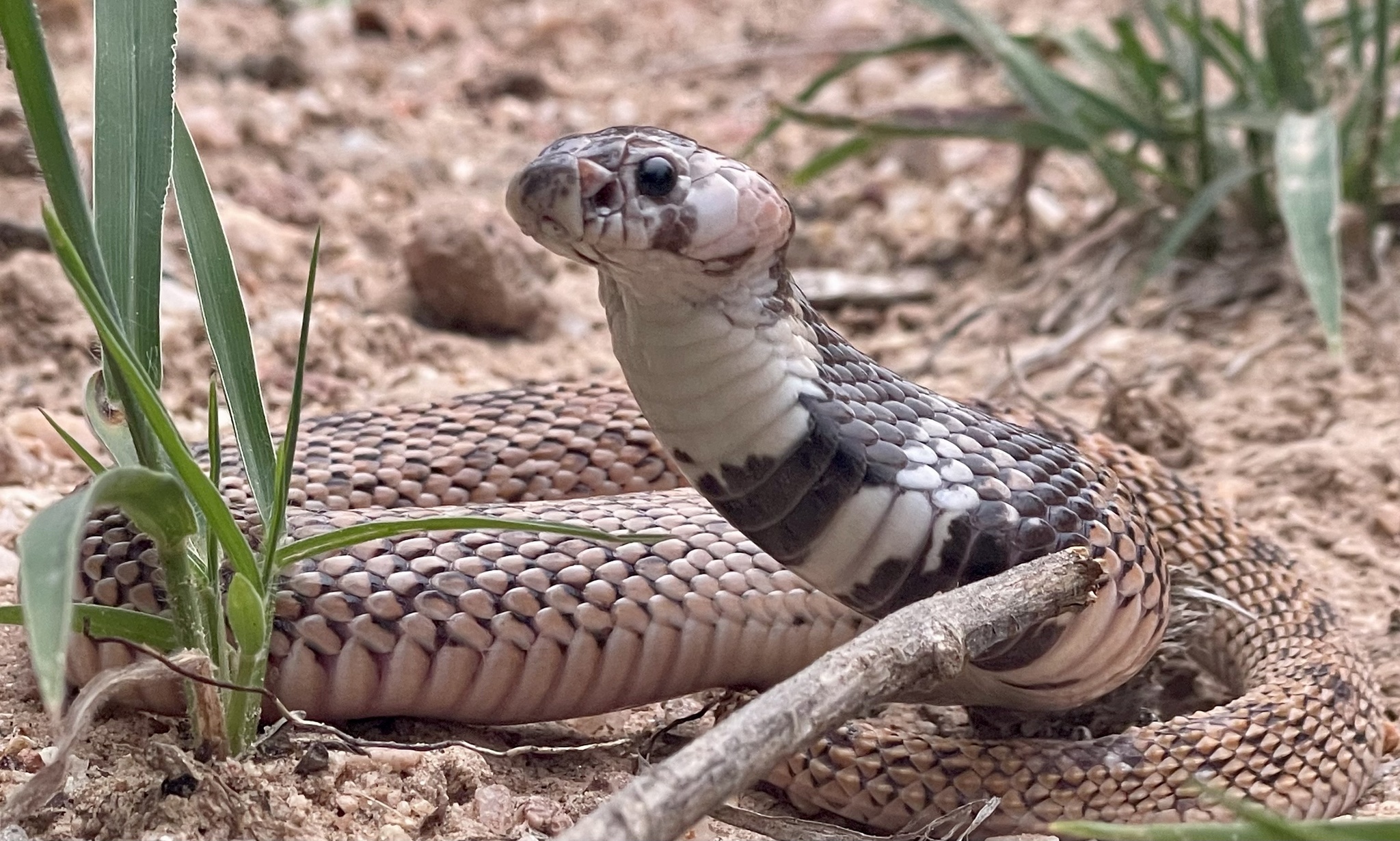
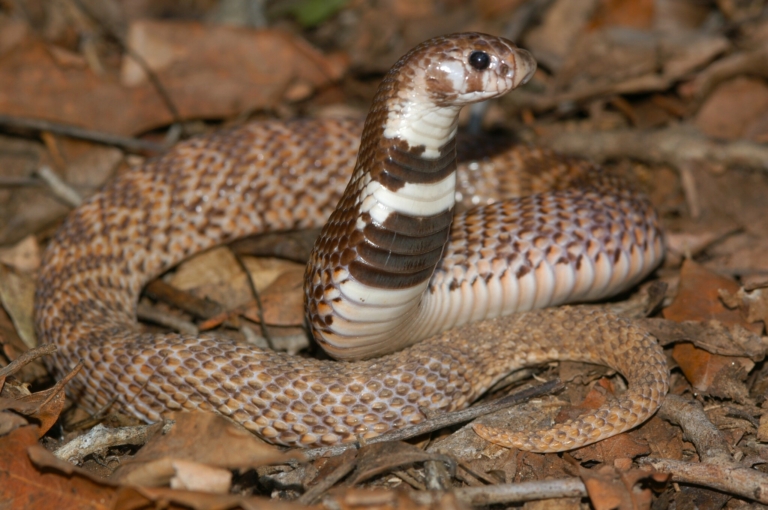
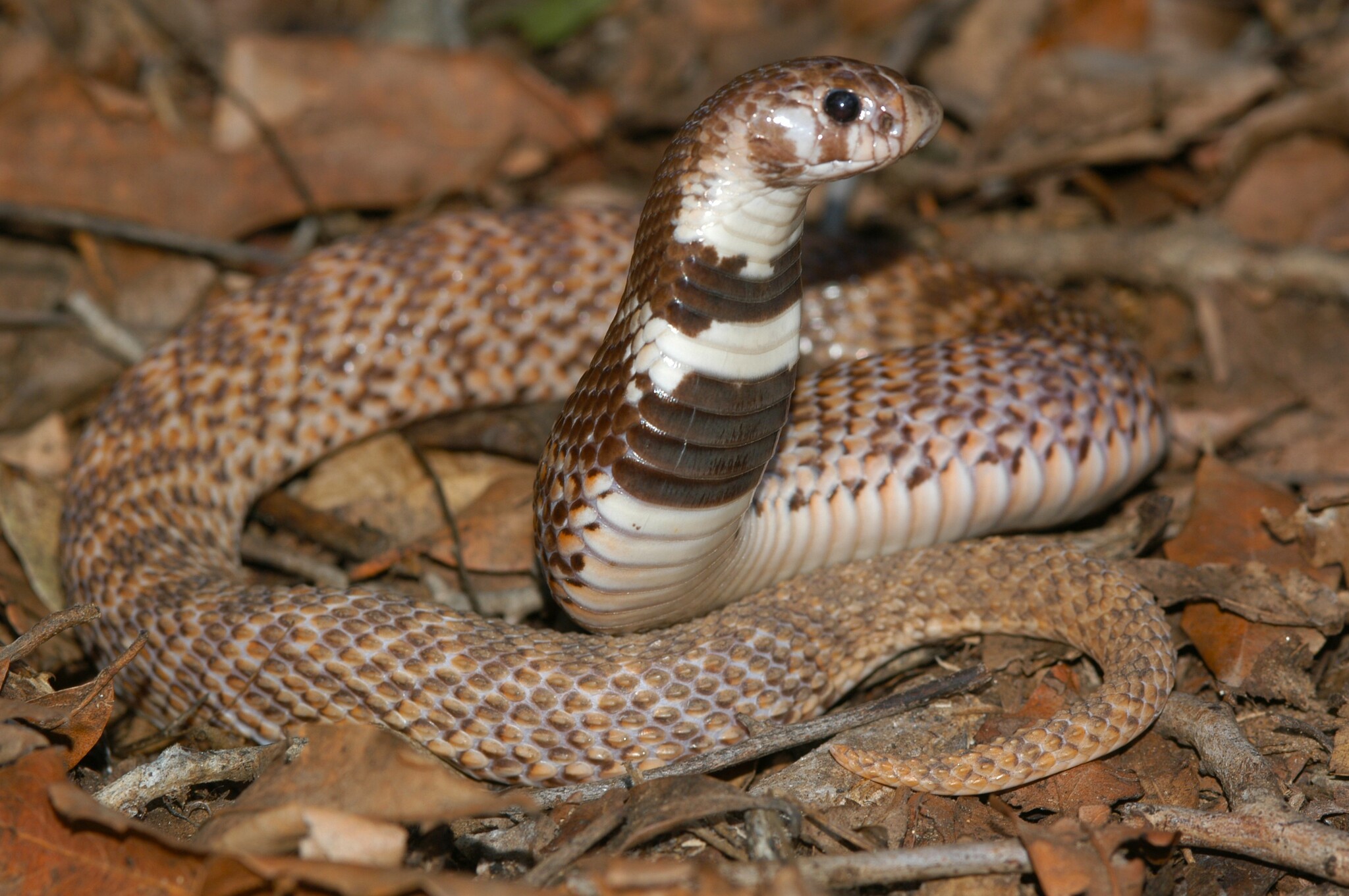
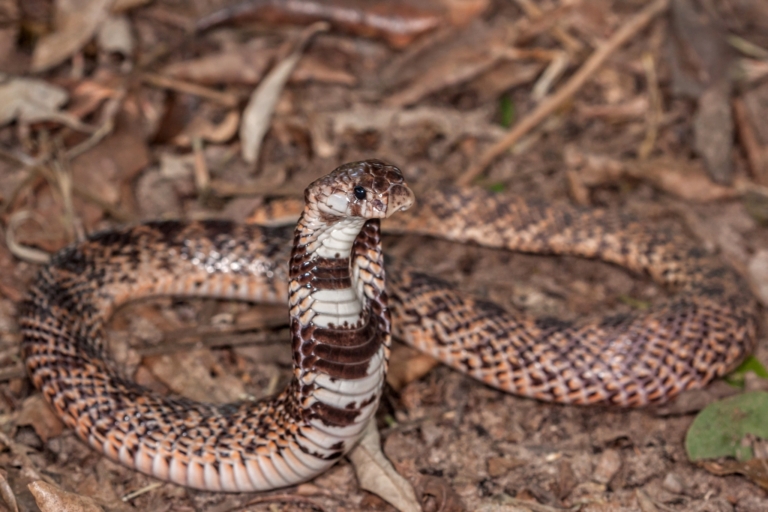
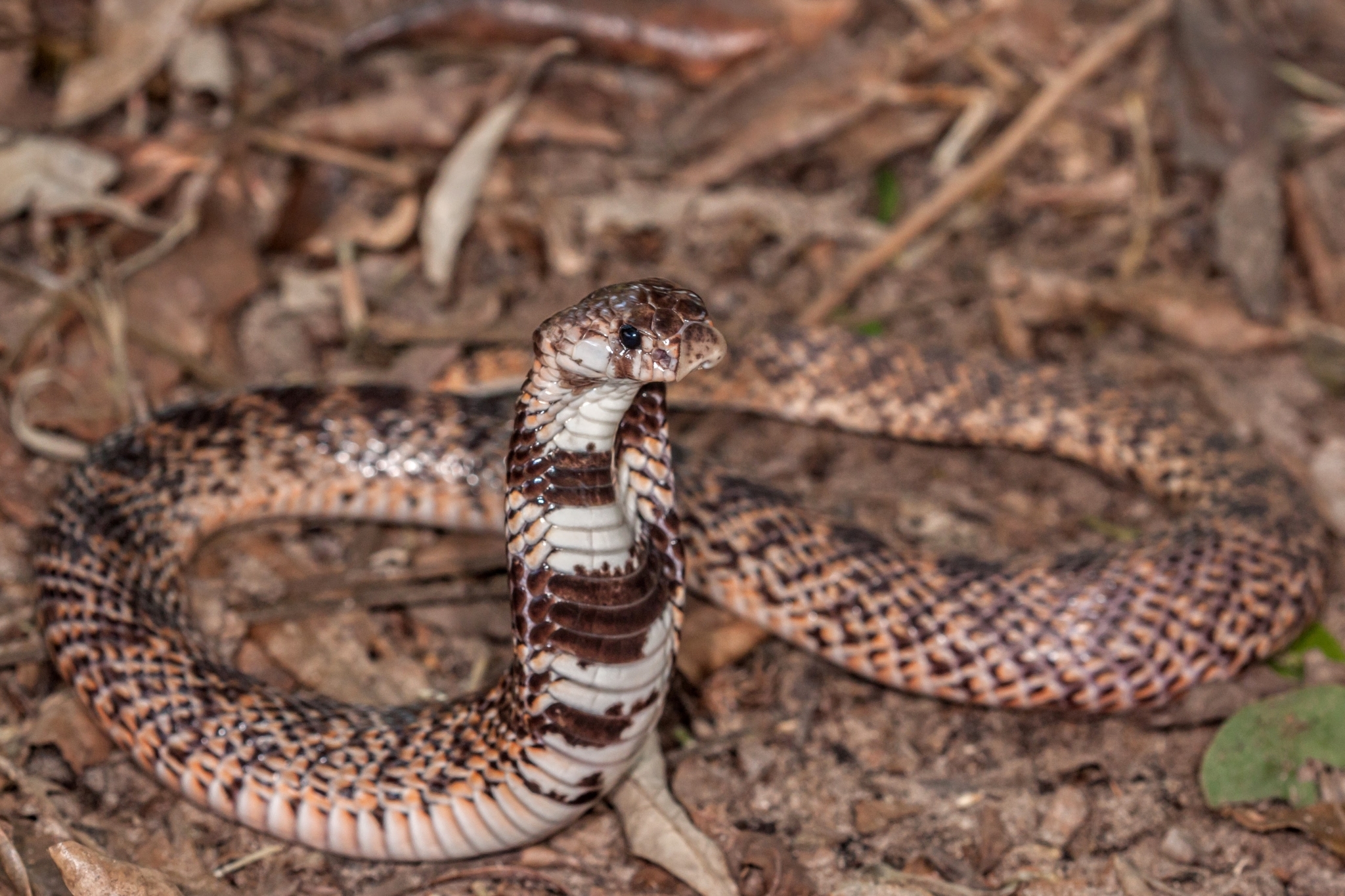
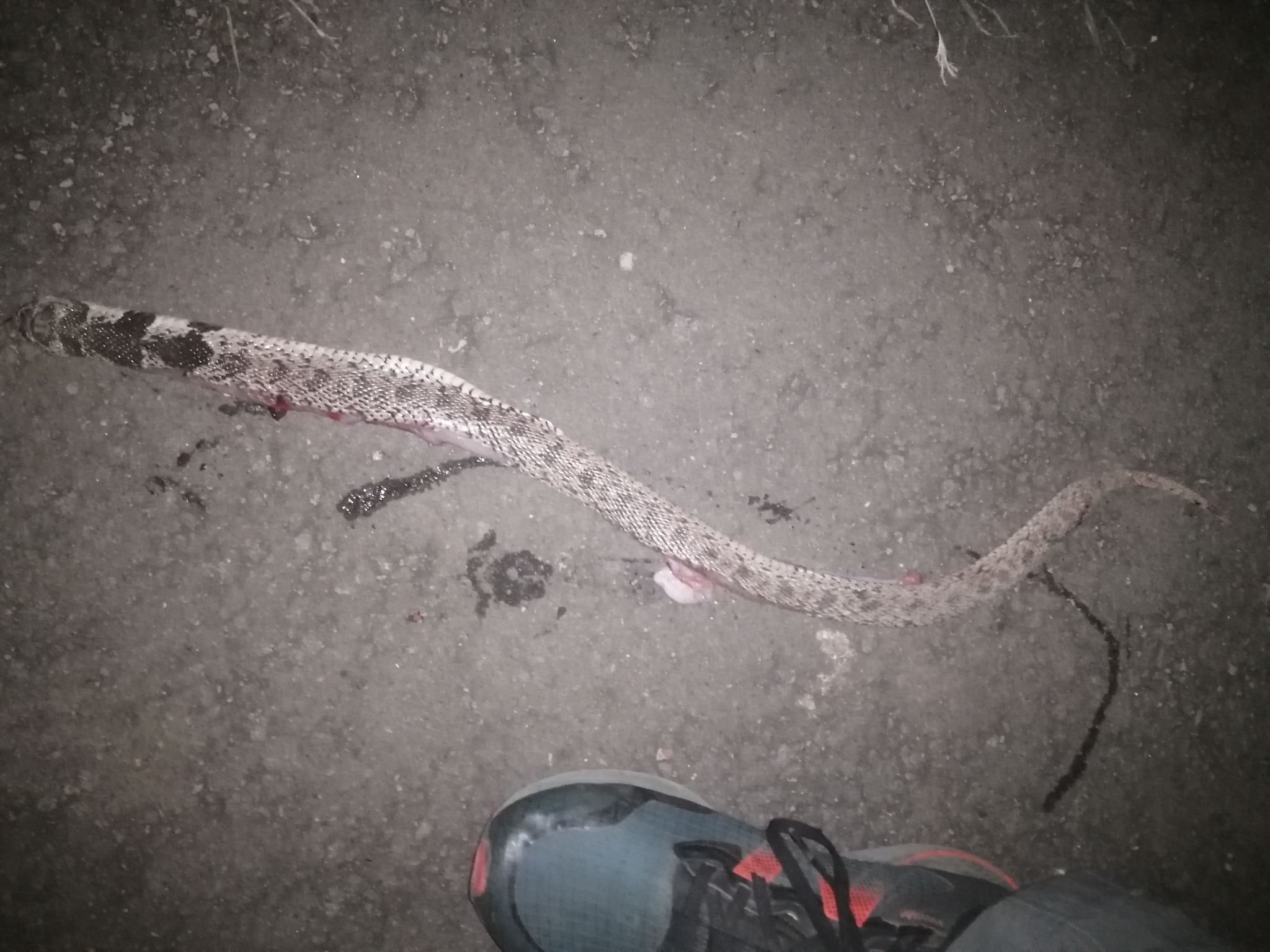
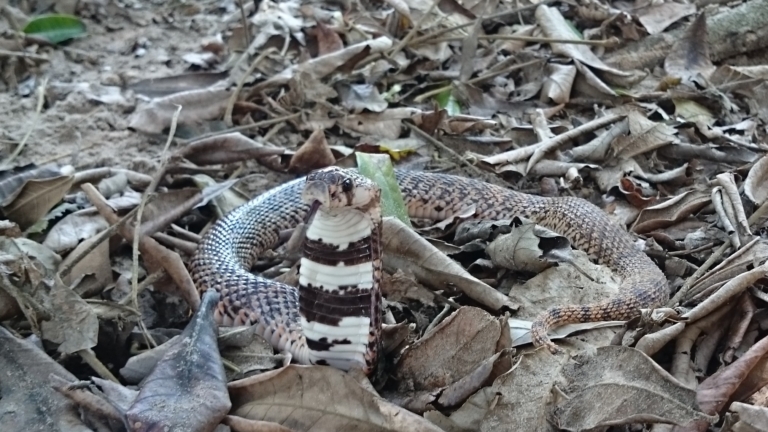
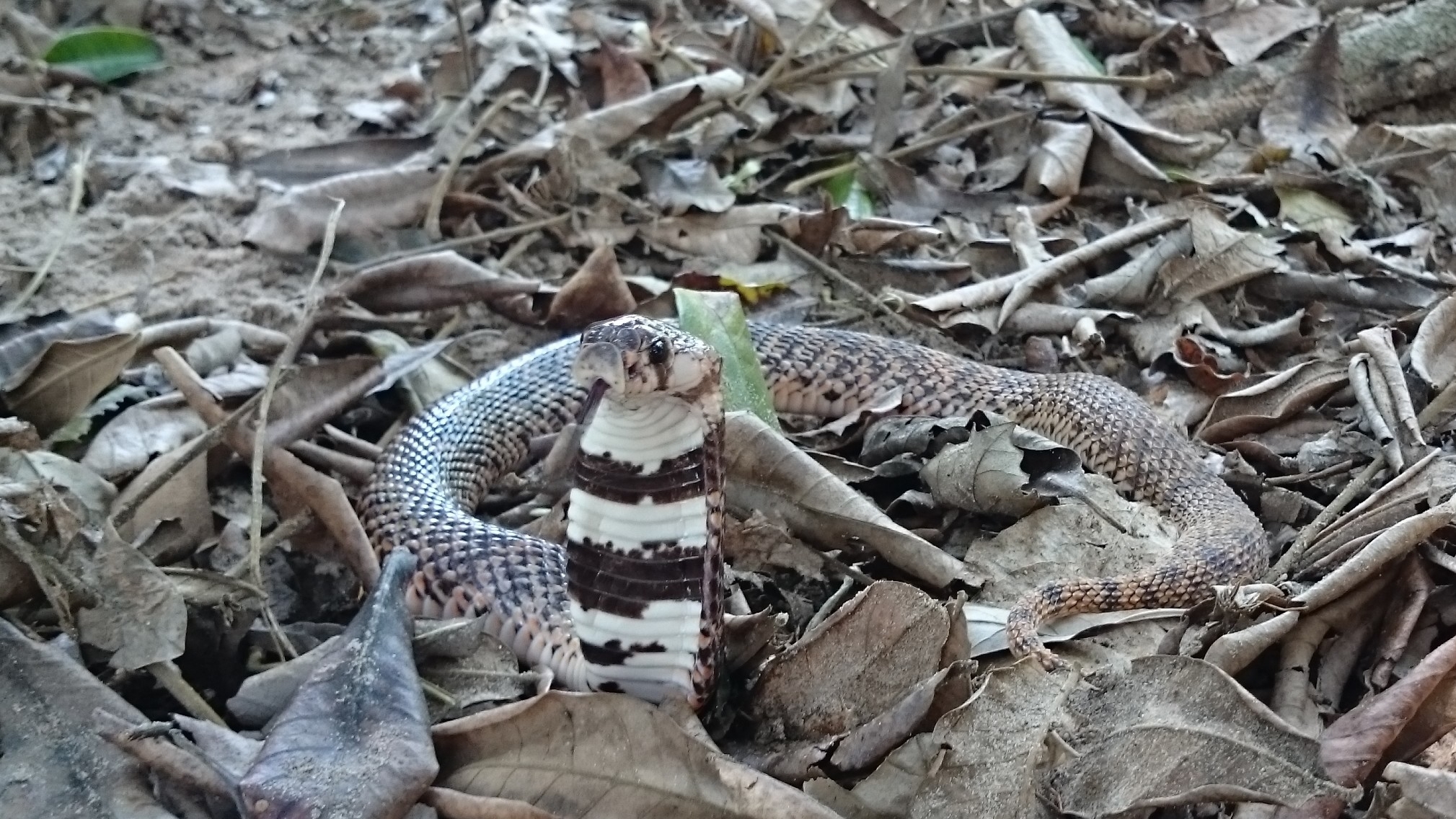
  • Description: The Intermediate Shield Cobra generally averages 30-45 cm, with a maximum length around 59 cm. Its coloration can be somewhat variable, often it has a plain colored or grey-brown head  (not a black head and neck,  like the nominate race). It retains the characteristic enlarged rostral scale. When threatened, it can lift its head, flatten its neck into a narrow hood, and strike repeatedly.
  • Distribution: This subspecies falls between the distribution of the it other two sister species.  It is found in the eastern parts of the Limpopo province, eastern Mpumalanga, and Eswatini.
  • Habitat: It prefers habitats with loose, sandy soil, where its burrowing adaptations allow it to thrive. It’s often found in savannas and bushveld areas within its range. Like its relatives, it’s a nocturnal, semi-fossorial species.
  • Diet: Its diet is similar to other shield-nosed snakes, consisting of small mammals, frogs, and especially legless lizards and other small reptiles, which it actively forages for in loose sand.
  • Venom: The venom of Aspidelaps scutatus intermedius is considered mildly cytotoxic and neurotoxic. Bites can cause local swelling and necrosis (tissue damage). While respiratory failure is rare, bites are still medically serious and require symptomatic treatment as there is no specific antivenom.

The Eastern Shield Cobra (Aspidelaps scutatus fulafula)

Unless otherwise noted, all images used in this article are sourced from iNaturalist.org and licensed under
a Creative Commons Attribution-NonCommercial 4.0 International License (CC BY-NC 4.0). 
We extend our sincere thanks to the respective photographers who generously
shared their work on iNaturalist, making the visual content of this article possible.

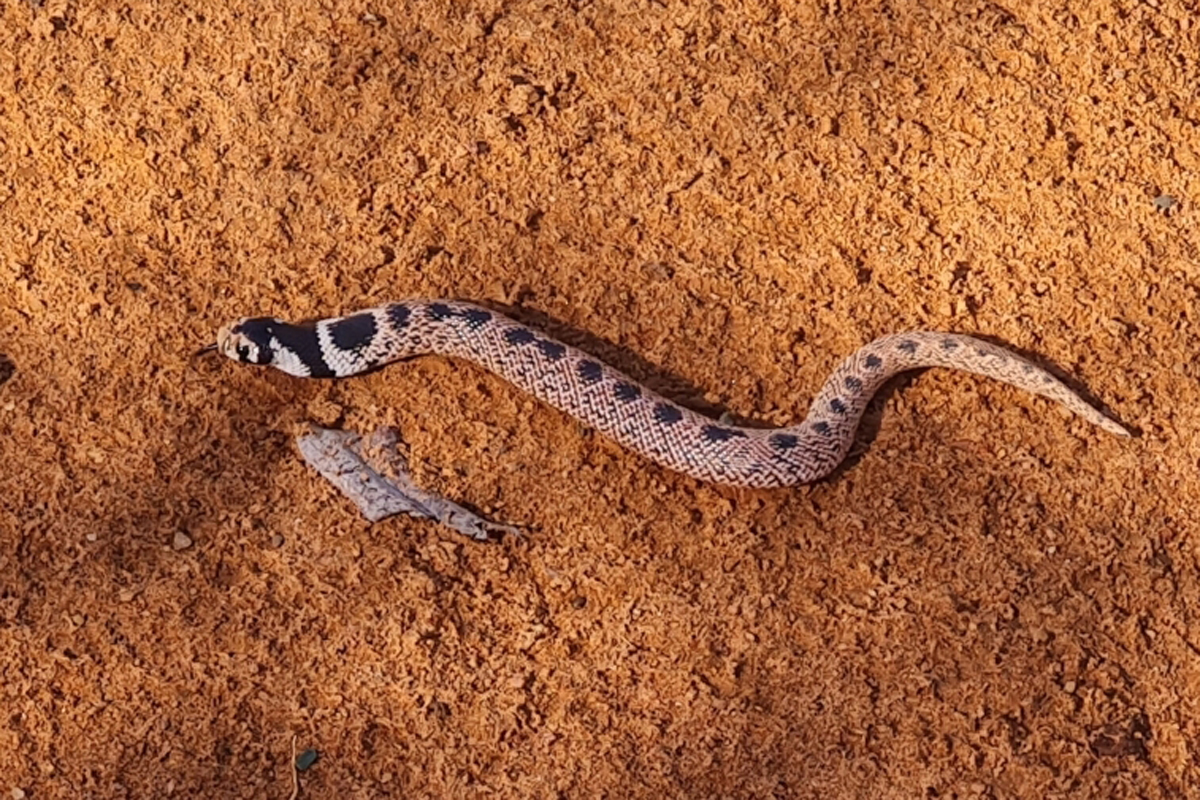
The Eastern Shield Cobra rounds out the Aspidelaps scutatus group, known for its distribution in the eastern parts of Southern Africa.

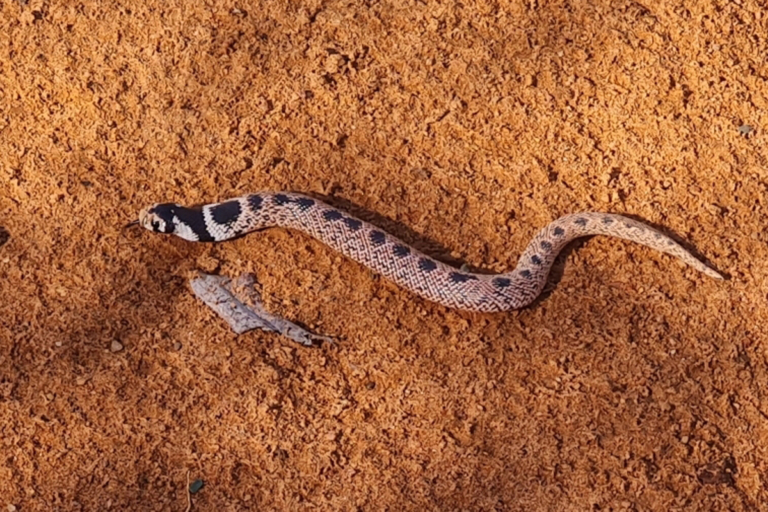
  • Description: Aspidelaps scutatus fulafula can be boldly marked with black blotches down the back, or often displays a more uniform or subtle pattern compared to the Speckled Shield Cobra, with shades ranging from pale to reddish-brown. The head typically lacks the prominent dark markings seen in A. s. scutatus. It also possesses the diagnostic enlarged rostral scale for burrowing and can form a narrow hood when agitated. Adults are typically around 60 cm in length.
  • Distribution: This subspecies is found from southeastern Zimbabwe, extending through southern Mozambique, and just entering the far north-east of South Africa, specifically in northern KwaZulu-Natal (including areas around Tembe Elephant Park, relevant to your Margate location context).
  • Habitat: It inhabits sandy savannas and coastal bushveld, often associated with sandy soils that allow for its burrowing lifestyle. It is a nocturnal species, spending much of its time concealed underground.
  • Diet: Its diet is consistent with other Aspidelaps species, comprising small amphibians, lizards, and small mammals.
  • Venom: The venom of Aspidelaps scutatus fulafula is potent, containing neurotoxic and cytotoxic components. While bites are rare due to its reclusive nature, they are medically serious and require immediate attention. As with other Aspidelaps, there is no specific antivenom available, so treatment focuses on managing symptoms.

Products & Courses